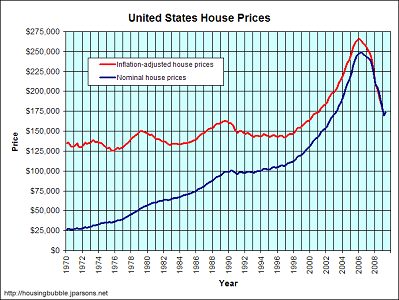
???....the housing bubble didn't start in 2004......that's when people started getting worried......by 2005 EVERYBODY except the demmycrats in the House were worried........they kept telling everyone the FED was fine.......
Why can't you provide proof of your claims? Because you can't. You think just because you say something, it makes it true? My God, you're ignorant.
Take a look at this. Look at what happened in 2002 after Bush Jr signed the American Dream Downpayment Act. There's your freaking evidence, pinhead:
My brother-in-law was a real estate broker in the DC area for 40 years. In 2004, I remember him in 2004 remarking about the bubble and how it was a sellers market. They were getting 10% more than their listing prices because there were so many more buyers than sellers because of Bush Jr's American Dream Downpayment Act in 2002. Low income buyers who normally couldn't buy a home, now could thanks to Bush Jr. This was the root of the problem. The proof is there. Everybody knows it except radicalized right wing nut jobs like yourself who feel the need to parrot the right wing talking points and deflect blame. It's what you nut jobs do.
Now, educate yourself and read below:
2003: Fannie Mae and Freddie Mac buy $81 billion in subprime securities.[21]
June: Federal Reserve Chair Alan Greenspan lowers federal reserve’s key interest rate to 1%, the lowest in 45 years.[42]
September: Bush administration recommended moving governmental supervision of Fannie Mae and Freddie Mac under a new agency created within the Department of the Treasury. The changes were blocked by Congress.[43]
December: President Bush signs the American Dream Downpayment Act to be implemented under the Department of Housing and Urban Development. The goal was to provide a maximum downpayment assistance grant of either $10,000 or six percent of the purchase price of the home, whichever was greater. In addition, the Bush Administration committed to reforming the homebuying process that would lower closing costs by approximately $700 per loan. It was said it would further stimulate homeownership for all Americans.[44]
2003-2007: The Federal Reserve failed to use its supervisory and regulatory authority over banks, mortgage underwriters and other lenders, who abandoned loan standards (employment history, income, down payments, credit rating, assets, property loan-to-value ratio and debt-servicing ability), emphasizing instead lender's ability to securitize and repackage subprime loans.[35]
2004: U.S. homeownership rate peaked with an all-time high of 69.2 percent.[45]
HUD increased Fannie Mae and Freddie Mac affordable-housing goals for next four years, from 50 percent to 56 percent, stating they lagged behind the private market; from 2004 to 2006, they purchased $434 billion in securities backed by subprime loans.[21]
October: SEC effectively suspends net capital rule for five firms - Goldman Sachs, Merrill Lynch, Lehman Brothers, Bear Stearns and Morgan Stanley. Freed from government-imposed limits on the debt they can assume, they levered up 20, 30 and even 40 to 1.[46]
2004–2005: Arizona, California, Florida, Hawaii, and Nevada record price increases in excess of 25% per year.
2004-2006: The Federal Reserve hiked interest rates in 17 consecutive quarterly meetings from 1% to 6.25% to slow the economy and forestall inflation. This greatly increasing the cost of lending, especially for loans indexed to the Fed's rates, including short-term adjustable rate mortgages. Many borrowers, especially subprime, saw their mortgage payments skyrocket as much as 60% after periodic resetting to their index.
2005: United States housing market correction.
January: The Median Home Price was $223,100, while the Average Home Price was $283,000. [47]
Fall: Booming housing market halts abruptly; from the fourth quarter of 2005 to the first quarter of 2006, median prices nationwide dropped off 3.3 percent.[49]
Year-end: A total of 846,982 properties were in some stage of foreclosure in 2005.[50]
2006: Continued market slowdown. Prices are flat, home sales fall, resulting in inventory buildup. U.S. Home Construction Index is down over 40% as of mid-August 2006 compared to a year earlier. A total of 1,259,118 foreclosures were filed during the year, up 42 percent from 2005.[51]
2005: About 885,000 foreclosures notices were filed on 846,982 properties during the year. Less than 1 percent of all households were in some stage of foreclosure during 2005.[52]
2006: Year-end: More than 1.25 million foreclosure notices were filed on more than 800,000 properties during the year. One in 92 of all households were in some stage of foreclosure during 2006.
2007: Year-to-year decreases in both U.S. home sales and home prices accelerates rather than slowing, with U.S. Treasury secretary Paulson calling "the housing decline ... the most significant risk to our economy."[54] Home sales continue to fall. The decrease in existing-home sales is the steepest since 1989. In Q1/2007, S&P/Case-Shiller house price index records first year-over-year decline in nationwide house prices since 1991.[55] The subprime mortgage industry collapses, foreclosure activity increases [56] and rising interest rates threaten to depress prices further as problems in the subprime markets spread to the near-prime and prime mortgage markets.[57]
February–ongoing: 2007 subprime mortgage financial crisis - more than 25 subprime lenders declare bankruptcy, announce significant losses, or put themselves up for sale.
April 2: New Century Financial, largest U.S. subprime lender, files for chapter 11 bankruptcy.[58]
August: worldwide "credit crunch" as subprime mortgage backed securities are discovered in portfolios of banks and hedge funds around the world, from BNP Paribas to Bank of China. Many lenders stop offering home equity loans and "stated income" loans. Federal Reserve injects about $100B into the money supply for banks to borrow at a low rate.
August 6: American Home Mortgage files for chapter 11 bankruptcy.[60]
August 16: Countrywide Financial Corporation, the biggest U.S. mortgage lender, narrowly avoids bankruptcy by taking out an emergency loan of $11 billion from a group of banks.[62]
August 17: Federal Reserve lowers the discount rate by 50 basis points to 5.75% from 6.25%.[63]
August 31: President Bush announces a limited bailout of U.S. homeowners unable to pay the rising costs of their debts.[64] Ameriquest, once the largest subprime lender in the U.S., goes out of business.[65]
September 17: Former Fed Chairman Alan Greenspan said "we had a bubble in housing" [71][72] and warns of "large double digit declines" in home values "larger than most people expect."
September 30: Affected by the spiraling mortgage and credit crises, Internet banking pioneer NetBank goes bankrupt[75] NetBank Inc was the largest savings and loan failure since the tail end of the Savings and Loan crisis in the early 1990s.[76] and the Swiss bank UBS announced that it lost US$690 million in the third quarter.[77]
December 6: President Bush announced a plan to voluntarily freeze the mortgages of a limited number of mortgage debtors holding ARMs for 5 years. The plan run by the Hope Now Alliance. Its phone number is 1-888-995-HOPE.[81] Some experts criticized the plan as "a Band-Aid when the patient needs major surgery",[82] a "teaser-freezer",[83] and a "bail-out".[84][85]
percent.[78] Economists' predictions of the total amount of home price declines from the bubble's peak range from moderate 10–15 percent to larger 30–50 percent price declines in some areas.[69][78]
Home sales continue to fall. Fears of a U.S. recession.
January 2–21: January 2008 stock market downturn.
January 24: The National Association of Realtors (NAR) announced that 2007 had the largest drop in existing home sales in 25 years,[89] and "the first price decline in many, many years and possibly going back to the Great Depression."[90]
March 14–18: Dropping valuations of mortgage securities caused by skyrocketing default and foreclosure rates forces margin calls to the Wall Street bank Bear Stearns for debts the bank used to leverage mortgage issuances, and threatens BSC with bankruptcy and causes worldwide market jitters. In a weekend deal brokered by U.S. Treasury secretary Paulson and Fed chairman Ben Bernanke, JPMorgan bank agrees to purchase BSC for $2 per share, compared to their 2007 high of nearly $170, in exchange for the Federal Reserve Bank agreeing to accept BSC's devalued mortgage backed securities as collateral for public loans at the newly created Term Securities Lending Facility (TSLF), effectively providing a mechanism to bail out Wall Street banks threatened with insolvency.[91]
Year-end: A total of 3,957,643 foreclosures were filed on 2,824,674 properties during the year, up 21 percent from 2008. More than 2.21 percent of all households were in some stage of foreclosure during 2009, up from 1.84 percent in 2008.[99]