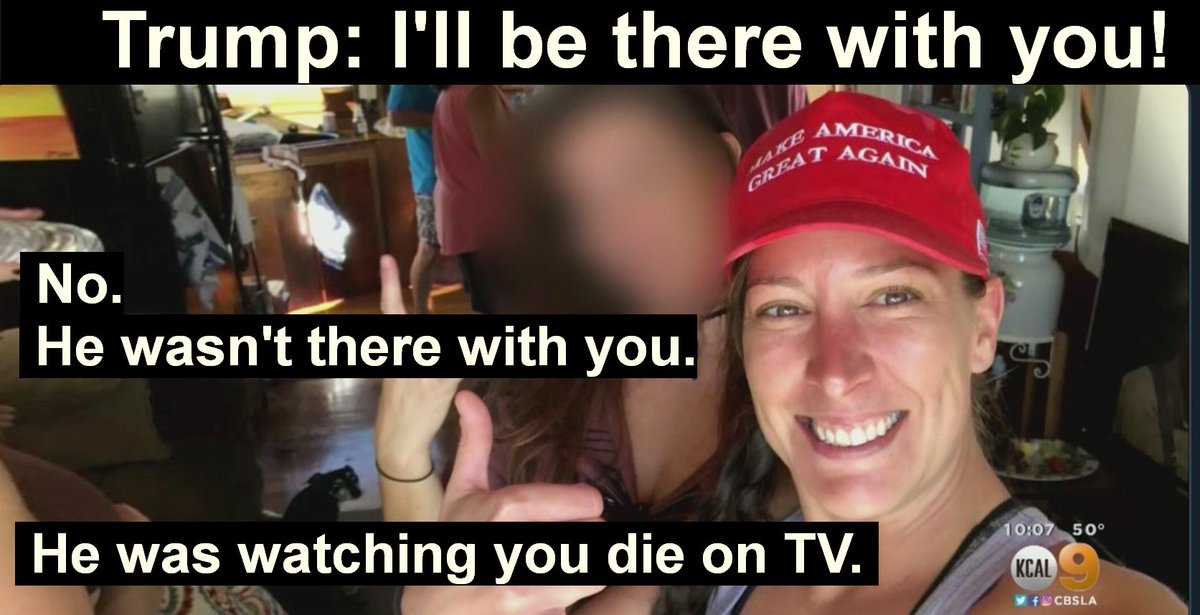
Ashli Babbitt Inside the effort to make a January 6 martyr
While Babbitt has been the only one to remain in the spotlight, four Trump supporters actually died at the U.S. Capitol on January 6. The D.C. Medical Examiner’s Officer determined two men, 55-year-old Kevin Greeson and 50-year-old Benjamin Phillips, died of complications from hypertensive heart disease. And, although video appeared to show her falling and being trampled by the pro-Trump mob, the medical examiner determined a second woman, 34-year-old Roseanne Boyland, died as a result of acute amphetamine intoxication.
Just a year younger than Babbitt, on paper the two share a number of similarities. They were both “fanatical” supporters of Donald Trump, according to their families. And, in the weeks prior to the Capitol riot, both women had descended into obsession with the Pizzagate and QAnon conspiracy theories – which hold, among other things, that President Joe Biden is part of a child sex cabal that runs the U.S. government.
Before she traveled to Washington, D.C., on January 6, Boyland had told her family she’d been learning about QAnon on YouTube. A childhood friend told the New York Times Boyland had been trying to spread the word about “underground pedophile rings.”
“She thought she was fighting for children, in her own way,” Sydney Vinson told the Times.
On her own social media accounts, Babbitt spend the weeks leading up to the riot sharing QAnon phrases like “WWG1WGA” (which stands for “where we go one, we go all”) and predicting that “the storm” was coming to D.C. “The storm” is a central part of the QAnon conspiracy, representing the day that Trump would initiate the mass arrest of Democrats.
In the days immediately before January 6, Babbitt had also retweeted Trump attorney Lin Wood dozens of times, including tweets alleging that Chief Justice John Roberts was being blackmailed in a global scheme involving the “rape and murder of children.”
“What’s important to highlight here is the glorification of Ashli Babbitt and her death is not actually about her. It’s about the narrative,” Friedfeld said. “There were other people who died that day. But we have not seen their stories used in the same way as Ashli Babbitt’s because it did not fit the us-vs-them narrative that hers so clearly does. And so they have largely been forgotten or ignored, while Babbitt has been turned into a symbol in order to advance the cause.”
https://www.wusa9.com/article/news/...qanon/65-6641f710-99d0-42ba-b657-4c568e132ef1