
You are using an out of date browser. It may not display this or other websites correctly.
You should upgrade or use an alternative browser.
You should upgrade or use an alternative browser.
Release the tape!!!
- Thread starter Jarod
- Start date



They are criminal enterprises, not terrorists.Personally I would advise against calling cartels "terrorist" organizations. Though I somewhat understand, as they use threats to cause whole governments to change their actions, not for ideology, but to make more money...
There really is no terror involved, those killed are choosing to participate.

There's yuge business in it.Personally I would advise against calling cartels "terrorist" organizations. Though I somewhat understand, as they use threats to cause whole governments to change their actions, not for ideology, but to make more money...
Are you sure they chose to participate? Or were their families held hostage and threatened with death?So they chose to participate and they got killed....
Yep. Nobody's forcing them to participate.

Their families were held hostage and threatened with death If The men didn't go fishing?Are you sure they chose to participate? Or were their families held hostage and threatened with death?
noTheir families were held hostage and threatened with death If The men didn't go fishing?
Another example of the teacher's poor reading comprehension. He was talking about the drug users.
I'm sure it's against the rule to sample the drugs.
Am I what?

Agreed, but the MAGAt cracker retards are shallow thinkers at best. Sad.Actually...not giving pardons to convicted drug traffickers would be a much stronger step toward stopping them...than blowing boats that cannot reach the US out of international waters.
Tbird19482
Verified User
It was the second " TAP " that is against the Geneva Convention and that is where I think Trump and his people should be charged.What you are asking is the incorrect question or issue.
To avoid 'discretion' being used by each and every military leader of soldier, some of which might say or think a disabled opponent is 'trying to turn the capsized and burning boat over to put it out', or the 'parachuting pilot will land on the ground and start fighting on the ground', they made the RULES CRYSTAL CLEAR and NOT up to discretion and the example cited is SPECIFIC to boats and this situation that played out.
The below states clearly and undeniable that if the boat is disable, the people are NOT to be considered a threat and to be considered 'out of combat'.
So if you want to get around that you MUST explain by what authority any soldier can ignore it while substituting their own judgement.
----------
From the U.S. Military Code of Conduct
- personnel who are disabled and no longer a threat
- and survivors of maritime warfare who are “out of combat” due to ship destruction
- Enemy personnel in the water from a destroyed vessel are considered hors de combat (out of the fight)
- They may not be intentionally attacked unless they take hostile action or present a threat
- There is a duty to render assistance if feasible, consistent with mission requirements
These rules come primarily from:
- Law of Armed Conflict
(also called the Law of War — the core legal standard the U.S. military must follow)- DoD Directive 2311.01
which makes compliance with the Law of War mandatory for the U.S. military.- Geneva Conventions
which the U.S. adheres to and trains under as part of LOAC.- U.S. Navy Commander's Handbook on the Law of Naval Operations
which does explicitly address people in the water after a ship is destroyed.
I am pretty sure if Argentina would have attacked an American boat and disabled it and didn't render Help to the survivors As it says they have to do in the Geneva Convention the MAGAS on here would be all up in arms saying they broke the Geneva Convention.
But they aren't saying a word about the Geneva Convention because their orange GOD is involved in this one.

The US code is rather vague. Coercion is used as an option other than political ideation. It seems a "letter" and literal interpretation of the law over the meaning that was meant when it was passed.They are criminal enterprises, not terrorists.
There really is no terror involved, those killed are choosing to participate.
It engages in "terrorist activity" listed as: premeditated, politically motivated violence against non-combatants, per 22 U.S.C. § 2656f(d)(2), but interpreted expansively to include intimidation for coercive purposes.
The "political motivation" element is key here: traditional terrorism (e.g., ISIS) aims for ideological change, but U.S. law allows designations based on de facto coercive impact, such as destabilizing governments or economies through violence. Cartels' brutality, (e.g. assassinations, bombings, and control of territories) is framed as "terrorism" because it coerces compliance and sows fear, even if the end goal is profit. Additionally, Executive Order 13224 (as amended) enables Specially Designated Global Terrorist (SDGT) labels under the International Emergency Economic Powers Act (IEEPA), focusing on threats to U.S. security without needing a strict political intent test.

QP!
Verified User
Agreed.It was the second " TAP " that is against the Geneva Convention and that is where I think Trump and his people should be charged.
I am pretty sure if Argentina would have attacked an American boat and disabled it and didn't render Help to the survivors As it says they have to do in the Geneva Convention the MAGAS on here would be all up in arms saying they broke the Geneva Convention.
But they aren't saying a word about the Geneva Convention because their orange GOD is involved in this one.
And this does open the door to ALL future such disabled military personnel, American or other, being killed.
This new standard Magats are pushing is completely arbitrary and based on any one Commander or even soldier, in proximity to the ship wreck simply saying 'I think they were trying to return to the fight and think the had weapons they could use'.
That is EXACTLY the discretion the Statutes deliberately deny as it would be unworkable to allow each and everyone to simply determine that.
That is why the Statute DEMANDS that they be consider "out of battle"... no exceptions.

Why hasn't Trump displayed any of these drugs as the USCG often does? Clearly he doesn't want any witnesses to his war crimes.
Well, supposedly they were "destroyed" is the answer to that. Except that according to one of the MAGATs, above, they weren't destroyed and were being collected by the survivors. *eyeroll*
It's a bullshit answer, just like his promises to release the tapes.Well, supposedly they were "destroyed" is the answer to that. Except that according to one of the MAGATs, above, they weren't destroyed and were being collected by the survivors. *eyeroll*
He continues to attack female reporters and call them names. Worse if they are black. He's very unwell but still a weak, spineless liar just like all of his MAGAt cracker retards.
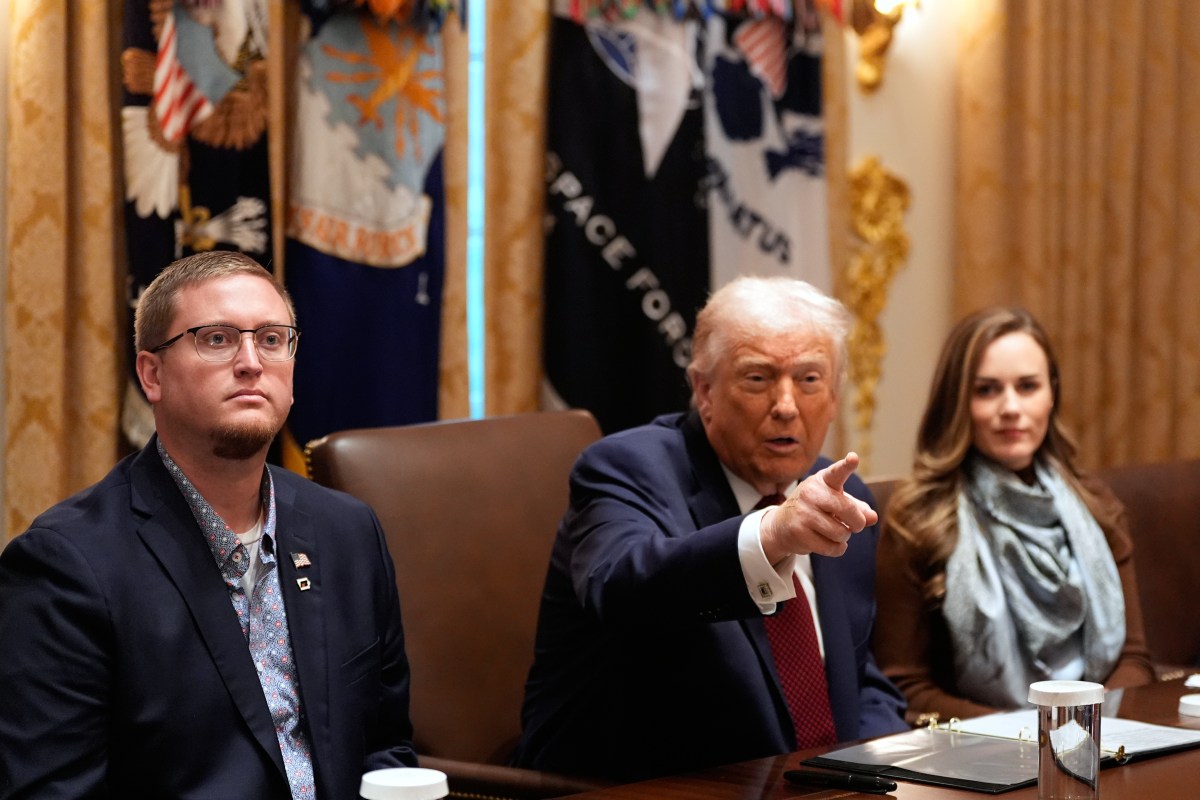
Donald Trump calls female reporter "obnoxious" for asking question
In recent weeks, Trump has drawn attention after slinging insults at several female journalists.
 www.newsweek.com