No one is likely to help America. It is now a pariah nation

Iran urges ITU to condemn attacks on its communications infrastructure


Iran’s Minister of Information and Communications Technology has called on the International Telecommunication Union (ITU) to condemn recent US and Israeli attacks on the country’s communications infrastructure.

In a telephone conversation with Bosun Tijani, the rotating President of the ITU Council, Sattar Hashemi condemned the assaults as a clear violation of international law. He requested that these actions be formally addressed and condemned during the council's upcoming summit in Geneva.

Referring to Iran's invocation of Article 51 of the UN Charter regarding the right to self-defense, Hashemi dismissed claims made by some regional countries accusing Iran of targeting civilian communications infrastructure, describing the allegations as totally baseless.

For his part, ITU Council President Bosun Tijani expressed regret over the attacks against the Islamic Republic. He emphasized that the ITU Council must maintain its role as a technical, specialized, and non-political body, stressing that it should not be turned into a platform for politicized actions.
 

SCO ICT forum voices concern over attacks on Iran’s digital infrastructure


Member states of the Shanghai Cooperation Organization (SCO) have voiced concern over US-Israeli attacks on Iran’s digital infrastructure, stressing the need to respect national sovereignty in cyberspace.

The 5th Meeting of Heads of Ministries and Agencies of SCO Member States Responsible for the Development of Information and Communication Technologies (ICT) was held on Monday in Bishkek, the capital of Kyrgyzstan. Key items on the agenda included the security of communication infrastructure, the development of artificial intelligence (AI), and the future of the data-driven economy.

In their final communiqué, participants expressed concern over attacks on Iran’s ICT infrastructure during the recent US-Israeli war of aggression against the country, saying such actions violate the principles of international law and the United Nations Charter.

The communiqué also emphasized the importance of refraining from the use of force and respecting countries’ sovereignty in cyberspace.

Participants further underscored the need for the coordinated and responsible development of AI as a key driver of the digital economy.

They also approved the “concept of establishing regional data centers and expanding processing capacities” within the SCO framework. The initiative aims to strengthen data storage and processing infrastructure, develop indigenous AI models, and enhance the resilience of digital services across member states.

Iran’s participation

Iran was represented at the meeting by Deputy Minister of Information and Communication Technology Ehsan Cheetsaz.

On the sidelines of the event, he held separate meetings with officials from SCO member states, including China, Russia, Kazakhstan, Belarus, Pakistan, Tajikistan, Uzbekistan, and Kyrgyzstan.

The talks focused on expanding bilateral and multilateral cooperation in emerging technologies, boosting the resilience of digital infrastructure, reinforcing national sovereignty in cyberspace, and enhancing collaboration in AI and data centers.

The meetings, along with the presentation of new initiatives, highlighted Iran’s active role in expanding regional ICT cooperation; an approach aimed at strengthening the country’s position in the regional digital economy.
 

ICRC chief arrives in Iran


Mirjana Spoljaric Egger, president of the International Committee of the Red Cross (ICRC), has arrived in Iran.

Leading a delegation on an official visit, Egger entered Iran on Tuesday via the Astara land border and was received by local officials upon arrival.

The visit aims to highlight the role of the ICRC and its defined mission within the framework of international humanitarian law.

Egger emphasized the organization’s readiness to strengthen cooperation with Iran, including through the Iranian Red Crescent Society.

She also underlined the need for all countries to enhance adherence to international humanitarian law, stressing the importance of global commitment to its principles.

During her two-day stay, the ICRC chief is expected to visit medical centers, hospitals, and sites targeted in the US-Israeli war of aggression.

Meetings with Iranian officials will focus on expanding cooperation and coordination in humanitarian efforts.
 

Iran takes all necessary measures to ensure security of Hajj pilgrims


Government spokesperson Fatemeh Mohajerani says Iran has taken all necessary measures and coordinated with the authorities in Saudi Arabia to ensure the security of Hajj pilgrims.

Mohajerani made the remarks during her weekly press conference that was held on Tuesday at the location of the Tarasht Power Plant Operation Company.

Addressing some of the domestic and regional issues, she also pointed to this year’s Hajj pilgrimage and embarking of Iranians to perform the annual ritual in Saudi Arabia.

Mohajerani referred to the necessary coordination with the Saudi side to ensure the security of the pilgrims, and said relevant officials had make preparations to dispatch pilgrims under the set procedure.

She added that the administration of President Masoud Pezeshkian is making every effort to ensure a dignified Hajj for Iranians and in accordance with the necessary standards.

The spokesperson also pointed to US piracy and naval hostage-taking, saying that the Iranian government had anticipated the such actions of the current American administration, and had taken measures to alleviate the problems.

She explained that the government’s main strategy is to make maximum use of the country’s strategic location and the policy of “good neighborliness.”

Regarding some of the claims made by US President Donald Trump, Mohajerani said the people of Iran should not pay heed to the enemy’s rhetoric and unofficial news, which are merely aimed at creating division and diverting public opinion.

Emphasizing the need for national unity and cohesion, she said that one of the tools of the imposed war is to disrupt the internal space, adding that the existing cohesion among different segments of the society, including leaders and defense forces make the enemy's goals futile.

This unanimity shows we are one nation, with one flag, one Leader, and one path for the dignity of the Islamic Republic of Iran, she added.
 

Trump’s Empty Propaganda and the Siege Putting Diplomacy at Risk


Iran’s foreign minister’s regional trip to three destinations—Islamabad, Muscat, and Moscow—took place at a time when each of these capitals plays an important role in current developments, from mediating talks between Iran and the United States to serving as Tehran’s strategic partners.


The visit came as the political and media atmosphere was heavily shaped by claims and narratives promoted by the U.S. president—an environment that appeared less a reflection of reality than a form of calculated propaganda. Nevertheless, Iran entered these consultations with a measured approach grounded in clearly defined principles.


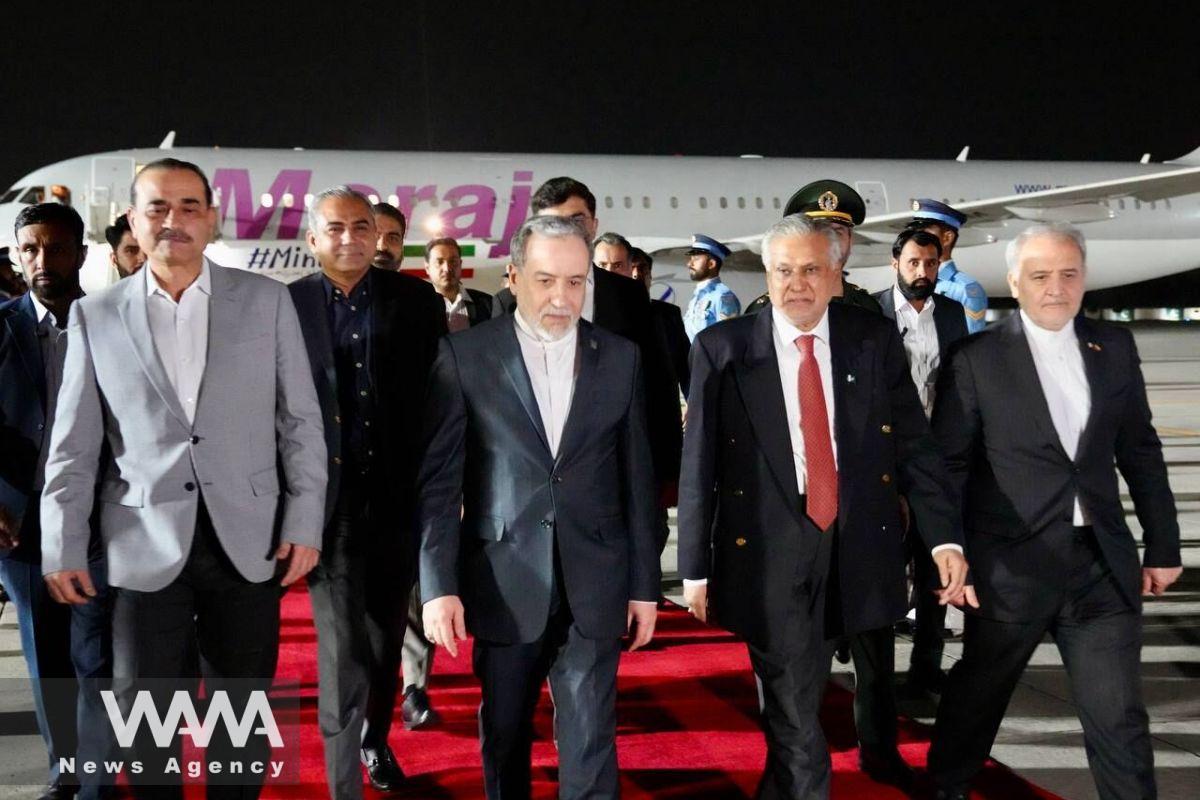
Late Friday evening, Iran’s foreign minister departed Tehran for Pakistan and arrived in Islamabad hours later at the head of a political delegation. Upon arrival, he was welcomed by senior Pakistani officials.


The purpose of the trip was described as strengthening bilateral coordination and consulting on regional developments. During the visit, meetings were held with top Pakistani officials, including the prime minister, while Islamabad’s role in mediation efforts and attempts to reduce tensions was acknowledged and appreciated.

Araghchi to Revisit Islamabad Following Oman Trip

Araghchi’s Trip to Pakistan on Apr 24, 2026. Social media/ WANA News Agency


From Tehran’s perspective, the outcome of this short but intensive trip was considered positive. Iran’s foreign minister described Pakistan as a country whose brotherly efforts to restore peace to the region carry significant importance.


He also outlined a practical and workable framework for permanently ending the war against Iran, while raising the question of whether the United States genuinely possesses the will to advance the diplomatic track.


With this stage completed, the foreign minister traveled on to Muscat. The move coincided with new claims by the U.S. president, including an announcement that envoys’ visits to Pakistan had been canceled—even though no official or confirmed trip had ever been announced in the first place. These assertions, made as the Iranian delegation arrived in Oman, were accompanied by a new wave of statements that once again dominated media coverage.


In Muscat, a meeting with the Sultan of Oman topped the agenda. During the talks, appreciation was expressed for Oman’s constructive role in supporting diplomatic efforts, while the country’s responsible approach to regional developments was also praised.


At the same time, the presence of U.S. forces in the region was criticized as a source of insecurity and widening divisions. According to prior planning, Moscow was the next destination of the trip, although additional consultations in
Islamabad were expected beforehand in order to receive Washington’s views on Iran’s declared positions.


Meanwhile, what drew even more attention than the diplomatic activity itself was the broad wave of media speculation surrounding the negotiations. From the earliest days after the ceasefire announcement, reports circulated in media outlets and on social networks about visits by American representatives to Pakistan. Some reports even included supposed flight details and the presence of specific figures.


Yet by the time talks officially began, no U.S. delegation had actually arrived in Islamabad. The pattern continued in the following days and was repeatedly amplified by various media outlets and even by the U.S. president himself.


In the latest example, although no concrete plan existed for meetings between Iranian and American officials, details of possible travel by certain U.S. figures were repeatedly reported.

Later, the U.S. president claimed that a trip had been canceled—a trip for which no plan had ever been officially announced. He also asserted that Iran’s initial proposal in negotiations had been unacceptable, but that Tehran revised it after the cancellation. Such claims fit the same recurring pattern of narrative management.


This style of storytelling had already been visible during earlier military developments—from claims of destroying Iran’s defense systems to assertions of controlling the Strait of Hormuz, even as field reports and international accounts presented a different picture.


The repetition of contradictory claims in recent weeks has raised a serious question: are these statements part of a deliberate strategy, or evidence of confusion in decision-making and communication?


In this environment, public messaging about negotiations has also been distorted. Focus has shifted away from core issues—such as the content of agreements and proposals from both sides—to side stories like travel schedules or the composition of delegations.


This diversion does not enhance transparency; instead, it deepens complexity and uncertainty in the diplomatic arena, making it harder even for many countries to predict U.S. behavior and decisions.


By contrast, Iran’s position has remained steady and based on its declared principles. From Tehran’s perspective, the ceasefire that began on April 8 must lead to a definitive and lasting end to the war, rather than becoming an exhausting cycle of war, ceasefire, and negotiations.


In Iran’s view, the experience of recent weeks has shown that the country has not been weakened by pressure, but has instead projected a different image of its capabilities and standing.


Accordingly, Iran has repeatedly stressed that its purpose in negotiations is to achieve a logical and durable agreement—not to accept conditions based on coercion or imposed pressure. At the same time, escalating threats and the beginning of a naval siege, coinciding with Iran’s firm positions, have created serious obstacles for the talks.


Under these circumstances, Washington proposed an unlimited ceasefire while maintaining pressure—a formula that Tehran does not regard as a viable basis for constructive dialogue.


Iran has made continued negotiations conditional on the cessation of threats and the lifting of the siege, and this position has been conveyed to mediators through diplomatic channels. It has been emphasized that as long as hostile measures continue, rebuilding trust and making progress through dialogue will remain extremely limited.


Ultimately, one clear reality emerges from these developments: diplomacy cannot be advanced through media propaganda. The wider the gap between reality and narrative becomes, the smaller the chance of reaching an agreement.


Negotiation requires consistency in decision-making, honesty in words, and transparency in action—elements without which even the busiest diplomatic shuttle efforts will fail to produce a lasting result.
 

No Nuclear Mandate or U.S. Contact During Araghchi’s Regional Tour


The spokesperson for the Iranian Parliament’s National Security and Foreign Policy Committee stated: “In today’s committee meeting, the Deputy Foreign Minister announced that during the Foreign Minister’s recent foreign trips to Pakistan, Oman, and Russia, there was no mandate for nuclear negotiations, and the subject of the trips and the axis of the Foreign Minister’s talks were bilateral relations and regional developments.”


Report on Diplomacy and the “40-Day Imposed War”​

Ebrahim Rezaei, explaining today’s session with the Deputy Foreign Minister, said: “In this meeting, the Deputy Foreign Minister provided a report on the activities and actions of the diplomatic apparatus in the last two months, from the beginning of the 40-day imposed war until today.”


He continued: “He provided a report on the Foreign Minister’s recent trip—Araghchi’s second trip to Islamabad and Pakistan—and said that in Araghchi’s meetings in Pakistan, there were no meetings or negotiations with the Americans, and no messages were exchanged with the Americans; fundamentally, the Americans were not present in that location.”


“The Field” and Diplomacy in Peak Coordination​

The committee spokesperson continued: “The Deputy Foreign Minister further emphasized that Iran was not the initiator of the war but is ready for an all-out defense of the country; the street, the field, and diplomacy are at the peak of coordination and readiness. In this regard, it was noted that one should not pay attention to the enemy’s psychological warfare.”


He stated: “The Deputy Foreign Minister also said that the Ministry of Foreign Affairs is the executor of high-level policies and decisions and considers itself a soldier of the Leadership and a servant of the Iranian people.”


Parliamentary Support for the Armed Forces​

Rezaei stated: “Subsequently, the members of the National Security and Foreign Policy Committee expressed their views. All members emphasized the necessity and importance of full compliance with the commands and instructions of the Supreme Leader of the Islamic Revolution in domestic and foreign matters, and full support for the Armed Forces of the Islamic Republic of Iran and the provision of all their requirements.”


Armed Forces at the Peak of Readiness​

The spokesperson added: “In this meeting, it was also emphasized that the Armed Forces are at the peak of readiness and will respond to any aggression at the highest level.”


He explained: “The Chairman of the Committee raised several key points, primarily emphasizing that officials must remain aligned with the Leadership and that the Supreme Leader’s directives serve as the final word for everyone.”


“He also stressed the importance of upholding the Parliament’s status and the dignity of the Speaker, warning that any attempt to weaken the Parliament is a mistake and must be prevented,” Rezaei said.


Strategic Plans: NPT Withdrawal and Strait of Hormuz​

Rezaei clarified: “The Chairman of the National Security Committee criticized the fear-mongering of some, especially regarding the battle with the enemy, and said that the strategic action plan for the management of the Strait of Hormuz, the plan to counter enemy infiltration, the reciprocal action plan, and also the plan to withdraw from the NPT (Non-Proliferation Treaty) have been reviewed and prepared in the National Security and Foreign Policy Committee. He emphasized support for the Armed Forces.”
 
Back
Top