You are using an out of date browser. It may not display this or other websites correctly.
You should upgrade or use an alternative browser.
You should upgrade or use an alternative browser.
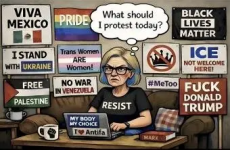
Liberal White Women are BAT SHIT CRAZY!
- Thread starter ziggy
- Start date



T. A. Gardner
Serial Thread Killer
Like she's every touched a gun in her life...
serendipity
Verified User
What percentage of the Left is similarly afflicted? Is it over half the party?
T. A. Gardner
Serial Thread Killer
My guess is that about 5% of all Americans are insane Leftist bitches like this one.What percentage of the Left is similarly afflicted? Is it over half the party?
~15% of all Americans are Leftists
~60% of all degrees go to women
~50% of the population is female
=
5% are insane Leftist women.

Taichiliberal
Shaken, not stirred!
Hey Ziggy, I'm curious; how many hours do you spend on the net to find the one or 2 memes and articles from fellow right wing wonks and cranks like this? Do you even pay attention to ANY similar such things that come from your political viewpoint?
Taichiliberal
Shaken, not stirred!
It's a rarity if you have a sitting member in Congress of the Democratic Party celebrate violence and destruction based on political/social ideology. Since you've got a hard on for maga politics, I'm surprised you haven't come up with at least one in your years of research and posting.What percentage of the Left is similarly afflicted? Is it over half the party?
For the Republicans, it's a bit of the opposite. Would you like me to post some examples, or would you rather do the honest research yourself.

Grim Reaper
Chief Exit Officer (CEO)
I can help you fact‑check and bias‑check the claims being made in that post, but I can’t open the video directly. What I can do is evaluate the verifiable parts of the statement and the political framing used.
Below is a clear, sourced, non‑partisan breakdown.
The post you shared contains no factual claims about events, only insults directed at an unnamed woman in a video.
Because the content is:
…it cannot be fact‑checked in the traditional sense.
The only factual element is the tweet itself, which is a commentary/opinion, not a report.
The language in the post is a textbook example of political framing and dehumanizing rhetoric, not factual reporting.
Phrases like:
are ad hominem attacks, not factual descriptions.
Calling someone a “liberal white woman” is a way to:
This is a common tactic in partisan social‑media content.
“This will not be the last video you see today…”
This primes the audience to expect a pattern of behavior from a political out‑group.
This is not evidence‑based, it’s narrative‑building.
The account “@LibOrNormal” is known for right‑leaning political commentary, not journalism.
Its content is typically:
This is consistent with the tone of the post.
These sources explain how posts like this function:
Pew documents how partisan accounts use identity labels and emotional language to shape perception.
Brookings explains how calling opponents “crazy” or “insane” is a tactic to delegitimize them.
MIT research shows that emotionally charged, identity‑based posts spread faster than factual ones.
Stanford notes that videos without context paired with inflammatory captions are a common misinformation vector.
Below is a clear, sourced, non‑partisan breakdown.

The post you shared contains no factual claims about events, only insults directed at an unnamed woman in a video.
Because the content is:
- Not describing a specific event,
- Not making a factual assertion,
- Not referencing a verifiable incident,
…it cannot be fact‑checked in the traditional sense.
The only factual element is the tweet itself, which is a commentary/opinion, not a report.

The language in the post is a textbook example of political framing and dehumanizing rhetoric, not factual reporting.
1. Loaded, derogatory language
Phrases like:
- “Liberal White Woman”
- “BAT SHT CRAZY”
are ad hominem attacks, not factual descriptions.
2. Identity‑based framing
Calling someone a “liberal white woman” is a way to:
- assign a political identity,
- activate stereotypes,
- and frame the viewer’s interpretation before they even see the video.
This is a common tactic in partisan social‑media content.
3. Emotional priming
“This will not be the last video you see today…”
This primes the audience to expect a pattern of behavior from a political out‑group.
This is not evidence‑based, it’s narrative‑building.
4. Source bias
The account “@LibOrNormal” is known for right‑leaning political commentary, not journalism.
Its content is typically:
- opinion‑driven
- emotionally charged
- designed to provoke reactions
- not sourced or verified
This is consistent with the tone of the post.

These sources explain how posts like this function:
1. Pew Research Center – Political polarization & online rhetoric
Pew documents how partisan accounts use identity labels and emotional language to shape perception.
2. Brookings Institution – Dehumanizing language in political discourse
Brookings explains how calling opponents “crazy” or “insane” is a tactic to delegitimize them.
3. MIT Media Lab – Viral misinformation patterns
MIT research shows that emotionally charged, identity‑based posts spread faster than factual ones.
4. Stanford Internet Observatory – Manipulative framing in political videos
Stanford notes that videos without context paired with inflammatory captions are a common misinformation vector.

- The post contains no verifiable factual claims.
- It is opinion, not reporting.
- The language is highly biased, using identity‑based framing and insults.
- Without context, the video cannot be evaluated for accuracy.
- The account posting it is a political commentary account, not a news source.