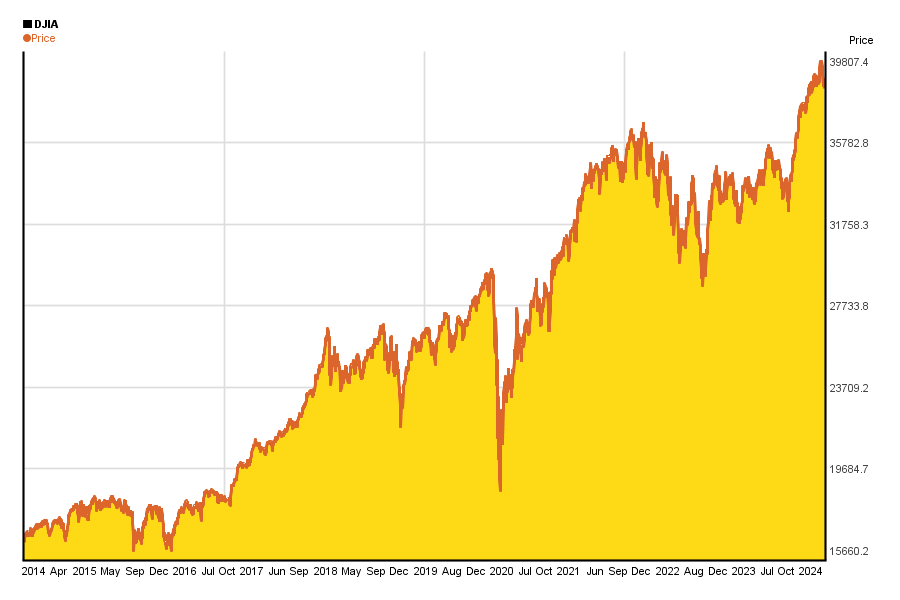
They did well, with next to zero inflation how could they do bad?
Are you kidding? They got crushed by low interest rates. This is a 2010 article. I bolded the relevant parts.
Federal Reserve policy helps companies, hurts retirees
The Federal Reserve’s latest move to help the U.S. economic recovery could punish pensioners and other long-term savers at the expense of helping large borrowers such as major corporations.
There’s also scant evidence so far to suggest that the move will help bring down unemployment, since U.S. companies are already benefiting from record-low borrowing rates while the jobless rate remains stuck near 10 percent.
The U.S. central bank on Wednesday committed to buy $600 billion more in government bonds to push borrowing costs down and stimulate growth. For details, see [ID:nN03287174]
As bond yields fall and interest rates remain low for the foreseeable future, investors are likely to struggle to earn income from savings without taking exposure to riskier assets.
“
They are crucifying the class of investors who invest in Treasuries, particularly the class of elderly or fixed income investors because it gives them no bang for the buck,” said Greg Habeeb, portfolio manager at Calvert Asset Management in Bethesda, Maryland.
“It’s a one-sided policy, its always a policy that favors the borrowers,” he said.
Yields on benchmark 10-year bonds have now fallen to 2.52 percent, after generating a return over 4.0 percent from 2005 to 2008 and over 6.0 percent in 2000.
Federal Reserve policy drives interest rates throughout the financial sector, and currently is aimed at preventing a fall in inflation from becoming a deflationary spiral of falling prices, wages, and slowing economic activity by flooding the financial sector with cheap money.
But low interest rates and bond yields resulting from Fed policy is bad news for investors living off interest income. They have already seen yields dwindle and now face the potential double blow of low returns and rising prices of necessities such as food and oil.
“Its a huge problem, particularly on the short-end, but that’s what the Fed wants people to do, it wants them to get out of cash,” said Mirko Mikelic, senior portfolio at Fifth Third Asset Management in Grand Rapids, Michigan.
Average annual total returns of money market funds, the most conservative investment, have plunged to only 0.04 percent from over 4.0 percent in 2006, according to Lipper.
Average returns on six-month certificates of deposit in the secondary market have fallen to 0.35 percent, compared with 1.74 percent at the beginning of 2009 and over 4.5 percent at the beginning of 2006, around the time Ben Bernanke was sworn in as Fed chairman, according to Fed data.
“People on fixed incomes could be in trouble particularly when the economy turns around. If we get in a period like the 1970s where inflation will surge, that will hurt people’s pocket books,” Mikelic said.
It’s also not clear when the flood of extra Fed money will end.
Goldman Sachs analysts said on Wednesday that they think high unemployment and the risk of deflation will cause the Fed its program even beyond the June 2011 target date set this week, with purchases likely to extend through at least 2012 and probably totaling around $2 trillion.
BIG COMPANIES GAIN
U.S. corporations, by contrast, have been key beneficiaries of the Fed monetary stimulus, with companies including Wal-Mart Inc (WMT.N), Ebay Inc (EBAY.O), Microsoft (MSFT.O) and PepsiCo Inc PEP.N selling debt at or near historically low coupons.
Coca-Cola Co (KO.N) was among a slew of issuers that were quick to take advantage of the post-Fed rally on Thursday. The company sold its largest ever debt offering of $4.5 billion, including a three-year tranche at one of the lowest interest rates ever in the high grade corporate bond market.[ID:nN04246734]
Companies which has issued high yield debt have also benefited and lower rates are likely to help them refinance around $1.1 trillion in below-investment-grade debt that will mature in the coming five years, according to Standard & Poor’s data.
Improvedments in corporate balance sheets however have so far failed to spur much investment and extra hiring.
Data released on Friday show that U.S. employment jumped by much more than expected last month, adding 151,000 jobs, though more improvement will need to be seen to show the economy is truly gaining strength.
Moody’s Investors Service said last month U.S. companies are hoarding almost $1 trillion in cash but are unlikely to spend on expanding their business or hiring new employees due to continuing uncertainty about the strength of the recovery.
“Low rates favor borrowers like companies that can issue cheap debt in the corporate bond market. People including homeowners can also benefit from the low rates,” said Eric Stein, portfolio manager at Eaton Vance in Boston.
However, “traditional fixed income investors like retirees are earning much less from their savings,” he added. And “the cost of buying food and oil is also rising as quantitative easing helps boost commodity prices.”
https://www.reuters.com/article/fed...ompanies-hurts-retirees-idINN0525953020101105