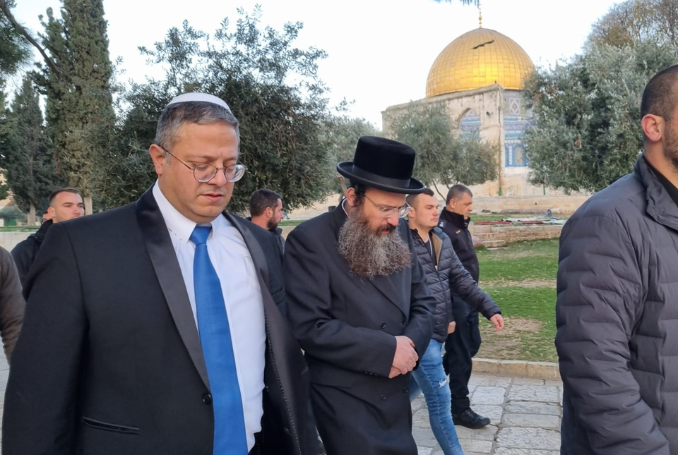
Quest for Religious War: How Israel is Unifying Arabs and Muslims around Palestine
By ordering a brutal attack against Palestinian worshipers inside Al-Aqsa Mosque on the 14th day of the holy Muslim month of Ramadan, Israeli Prime Minister Benjamin Netanyahu knew very well that the Palestinians would retaliate.
Netanyahu’s motive should be clear. He wanted to generate a distraction from the mass protests that have rocked Israel, starting in January, and divided Israeli society around ideological and political lines, in ways never witnessed before.
Unwilling to relinquish his hard-earned achievement of finally winning a decisive election and forming an entirely rightwing coalition, while fearing that major concessions to his political rivals could eventually dissolve his government, Netanyahu set his sights on the Al-Aqsa Mosque.
History has proven that Israeli attacks on Palestinian holy places are a guarantor of a Palestinian response. For Netanyahu, and also his National Security Minister, Itamar Ben Gvir, the price of Palestinian retaliation was worth the political gains of unifying Israelis of all political backgrounds behind them. For Ben-Gvir, in particular, the attack against Al-Aqsa would reassure his far-right religious constituency of his commitment to restoring full Israeli Jewish sovereignty over Palestinian Muslim and Christian holy places in the occupied city.
What Netanyahu and his allies may have not anticipated, however, is the intensity of the Palestinian response as hundreds of rockets were fired, not only from besieged Gaza but, even more strategically important, from South Lebanon, towards the northern and southern parts of the country.
https://www.palestinechronicle.com/...-unifying-arabs-and-muslims-around-palestine/