
Bigdog
Harris - make America a 3rd world shithole
We're not long-term thinkers.
Speak for yourself.
Long term, we are transitioning from the current interglacial period into another glacial period.

We're not long-term thinkers.
Which, personally, I think is very nice of the planet.
And no - I'm not saying one weather event means anything. But, it is showing us what a likely future outcome will be. Global temps pushing and exceeding 100, the polar caps melting at accelerated rates.
Honestly, even the Green New Deal doesn't go far enough. We need a revolution in terms of energy use and conservation. It won't happen - but it's what we need. Conservatives always say that environmentalists are alarmists and have been doing the "boy cries wolf" routine for decades - but what they don't seem to realize is that most predictions about the climate and our planet have come true. We've just gotten used to the changes.

Yes it is.How significant is its role, percentage wise, in fire extinguishment compared to oxygen displacement?
It's not significant.
You can't clear your paradox by denying it, dude. You MUST choose one and only one of the conflicting arguments and never use the other again. That is the ONLY way to clear a paradox.Nope.
Refraction is not reflection. Reemission is a buzzword. It doesn't exist. When a photon is absorbed, it is DESTROYED.Agreed.
Agreed. Absorption and reemission (and refraction) would have been a more exacting word choice.
You cannot trap heat. You cannot heat a warmer surface using a colder gas either. Heat has no temperature. CO2 is not a thermal insulator.Agreed.
No one is saying that you can. It only slows the escape of heat, like an insulator.
Of course you disagree. You have already demonstrated you are discarding the 2nd law of thermodynamics. You can't accept this law and ignore it at the same time, dude.Meh.
Disagree.
That's all he can speak for, though he often tries to speak for everyone.Speak for yourself.
This is your belief, is it?Long term, we are transitioning from the current interglacial period into another glacial period.
False premise. Straw man.
The planet's gonna be fine in the long run.
And it's actually a few hundred years since the start of the industrial revolution. If you look at anything measurable in that amount of time, it's actually impossible to conclude that how we produce and consume energy, and our general activity, is in any way sustainable. We're talking about just a couple hundred years. Imagine another 200, trending the same way.
We're not long-term thinkers.
Yes it is. Or are you claiming that the Industrial Revolution wasn't the first one?
I know this is hard for you, but do some honest research as to where a lot of used PC's and their junk end up. You might be surprised....because the "electronics age" doesn't magically appear.
To quote the late, great George Carlin, " the planet will adapt and be fine .... we'll be gone!"
Stop being willfully ignorant, will ya please? I tire of doing homework for folks like you. Here's a primer ... Hope you have the brain power to understand the significance and why it shows the flaw in your claim.
https://www.bloomberg.com/news/articles/2019-05-29/the-rich-world-s-electronic-waste-dumped-in-ghana
Technologically, there are four periods in human history:
Ancient. Inventions were discovered and rediscovered. Due to lack of a means to document things widely and securely, this period stagnated.
Rennaissance / Scientific Revolution: The invention of the scientific method and printing press made it possible to make advances off discoveries and disseminate them widely and permanently.
Industrial Revolution: Worked off the knowledge of the Rennaissance and made industrialization possible.
Electronics Revolution: Harnessing and using electricity and electronics made it possible to advance the industrial revolution's discoveries beyond human capacity alone.
Prove me fucking wrong asshole. I know more about history than you or your neighbor's dog does--I assume you are far too much an asshole to own one of your own...
Since you insist on starting this unrelated conversation, fine. Let's discuss it.A lot of moot points and chest thumping, yet you're still too dumb to catch on. So I'll pablum feed you.
Illiteracy: Use of excessive commas. Redundancy in attempted list.Computers are made up of processed, metals, composites.
Depends on who you ask. If you ask some people here, fossils.Where do you think the metals come from?
The process is called 'smelting'. I suggest you look it up. After that, depending on the circuit, a variety of building techniques are used. Wire wrap and 'dead bug' construction is not used much anymore. Developing a circuit often uses one of the new plugboards (sometimes called a 'bread' board out of habit), though most is done strictly with CAD systems and circuit emulators now. Finished chips are easily tested and verified for correct function using a simple JTAG circuit now. The 'bed of nails' testing is not used much anymore. Most circuits today are either integrated chips (made by doping pure silicon with small amounts of arsenic and gallium, using patterns drawn by a laser). Components are interconnected with an aluminum layer (very small amounts of aluminum are used), and attached to the outside world using gold wire and often gold plated connectors (sometimes tin plated connectors). The base metal for plated connectors is usually copper. Circuit boards themselves are a fiberglass layup to the desired thicknesses, and copper traces either laid directly, or etched from a copper sheet using a mordant. Silk screening and protective coatings are also applied, consisting of various compounds and an epoxy. Tin in the form of a paste is often applied to land pads to make it easier to solder circuits to, also using a silkscreen process.How do you think the metals are turned into wires and circuits and such
Glass is just melted silicon (with small amounts of other chemicals added to either color or toughen it), and often lexan or similar is applied as a coating on some screens like cell phones.(same with the creation of the screens and tempered glass)?
Some is recycled. Some is chucked into a landfill. Some is repaired.WTF do you think happens to all that when it breaks down or becomes obsolete?
Yes. You are concentrating on a specific landfill in Africa, badly operated.Did you even READ THE ARTICLE I PROVIDED?
He already said that. I guess you weren't listening.To dumb it down further, we are STILL using Industrial Age mechanics and technology to in part produce these Electronic wonders you're so hyped about.
What pollution? Define 'pollution'.Until the world goes complete recycling and using the best filtration systems to date, the pollution and such will just continue at a slower pace, and effect the industrial nations just a little slower.
Are you considering a landfill 'pollution'?????!? No. A landfill is not pollution. Many become parks, golf courses, or wildlife refuges.READ THE ARTICLE, YOU DIMWIT. GET EDUCATED AND STOP BRAYING LIKE AN ASS. If you still don't understand, get a nearby adult to explain it to you.
Bullshit.
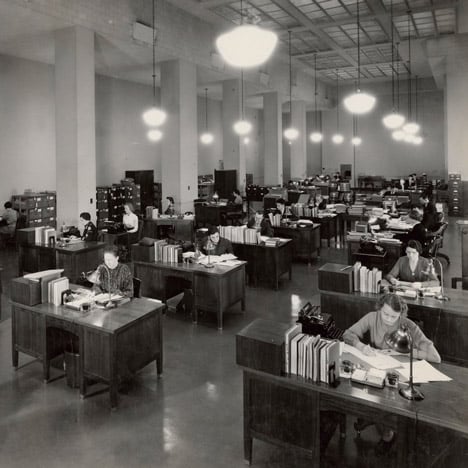
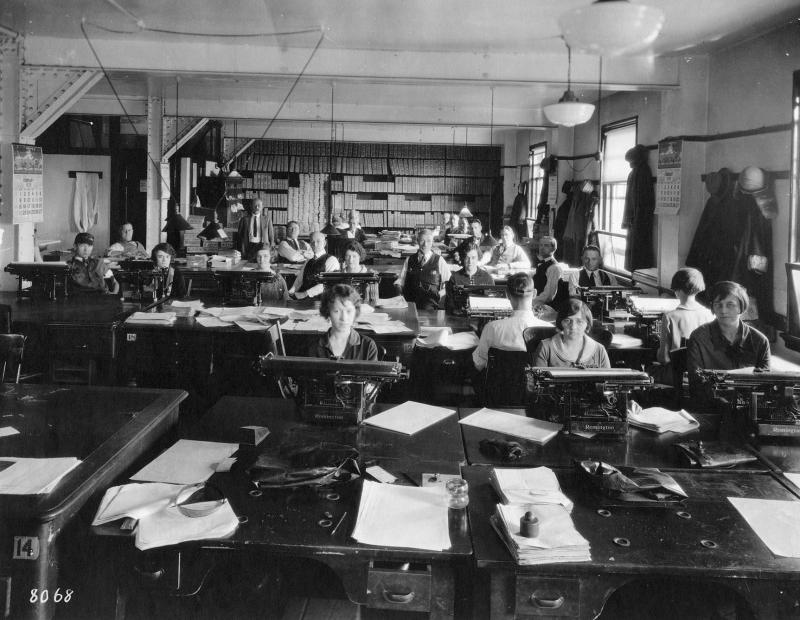
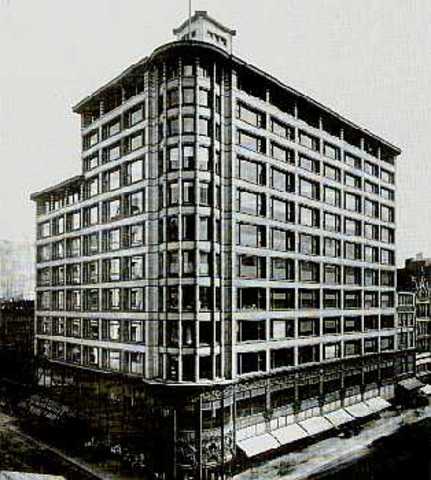
In the Industrial Age a factory relied on workers operating individual machines and on what amounted to a manual paperwork factory in a skyscraper office building to control things.

In the Electronics Age, that has been replaced by industrial robots and software that eliminates the need for masses of workers:


So, unless there is some massive, planet-wide, disaster that destroys the electronics and AI running things we aren't returning to the Industrial Age.
They ARE liars by declaring their religion as 'science'.

I would add a fifth:
Information Revolution: Using the benefits of the Electronics Revolution, information itself is fundamentally changed in how it's gathered, distributed, and indexed.
It's like the printing press part 2. Just as being illiterate since then kept you down, today being computer illiterate is becoming the same thing.


Bullshit.
In the Industrial Age a factory relied on workers operating individual machines and on what amounted to a manual paperwork factory in a skyscraper office building to control things.
In the Electronics Age, that has been replaced by industrial robots and software that eliminates the need for masses of workers:
So, unless there is some massive, planet-wide, disaster that destroys the electronics and AI running things we aren't returning to the Industrial Age.
https://www.yahoo.com/news/pacific-northwest-braces-hazardous-heat-191033588.html
wut?
I am going to need some evidence.
Yes it is.
You can't clear your paradox by denying it, dude. You MUST choose one and only one of the conflicting arguments and never use the other again. That is the ONLY way to clear a paradox.
Refraction is not reflection. Reemission is a buzzword. It doesn't exist. When a photon is absorbed, it is DESTROYED.
You cannot trap heat. You cannot heat a warmer surface using a colder gas either. Heat has no temperature. CO2 is not a thermal insulator.
Of course you disagree. You have already demonstrated you are discarding the 2nd law of thermodynamics. You can't accept this law and ignore it at the same time, dude.

Random phrase. Trolling.
Yes it is.
You can't clear your paradox by denying it, dude. You MUST choose one and only one of the conflicting arguments and never use the other again. That is the ONLY way to clear a paradox.
Refraction is not reflection. Reemission is a buzzword. It doesn't exist. When a photon is absorbed, it is DESTROYED.
You cannot trap heat. You cannot heat a warmer surface using a colder gas either. Heat has no temperature. CO2 is not a thermal insulator.
Of course you disagree. You have already demonstrated you are discarding the 2nd law of thermodynamics. You can't accept this law and ignore it at the same time, dude.