Mahmoud Ahmadinejad
الله أكبر)
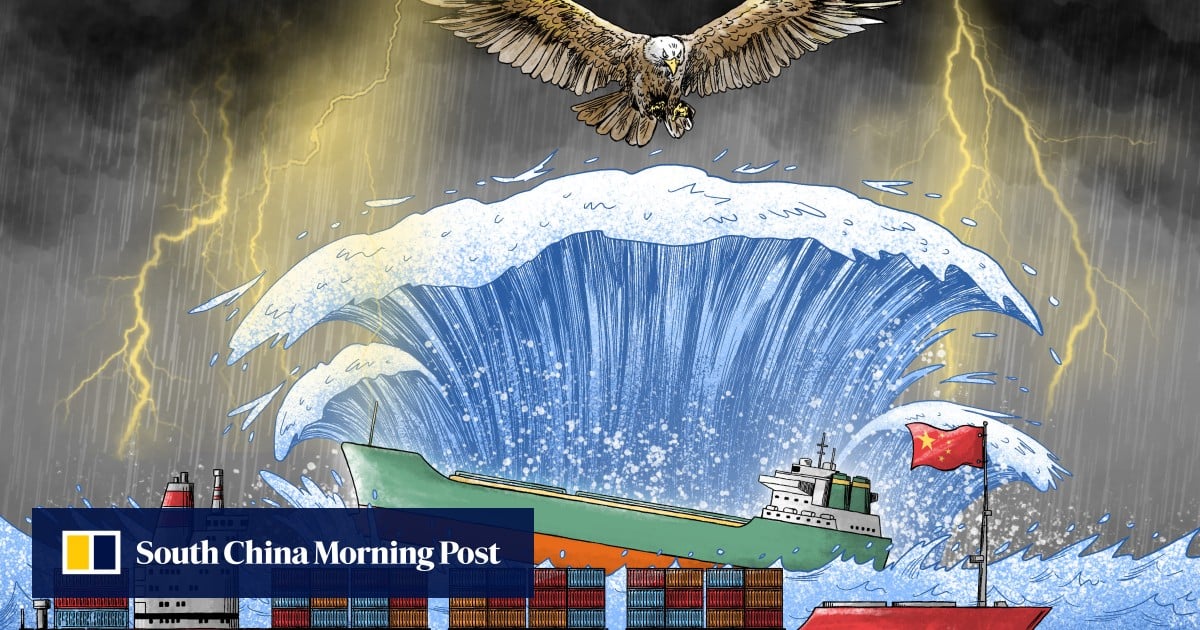
At the least, it is thought likely that America will face strong diplomatic condemnation from China, economic retaliation, heightened risk of a naval standoff or incident at sea possibly an immediate full-scale war,
This scenario is not purely hypothetical; it aligns closely with President Trump's April 12, 2026, order for the US Navy to blockade the waters of the Strait of Hormuz and interdict any vessels that paid Iran a fee for access to the northern shipping channel through the Strait of Hormuz.
China has signaled it may deploy People's Liberation Army Navy (PLAN) escorts as "safeguards" for its merchant fleet.
Under international law (primarily UNCLOS), flag states have primary jurisdiction over their vessels on the high seas. Unilateral interdiction of neutral Chinese-flagged ships without UN Security Council authorization, consent, or clear self-defense grounds is widely viewed as a violation of flag-state sovereignty—potentially an "act of war" in legal terms.
American interdictions would spike prices, fuel inflation, and disrupt Asian economies (China, India, and Japan remain heavily reliant on Gulf oil ).
The real danger is miscalculation during an interdiction operation. This fits Trump's "maximum pressure" style but carries classic great-power escalation risks.
This scenario is not purely hypothetical; it aligns closely with President Trump's April 12, 2026, order for the US Navy to blockade the waters of the Strait of Hormuz and interdict any vessels that paid Iran a fee for access to the northern shipping channel through the Strait of Hormuz.
China has signaled it may deploy People's Liberation Army Navy (PLAN) escorts as "safeguards" for its merchant fleet.
Under international law (primarily UNCLOS), flag states have primary jurisdiction over their vessels on the high seas. Unilateral interdiction of neutral Chinese-flagged ships without UN Security Council authorization, consent, or clear self-defense grounds is widely viewed as a violation of flag-state sovereignty—potentially an "act of war" in legal terms.
American interdictions would spike prices, fuel inflation, and disrupt Asian economies (China, India, and Japan remain heavily reliant on Gulf oil ).
The real danger is miscalculation during an interdiction operation. This fits Trump's "maximum pressure" style but carries classic great-power escalation risks.