suck your own balls dickbrain
that article I linked to even uses your own idiot charts to prove how they are wrong bag o dicks
Kill yourself.



suck your own balls dickbrain
that article I linked to even uses your own idiot charts to prove how they are wrong bag o dicks

Taxes on the Wealthy
Over a longer timeline, we can see if there exists a correlation between taxes on the wealthy and GDP growth. *Unfortunately, we find no correlation between the two.* Cutting taxes on the rich appears to have resulted in no increase in the rate of GDP growth. *According to the logic of tax cut advocates, the post World War II boom should never have happened given that tax rates on the the top earners were exponentially higher than they are now (something to keep in mind when Republicans claim that raising taxes on the rich back to what they were during those disastrous Clinton years (as Obama has been trying to do) will stifle economic growth).
no dickspittle
bathe in your own spooge
hahahahahahahahahahahahahah
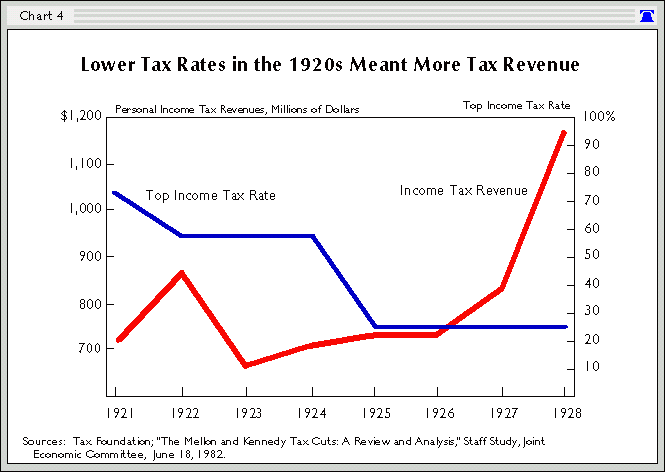
even your OPINION idiot didnt tell us where his numbers came from to make the chart idiot
have you ever read the history of recessions in this country
it destroys right wing memes fool
https://en.wikipedia.org/wiki/List_of_recessions_in_the_United_States
http://www.factandmyth.com/taxes/tax...crease-revenue
Correlating Tax Increases and Decreases with Revenue
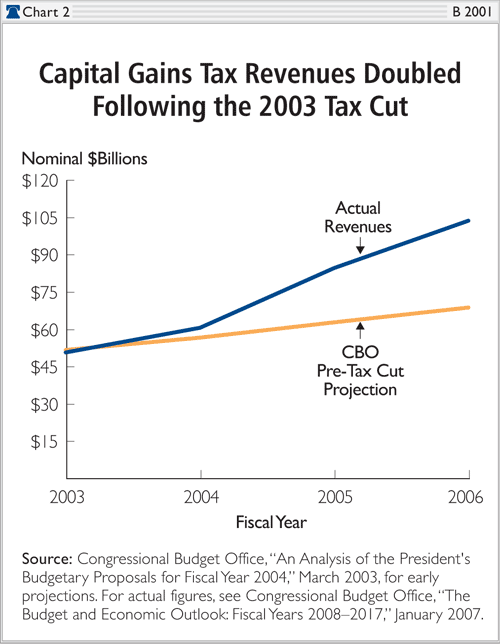
By conveniently pointing to places where tax cuts were enacted at or around the time of a recovery or boom, tax cut advocates argue that tax cuts increase revenue. * The problem with this is that the revenue increases following the Bush and Reagan tax cuts are dwarfed by the revenue increase following Bill Clinton’s tax increase on the wealthiest Americans. *In fact, as a percentage of GDP, post-Reagan & Bush tax cut revenue falls below the 1965-2005 average. In other words, revenue increased because the economy was recovering/growing, and the*tax cuts have little (probably nothing) to do with growth in GDP. *if anything, these tax cuts actually lowered revenue increased from what they would have been otherwise. *So the real question to ask is this: how much revenue did these tax cuts cost us? *See Historical Tax Rates.
Investment has been shown to increase both after tax cuts and tax increases.* Investment increased both after Bill Clinton’s 1993 tax increases and after George W Bush’s 2003 tax cuts.* The reason is simple: investors were confident because the economy was growing and therefore felt that it was a good time to invest. *In other words, it’s demand and other market signals that investors care about most, not tax rates. *Tax rates can no doubt play a role (especially if they are disproportionately high), but the tax rate fluctuations between the Clinton vs Reagan and Bush tax rates are rather inconsequential to investor behavior.
your corporate dick sucking lies dont work anymore
Really?
Bush Ii tax cuts for the rich 2002 National Debt; 4 TRILLION
6 years later; National Debt 10 TRILLION
Maybe you should shut up now.
The numbers are from the US government you moron. Those are federal tax receipts. But you are too stupid to realize that aren't you Desh?
http://www.factandmyth.com/taxes/tax-decreases-do-not-increase-revenue
Correlating Tax Increases and Decreases with Revenue
By conveniently pointing to places where tax cuts were enacted at or around the time of a recovery or boom, tax cut advocates argue that tax cuts increase revenue. * The problem with this is that the revenue increases following the Bush and Reagan tax cuts are dwarfed by the revenue increase following Bill Clinton’s tax increase on the wealthiest Americans. *In fact, as a percentage of GDP, post-Reagan & Bush tax cut revenue falls below the 1965-2005 average. In other words, revenue increased because the economy was recovering/growing, and the*tax cuts have little (probably nothing) to do with growth in GDP. *if anything, these tax cuts actually lowered revenue increased from what they would have been otherwise. *So the real question to ask is this: how much revenue did these tax cuts cost us? *See Historical Tax Rates.
Investment has been shown to increase both after tax cuts and tax increases.* Investment increased both after Bill Clinton’s 1993 tax increases and after George W Bush’s 2003 tax cuts.* The reason is simple: investors were confident because the economy was growing and therefore felt that it was a good time to invest. *In other words, it’s demand and other market signals that investors care about most, not tax rates. *Tax rates can no doubt play a role (especially if they are disproportionately high), but the tax rate fluctuations between the Clinton vs Reagan and Bush tax rates are rather inconsequential to investor behavior.
then prove it with facts and links dickhole
The estate tax element of the proposal really tips the whole hand.
It's a giveaway for the rich. I don't know how you argue that cutting the estate tax benefits growth.
then prove it with facts and links dickhole

You want to put small family owned farms and businesses either a) out of business, or b) into massive debt with your death tax. The rich are liquid they don't pay the death tax their accountants take care of that, get fucking educated.
Do Tax Cuts Increase Government Revenue?
Mike Patton , Contributor
I provide analysis on the economy, investing and financial planning.
Opinions expressed by Forbes Contributors are their own.
Kill yourself.
