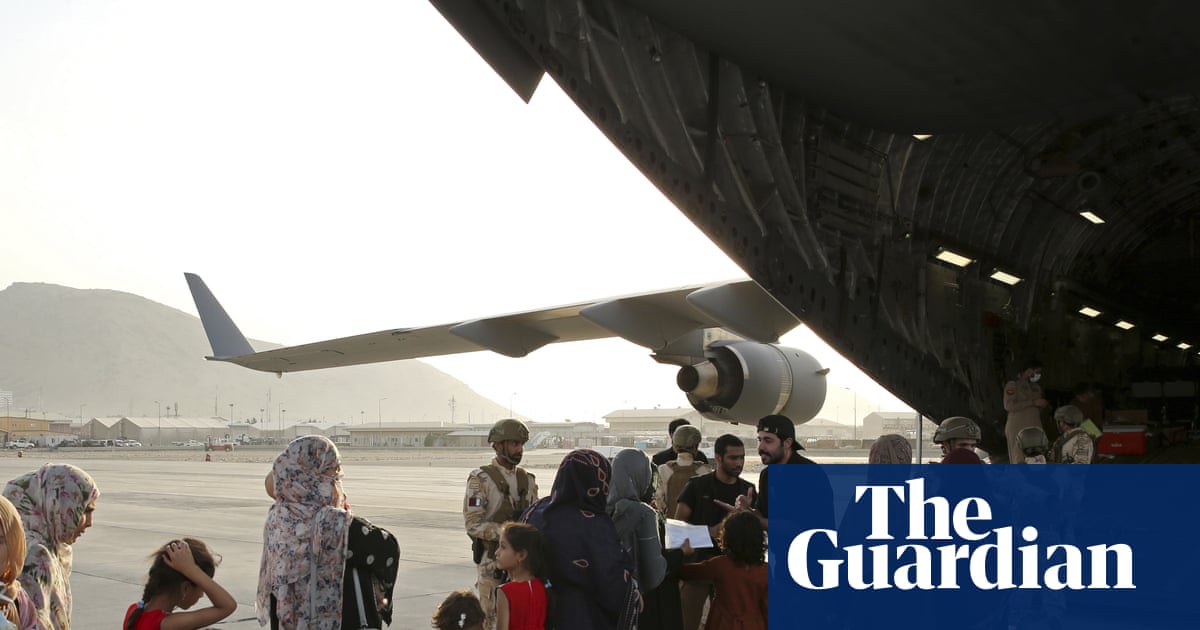
tRump is gonna send our Afghan allies to the Congo

This is pure Steven Miller evil at its peak.

The US veterans relied on many or most of these people, in country, for their survival and to complete their missions. They put their lives on the line knowing they would have no home in Afghanistan after they helped the US troops but they did so anyway.

It will be veterans who call this out as evil.
 
America's unreliability is well-known. None who have supported them in the past have fared well once their usefulness to the imperialists had passed. Once Americans cut and run from their foreign adventures, the fate of their collaborators is an ugly one.

For example, after the U.S. withdrawal from Vietnam in 1975, many Hmong and other groups who had allied with American forces faced immediate and severe reprisals from the victorious communist governments in Laos, Vietnam, and Cambodia. Key outcomes:

  • Flight and refugee crisis: Hundreds of thousands fled by land and sea. Many Hmong escaped to Thailand (in refugee camps such as Ban Vinai and Nong Khai) or sought asylum elsewhere; others were internally displaced or hid in remote areas.
  • Mass reprisals and persecution: Those identified as U.S. allies—Hmong soldiers and militia, their families, and ethnic minorities—were subject to executions, imprisonment, forced labor, “re-education” camps, property confiscation, and loss of civil rights. Estimates of casualties vary and are contested, but researchers document widespread abuses.
  • Long-term displacement and resettlement: From the late 1970s through the 1990s, large numbers resettled overseas. The U.S., Australia, France, and other countries accepted many refugees under resettlement programs; the U.S. admitted tens of thousands of Hmong refugees beginning with emergency evacuations (notably 1975–1976) and later refugee resettlement waves.
  • Family separation and hardship: Evacuation was limited and chaotic; many who served U.S. forces were left behind. Families often remained separated for years; many faced poverty and difficulty integrating even after resettlement.
  • Continued activism and recognition: Hmong veterans and advocacy groups in the U.S. have campaigned for refugee support, recognition of service, access to veterans’ benefits for resettled fighters who later obtained U.S. citizenship, and accounting for those left behind. The U.S. eventually provided some Special Immigrant Visas and humanitarian relief programs decades later.
  • Ongoing challenges in Laos and region: Those remaining in Laos face continued political marginalization; reports of sporadic persecution, discrimination, and limited freedom persist. Some Hmong insurgent groups continued low-level resistance for years, provoking periodic crackdowns.
 
America's unreliability is well-known. None who have supported them in the past have fared well once their usefulness to the imperialists had passed. Once Americans cut and run from their foreign adventures, the fate of their collaborators is an ugly one.

For example, after the U.S. withdrawal from Vietnam in 1975, many Hmong and other groups who had allied with American forces faced immediate and severe reprisals from the victorious communist governments in Laos, Vietnam, and Cambodia. Key outcomes:

  • Flight and refugee crisis: Hundreds of thousands fled by land and sea. Many Hmong escaped to Thailand (in refugee camps such as Ban Vinai and Nong Khai) or sought asylum elsewhere; others were internally displaced or hid in remote areas.
  • Mass reprisals and persecution: Those identified as U.S. allies—Hmong soldiers and militia, their families, and ethnic minorities—were subject to executions, imprisonment, forced labor, “re-education” camps, property confiscation, and loss of civil rights. Estimates of casualties vary and are contested, but researchers document widespread abuses.
  • Long-term displacement and resettlement: From the late 1970s through the 1990s, large numbers resettled overseas. The U.S., Australia, France, and other countries accepted many refugees under resettlement programs; the U.S. admitted tens of thousands of Hmong refugees beginning with emergency evacuations (notably 1975–1976) and later refugee resettlement waves.
  • Family separation and hardship: Evacuation was limited and chaotic; many who served U.S. forces were left behind. Families often remained separated for years; many faced poverty and difficulty integrating even after resettlement.
  • Continued activism and recognition: Hmong veterans and advocacy groups in the U.S. have campaigned for refugee support, recognition of service, access to veterans’ benefits for resettled fighters who later obtained U.S. citizenship, and accounting for those left behind. The U.S. eventually provided some Special Immigrant Visas and humanitarian relief programs decades later.
  • Ongoing challenges in Laos and region: Those remaining in Laos face continued political marginalization; reports of sporadic persecution, discrimination, and limited freedom persist. Some Hmong insurgent groups continued low-level resistance for years, provoking periodic crackdowns.
Where are you copying these texts from?
 
Where are you copying these texts from?


History.

Many Iraqis who worked with U.S. forces—interpreters, guides, drivers, contractors, intelligence aides, and local security partners—faced serious danger after U.S. combat drawdowns and final withdrawals.

  • American collaborators were subjected to assassination, kidnapping, intimidation, torture, and reprisals; hundreds of translators and local hires were killed or wounded.
  • Contract layoffs and base closures left many unemployed and publicly exposed (ID lists, contract records, or required travel permissions sometimes revealed identities), forcing some into hiding or internal displacement.
  • Tens of thousands applied for Special Immigrant Visas (SIVs) or other protection; processing backlogs, caps, and changing policy reduced admissions—many applicants waited years or were denied. Admissions spiked some years but fell sharply in others.
  • Some US collaborators were eventually evacuated or resettled (U.S., Europe, Australia, etc.) under SIV, refugee, or ad hoc programs, but large numbers remained vulnerable in Iraq.
 
History.

Many Iraqis who worked with U.S. forces—interpreters, guides, drivers, contractors, intelligence aides, and local security partners—faced serious danger after U.S. combat drawdowns and final withdrawals.

  • American collaborators were subjected to assassination, kidnapping, intimidation, torture, and reprisals; hundreds of translators and local hires were killed or wounded.
  • Contract layoffs and base closures left many unemployed and publicly exposed (ID lists, contract records, or required travel permissions sometimes revealed identities), forcing some into hiding or internal displacement.
  • Tens of thousands applied for Special Immigrant Visas (SIVs) or other protection; processing backlogs, caps, and changing policy reduced admissions—many applicants waited years or were denied. Admissions spiked some years but fell sharply in others.
  • Some US collaborators were eventually evacuated or resettled (U.S., Europe, Australia, etc.) under SIV, refugee, or ad hoc programs, but large numbers remained vulnerable in Iraq.
So, you are posting from sites without citation. Violation of forum rules.
 
So, you are posting from sites without citation. Violation of forum rules.


ChatGPT requires no citation, American. Its chats are not copyrighted.

Why are you desperate to hide your nation's disgraceful history?

After the U.S. withdrawal from Afghanistan in August 2021, thousands of Afghans who collaborated with American forces faced severe repercussions under Taliban rule. Many of these individuals, including interpreters, humanitarian workers, and others who supported U.S. efforts, were left behind and are now living in constant fear of persecution.
  • Collaborators are often targeted by the Taliban for their association with the U.S. This has led to reports of torture, imprisonment, and even execution.
  • Many have experienced brutal treatment, including physical torture and threats to their families. The Taliban has been known to administer vengeance against those who aided foreign forces.
  • The situation has created a sense of despair among those left behind, as they feel abandoned and without a path to safety.
  • Limited Evacuations: Only a small percentage of Afghans who applied for special visas were evacuated. Reports indicate that around 78,000 Afghan allies were left behind after the withdrawal, with only a fraction successfully relocated.
  • The U.S. government suspended relocation programs, further complicating the situation for those seeking safety. Many of these individuals remain in Afghanistan, facing dire circumstances as the Taliban continues to consolidate power and impose strict rules, particularly affecting those who worked with international organizations. The ongoing humanitarian crisis exacerbates their plight, leaving them vulnerable and without support.
 
ChatGPT requires no citation, American. Its chats are not copyrighted.

Why are you desperate to hide your nation's disgraceful history?

After the U.S. withdrawal from Afghanistan in August 2021, thousands of Afghans who collaborated with American forces faced severe repercussions under Taliban rule. Many of these individuals, including interpreters, humanitarian workers, and others who supported U.S. efforts, were left behind and are now living in constant fear of persecution.
  • Collaborators are often targeted by the Taliban for their association with the U.S. This has led to reports of torture, imprisonment, and even execution.
  • Many have experienced brutal treatment, including physical torture and threats to their families. The Taliban has been known to administer vengeance against those who aided foreign forces.
  • The situation has created a sense of despair among those left behind, as they feel abandoned and without a path to safety.
  • Limited Evacuations: Only a small percentage of Afghans who applied for special visas were evacuated. Reports indicate that around 78,000 Afghan allies were left behind after the withdrawal, with only a fraction successfully relocated.
  • The U.S. government suspended relocation programs, further complicating the situation for those seeking safety. Many of these individuals remain in Afghanistan, facing dire circumstances as the Taliban continues to consolidate power and impose strict rules, particularly affecting those who worked with international organizations. The ongoing humanitarian crisis exacerbates their plight, leaving them vulnerable and without supporSo...never goinhg to
So, won't be reading your garbage.
 
Yup, those folks who believed that we could be trusted to treat them right if they helped us are being betrayed.

Ah, give 'em each $1000 in cash and a couple of surplus AK 74's with plenty of ammo. They'll be a better group to deal with than the local Muslim terrorists and revolutionaries are!
 
Back
Top