
Centerleftfl
Verified User
The numbers are going to be staggering. LOST WAGES. LOST REVENUES. STOCK MARKET LOSSES. LOST PRODUCTIVITY. We can only PRAY that loss of life is limited. He fucked it up profoundly with sheer indifference or 'head up ass' at the onset. Now arrogance, PARTISAN MANIPULATION, lies, more lies and still lying! Now he will add BILLIONS to the deficit, probably another trillion this year if I were to venture a guess!
Remember before 9/11 Bush and Cheney told us we had to have those paltry TAX CUTS? That had to be done that spring and summer. Then 9/11. Then a war.
PS $150,000,000 poof GONE from our local economy. They cancelled the 'big one' for the area. Vendors and small businesses will likely (some, very) go out of business.
Coronavirus Is Going To Be Expensive. Too Bad the Government Is Already in Massive Debt.
Having failed to be fiscally responsible when it would have been relatively easier, our elected officials will now likely hike spending even further.
ERIC BOEHM | 3.13.2020 5:40 PM
(Ron Sachs/CNP/Sipa USA/Newscom)
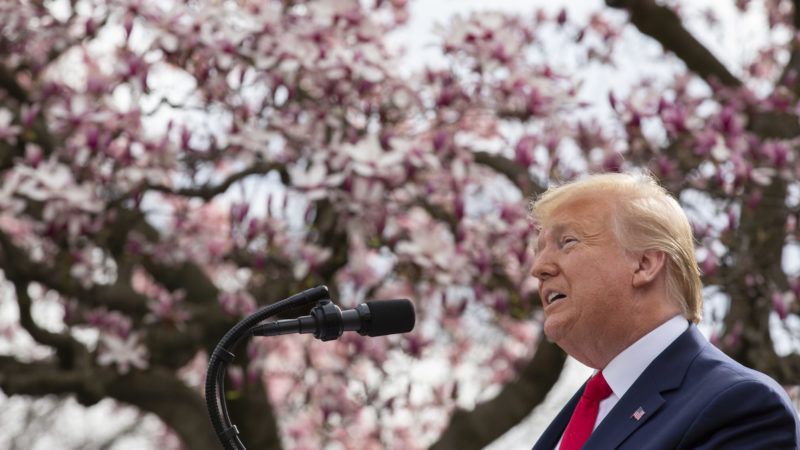
While delivering an address Friday afternoon to declare a national emergency and outline plans for billions of dollars in emergency spending to combat the COVID-19 virus, President Donald Trump paused for a rare moment of reflection.
In addition to responding to the current coronavirus crisis, Trump said, the federal government would have to make changes to be better prepared for a similar event in the future. You hope that doesn't happen, he said, "but it will, I guess. Somewhere out there. [We've] had some bad ones over the years."
It's a shame he's three years too late in realizing that.
During Trump's first three years in office, he's signed off on spending plans that added at least $4.7 trillion to the national debt. The debt totals more than $23 trillion, a record high. When measured against the size of the economy, it is approaching the all-time record set during World War II. Annual budget deficits are expected to exceed $1 trillion for the rest of the decade, at least. The Government Accountability Office has called the nation's fiscal trajectory "unsustainable."
Trump said during the 2016 campaign that he'd be able to pay off the national debt in eight years. That was always a pretty laughable idea, but once in office, Trump was the one laughing off worries about overspending. "I won't be here" when the national debt becomes a crisis, Trump reportedly said during one Oval Office discussion about the issue.
But the "bad one" is here now. And Trump is still in office.
The bad ones aren't always pandemics. Sometimes they are wars or massive terrorist incidents. Sometimes they are the result of government-inflated housing bubbles popping. Sometimes they're just part of the business cycle. But they always come, and you can rarely predict them.
When they do happen, another thing you can count on is a governmental response that involves spending more money—to help people who lose jobs, to prop-up whole industries, or just to stimulate the stock market—at a time when tax revenues are almost certain to fall. Much of that spending will be counterproductive or, worse, wasteful cronyism. But it will happen regardless. This time, the Trump administration and House Democrats are currently negotiatinga massive spending package (perhaps as much as $50 billion) that is likely to include paid sick leave for workers, expanded welfare programs, and a bailout for travel industries.
"The federal government will unleash every authority, resource, and tool at our disposal," Trump said Friday.
https://reason.com/2020/03/13/coronavirus-expensive-trump-congress-debt-deficit-huge/
Trump's favored solution, a payroll tax cut that would extend through November, would reduce federal revenues by an estimated $840 billion.
Remember before 9/11 Bush and Cheney told us we had to have those paltry TAX CUTS? That had to be done that spring and summer. Then 9/11. Then a war.
PS $150,000,000 poof GONE from our local economy. They cancelled the 'big one' for the area. Vendors and small businesses will likely (some, very) go out of business.
Coronavirus Is Going To Be Expensive. Too Bad the Government Is Already in Massive Debt.
Having failed to be fiscally responsible when it would have been relatively easier, our elected officials will now likely hike spending even further.
ERIC BOEHM | 3.13.2020 5:40 PM
(Ron Sachs/CNP/Sipa USA/Newscom)
While delivering an address Friday afternoon to declare a national emergency and outline plans for billions of dollars in emergency spending to combat the COVID-19 virus, President Donald Trump paused for a rare moment of reflection.
In addition to responding to the current coronavirus crisis, Trump said, the federal government would have to make changes to be better prepared for a similar event in the future. You hope that doesn't happen, he said, "but it will, I guess. Somewhere out there. [We've] had some bad ones over the years."
It's a shame he's three years too late in realizing that.
During Trump's first three years in office, he's signed off on spending plans that added at least $4.7 trillion to the national debt. The debt totals more than $23 trillion, a record high. When measured against the size of the economy, it is approaching the all-time record set during World War II. Annual budget deficits are expected to exceed $1 trillion for the rest of the decade, at least. The Government Accountability Office has called the nation's fiscal trajectory "unsustainable."
Trump said during the 2016 campaign that he'd be able to pay off the national debt in eight years. That was always a pretty laughable idea, but once in office, Trump was the one laughing off worries about overspending. "I won't be here" when the national debt becomes a crisis, Trump reportedly said during one Oval Office discussion about the issue.
But the "bad one" is here now. And Trump is still in office.
The bad ones aren't always pandemics. Sometimes they are wars or massive terrorist incidents. Sometimes they are the result of government-inflated housing bubbles popping. Sometimes they're just part of the business cycle. But they always come, and you can rarely predict them.
When they do happen, another thing you can count on is a governmental response that involves spending more money—to help people who lose jobs, to prop-up whole industries, or just to stimulate the stock market—at a time when tax revenues are almost certain to fall. Much of that spending will be counterproductive or, worse, wasteful cronyism. But it will happen regardless. This time, the Trump administration and House Democrats are currently negotiatinga massive spending package (perhaps as much as $50 billion) that is likely to include paid sick leave for workers, expanded welfare programs, and a bailout for travel industries.
"The federal government will unleash every authority, resource, and tool at our disposal," Trump said Friday.
https://reason.com/2020/03/13/coronavirus-expensive-trump-congress-debt-deficit-huge/
Trump's favored solution, a payroll tax cut that would extend through November, would reduce federal revenues by an estimated $840 billion.

