The insanity of government run grocery stores:

Terry is saying "i have no reply I can offer" whenever he whines about AI or Google material being provided.

He pretends he sources his info without any search engines and that is somehow better as his way to dismiss posts he has no answer for.

Whether AI sourced or Google sourced or you go to a specific web site does not matter. All that matters is the content provided and if it is sourced.
I think he just likes to bitch.
 
@T. A. Gardner again using terms incorrectly that he does understand.

Hiring via an 'old boys network ' bias requires a historical center of established power and management who then hire based on factors that relate to where they are from, where they hang around etc.

The opposite of DEI hiring which attempts to make those hiring not just rely, deliberately or sub consciously on the old boys network which had been the primary driver for about 100 years and you see how quickly the Trump regime instantly went back to 'old boys network ' type hiring as soon as they felt unrestrained and how unqualified those hires have been.
Do you really believe that there isn't nepotism and insider favoritism going in in government hiring? Do you really think that unions aren't selectively allowing membership at least in part on the basis of knowing someone in the union?

DEI hires on the basis of race, gender, sexual orientation, etc. It puts competence a far third to checking the correct DEI boxes.
 
Terry is saying "i have no reply I can offer" whenever he whines about AI or Google material being provided.

He pretends he sources his info without any search engines and that is somehow better as his way to dismiss posts he has no answer for.

Whether AI sourced or Google sourced or you go to a specific web site does not matter. All that matters is the content provided and if it is sourced.
My reply is simply that cutting and pasting up some AI answer--particularly one that's poorly done by the AI--isn't generally worth commenting on. Grimmy takes all of say, 30 seconds to do that. An actual reasoned out and sourced rebuttal takes many times longer and won't accomplish anything since Grimmy really doesn't give a shit and is just trolling. If that weren't true, she wouldn't be letting AI do all of her posting for her which is what she's doing now amounts to.
 
Do you really believe that there isn't nepotism and insider favoritism going in in government hiring? Do you really think that unions aren't selectively allowing membership at least in part on the basis of knowing someone in the union?

DEI hires on the basis of race, gender, sexual orientation, etc. It puts competence a far third to checking the correct DEI boxes.

1) “There is nepotism and insider favoritism in government hiring”​


✔ Factually supported (but not universal or systematic in the way implied)​


  • Nepotism and favoritism do occur in government hiring and contracting, especially:
    • at local and municipal levels
    • in political appointments (not civil service roles)
    • in informal networks (“recommendations,” “connections”)
  • However:
    • Many government jobs (especially federal U.S. civil service roles) are governed by merit-based hiring rules
    • There are anti-nepotism laws and ethics rules (e.g., federal anti-nepotism statute 5 U.S.C. § 3110)

Bottom line:​


✔ True that nepotism exists in some cases
❌ False to imply it is the dominant or formal hiring system across government


2) “Unions selectively allow membership based on knowing someone”​


⚠ Partly true in structure, but overstated in implication​


  • Many unions have eligibility requirements, such as:
    • working in a covered job classification
    • being hired by a unionized employer
  • Some trades (construction, entertainment, etc.) may involve:
    • apprenticeship pipelines
    • waiting lists
    • sponsorship systems

These can sometimes feel like “connections matter,” but:


  • Unions generally cannot legally exclude people arbitrarily based on personal familiarity
  • Membership is typically governed by contracts, seniority systems, or objective entry requirements

Bottom line:​


✔ Access can be influenced by networks in practice
❌ But unions are not generally “membership clubs based on knowing someone”


3) “DEI hires prioritize race/gender/sexual orientation over competence”​


❌ This is not supported by how DEI hiring actually works in law or practice​


What DEI policies actually do:​


  • DEI (Diversity, Equity, Inclusion) programs in U.S. institutions are:
    • aimed at expanding applicant pools
    • reducing bias in hiring processes
    • ensuring compliance with anti-discrimination law

What is legally allowed (and not allowed):​


  • ❌ Quotas based on race/gender are illegal in most U.S. hiring contexts
  • ✔ Employers cannot legally hire unqualified candidates over qualified ones based on protected traits
  • ✔ They can consider diversity in outreach and recruitment, but not as a substitute for qualifications

What evidence shows:​


  • Large-scale studies in hiring (public and private sectors) consistently find:
    • hiring remains heavily credential- and experience-based
    • bias reduction efforts sometimes change who applies or is interviewed, not eliminate standards

Bottom line:​


✔ DEI influences recruitment and evaluation processes in some contexts
❌ There is no credible evidence that competence is “put third” or replaced by identity-based hiring as a general rule


4) The underlying conclusion (“competence is deprioritized system-wide”)​


❌ Not supported​


Across government, unions, and private employers:


  • hiring is still overwhelmingly driven by:
    • qualifications
    • experience
    • licensing/certification (where applicable)
    • structured interviews/tests (in many roles)

There are real issues in all systems (bias, networking advantages, uneven access), but:


The claim that modern hiring broadly prioritizes identity over competence is not supported by labor economics or hiring data.


Overall bias check​


This statement mixes:


  • ✔ real phenomena (nepotism exists, networks matter)
  • ⚠ partial truths (informal access advantages in some unions/jobs)
  • ❌ unsupported generalization (system-wide replacement of merit with DEI identity selection)

The pattern is:


taking localized or structural imperfections and expanding them into a universal explanation of how hiring works

That’s the key distortion.


Bottom line​


  • ✔ Nepotism exists, but is not the standard hiring mechanism in government systems
  • ✔ Networks can influence access in unions and trades, but not as open favoritism systems
  • ❌ DEI does not legally or generally replace competence-based hiring
  • ❌ The claim of widespread competence being deprioritized is not supported by evidence
 
My reply is simply that cutting and pasting up some AI answer--particularly one that's poorly done by the AI--isn't generally worth commenting on. Grimmy takes all of say, 30 seconds to do that. An actual reasoned out and sourced rebuttal takes many times longer and won't accomplish anything since Grimmy really doesn't give a shit and is just trolling. If that weren't true, she wouldn't be letting AI do all of her posting for her which is what she's doing now amounts to.
:clinton: :thing1:
 
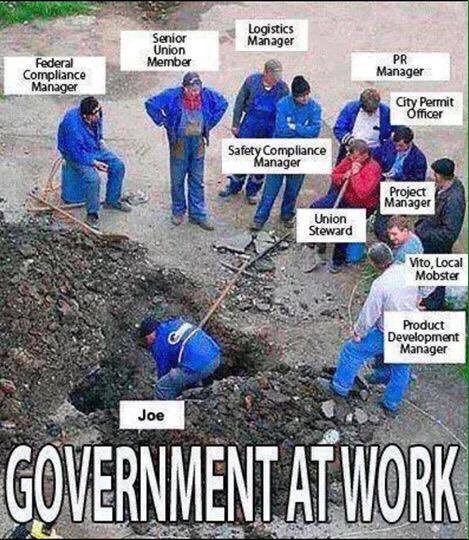
unions-meme.jpg
no different than corporate layers of do-nothings.
 
Just more layers as government is unaccountable for the most part. In a corporation you have to produce at least some results.
not if you;re a government contractor.

you can sell 800 dollar toilet seats all day long.

you;re concept of government versus corporation is anachronistic considering the current levels of fascism.
 
No there isn’t, what is there are specialty stores as a butcher store and a Market nearby that serves food but no grocery type store
Bullshit there is a a Pamela Grocery Store (corner of 115th St. and Park Ave). This store is owned by Adan Food Center Corp. It is across the street.
 
not if you;re a government contractor.

you can sell 800 dollar toilet seats all day long.

you;re concept of government versus corporation is anachronistic considering the current levels of fascism.
I was talking about the internal mechanisms of corporations. Sure, as a corporate employee you can shake down customers for their last nickel and likely get promoted for doing so. What you can't do is sit on your ass and do nothing. In government you can. In fact, there are whole office buildings full of that.


I was talking about the internal mechanisms of corporations. Sure, as a corporate employee you can shake down customers for their last nickel and likely get promoted for doing so. What you can't do is sit on your ass and do nothing. In government you can. In fact, there are whole office buildings full of that.


1) “In corporations you can shake down customers for their last nickel and get promoted”​


❌ Misleading / exaggerated​


  • In most regulated corporate environments (especially in the U.S., EU, etc.), employees:
    • must follow consumer protection laws
    • are constrained by regulators (FTC, SEC, CFPB, etc.)
    • face internal compliance and legal risk for abusive practices
  • “Shaking down customers” (i.e., coercive or exploitative behavior) is:
    • illegal in many contexts (fraud, deceptive practices, predatory billing)
    • reputationally damaging
    • often grounds for termination, not promotion

✔ Reality:


  • Some firms may incentivize aggressive sales behavior
  • But there are also strong legal and institutional constraints that limit outright abuse

So this is an overgeneralization based on worst-case perceptions of sales culture


2) “What you can't do is sit on your ass and do nothing. In government you can.”​


❌ Not supported as a general claim​


This is a common stereotype, but it does not match how large organizations work:


In corporations:​


  • There are well-documented cases of:
    • “dead weight” employees
    • low-performance tolerance in some protected roles
    • bureaucratic inefficiencies in large firms
  • Studies of organizational behavior show:
    • performance variation exists everywhere
    • monitoring is imperfect in both sectors

In government:​


  • Government employment (especially civil service) typically includes:
    • structured job classifications
    • performance reviews
    • disciplinary systems
    • union protections in some roles
  • Many roles are audited, regulated, or performance-tracked
    • especially federal agencies, law enforcement, healthcare, and financial oversight

✔ Reality:


  • Both sectors have high performers and low performers
  • Neither allows widespread “do nothing with no consequence” as a structural norm


3) “In government there are whole office buildings full of that”​


❌ Unsupported generalization​


This is:


  • a rhetorical exaggeration
  • not backed by empirical evidence or workforce studies

Actual findings in public administration research show:


  • government productivity varies widely by agency and function
  • many public-sector roles are understaffed, high-demand, and heavily regulated
  • some administrative inefficiency exists (as in any large system), but not the caricature described here


4) Structural reality: government vs corporate incentives​


A more accurate comparison looks like this:


Corporations:​


  • incentive: profit
  • risk: market failure, lawsuits, competition
  • accountability: shareholders, regulators, customers

Government:​


  • incentive: service delivery, legal compliance, political oversight
  • risk: audits, elections, inspector generals, public scrutiny
  • accountability: laws, courts, voters, watchdog agencies

Neither system is:


  • uniformly efficient
  • uniformly corrupt
  • uniformly meritocratic

Both are large bureaucracies with mixed performance outcomes


5) Bias analysis​


This statement reflects a common cognitive pattern:


1. Selection bias


  • focusing on worst examples of each system

2. Asymmetry assumption


  • assumes corporations enforce discipline strictly
  • assumes government does not

3. Stereotype compression


  • compresses millions of workers into one behavioral stereotype per sector


Bottom line​


  • ❌ Corporations do not generally reward “shaking down customers” — it is constrained by law and compliance systems
  • ❌ Government is not broadly characterized by “doing nothing without consequence”
  • ✔ Both systems contain inefficiency and variation in performance
  • ❌ The sweeping contrast between disciplined corporations and idle government offices is not supported by evidence
 
This article shows some of the insanity of government run grocery stores.

Op-ed: They block grocery stores, then build their own at four times the cost​


Four times, or more, the cost per square foot to build...

Using eminent domain to seize land to build them...

Endless taxpayer subsidies to operate...

Mamdani's first store is running $30 million to open and it's in direct competition with several smaller grocery and convenience stores within a few blocks of it.


So, this store, operating with a massive taxpayer subsidy will directly compete with several private businesses right next to it who aren't subsidized. Can you say "bankruptcy?"

This is the insanity of Socialism on full display. Slower, lousier, costlier...
Fee free to prove they blocked any grocery stores.
 
I was talking about the internal mechanisms of corporations. Sure, as a corporate employee you can shake down customers for their last nickel and likely get promoted for doing so. What you can't do is sit on your ass and do nothing. In government you can. In fact, there are whole office buildings full of that.


you were talking about governments.

corprorations are just as wasteful. and the government waste actually goes to corporations too.

croney capitalism aka fascism is our system in reality.

your false division is a propaganda technique.


1) “In corporations you can shake down customers for their last nickel and get promoted”​


❌ Misleading / exaggerated​


  • In most regulated corporate environments (especially in the U.S., EU, etc.), employees:
    • must follow consumer protection laws
    • are constrained by regulators (FTC, SEC, CFPB, etc.)
    • face internal compliance and legal risk for abusive practices
  • “Shaking down customers” (i.e., coercive or exploitative behavior) is:
    • illegal in many contexts (fraud, deceptive practices, predatory billing)
    • reputationally damaging
    • often grounds for termination, not promotion

✔ Reality:


  • Some firms may incentivize aggressive sales behavior
  • But there are also strong legal and institutional constraints that limit outright abuse

So this is an overgeneralization based on worst-case perceptions of sales culture


2) “What you can't do is sit on your ass and do nothing. In government you can.”​


❌ Not supported as a general claim​


This is a common stereotype, but it does not match how large organizations work:


In corporations:​


  • There are well-documented cases of:
    • “dead weight” employees
    • low-performance tolerance in some protected roles
    • bureaucratic inefficiencies in large firms
  • Studies of organizational behavior show:
    • performance variation exists everywhere
    • monitoring is imperfect in both sectors

In government:​


  • Government employment (especially civil service) typically includes:
    • structured job classifications
    • performance reviews
    • disciplinary systems
    • union protections in some roles
  • Many roles are audited, regulated, or performance-tracked
    • especially federal agencies, law enforcement, healthcare, and financial oversight

✔ Reality:


  • Both sectors have high performers and low performers
  • Neither allows widespread “do nothing with no consequence” as a structural norm


3) “In government there are whole office buildings full of that”​


❌ Unsupported generalization​


This is:


  • a rhetorical exaggeration
  • not backed by empirical evidence or workforce studies

Actual findings in public administration research show:


  • government productivity varies widely by agency and function
  • many public-sector roles are understaffed, high-demand, and heavily regulated
  • some administrative inefficiency exists (as in any large system), but not the caricature described here


4) Structural reality: government vs corporate incentives​


A more accurate comparison looks like this:


Corporations:​


  • incentive: profit
  • risk: market failure, lawsuits, competition
  • accountability: shareholders, regulators, customers

Government:​


  • incentive: service delivery, legal compliance, political oversight
  • risk: audits, elections, inspector generals, public scrutiny
  • accountability: laws, courts, voters, watchdog agencies

Neither system is:


  • uniformly efficient
  • uniformly corrupt
  • uniformly meritocratic

Both are large bureaucracies with mixed performance outcomes


5) Bias analysis​


This statement reflects a common cognitive pattern:


1. Selection bias


  • focusing on worst examples of each system

2. Asymmetry assumption


  • assumes corporations enforce discipline strictly
  • assumes government does not

3. Stereotype compression


  • compresses millions of workers into one behavioral stereotype per sector


Bottom line​


  • ❌ Corporations do not generally reward “shaking down customers” — it is constrained by law and compliance systems
  • ❌ Government is not broadly characterized by “doing nothing without consequence”
  • ✔ Both systems contain inefficiency and variation in performance
  • ❌ The sweeping contrast between disciplined corporations and idle government offices is not supported by evidence
With the minor caveat that the tRump *administration is doing their best to do away with many consumer protections I agree.
 
Do you really believe that there isn't nepotism and insider favoritism going in in government hiring? Do you really think that unions aren't selectively allowing membership at least in part on the basis of knowing someone in the union?

DEI hires on the basis of race, gender, sexual orientation, etc. It puts competence a far third to checking the correct DEI boxes.
Do you think a local grocery store in Harlem will be full of government related nepotism hires?

Do you think without unions that hiring is not done partially on who knows who?

You see one side while ignoring the other which is over 100 years of almost exclusively white euro men taking all the top management jobs because PoC and women were barred.

Once you establish that base that DID NOT earn their jobs via market competition and then all of the issues you raise exist there is no question who benefits more from the nepotism and other factors you mention and it's NOT the DEI group and IS the group who got their jobs for over 100 years wrongly.
 
Do you think a local grocery store in Harlem will be full of government related nepotism hires?

I think a government run grocery store in Harlem will be.
Do you think without unions that hiring is not done partially on who knows who?

Partially, but not primarily.
You see one side while ignoring the other which is over 100 years of almost exclusively white euro men taking all the top management jobs because PoC and women were barred.

I see one side as being worse by degree compared to the other.
Once you establish that base that DID NOT earn their jobs via market competition and then all of the issues you raise exist there is no question who benefits more from the nepotism and other factors you mention and it's NOT the DEI group and IS the group who got their jobs for over 100 years wrongly.

DEI has been rampant in government for decades now.
 
Do you think a local grocery store in Harlem will be full of government related nepotism hires?

Do you think without unions that hiring is not done partially on who knows who?

You see one side while ignoring the other which is over 100 years of almost exclusively white euro men taking all the top management jobs because PoC and women were barred.

Once you establish that base that DID NOT earn their jobs via market competition and then all of the issues you raise exist there is no question who benefits more from the nepotism and other factors you mention and it's NOT the DEI group and IS the group who got their jobs for over 100 years wrongly.
please stop injecting race into class issues, fucking Jew.
 
Back
Top