That's just insane .. and you're still running from the facts.
Low unemployment. No doubt lower than where you live
A booming and thriving economy
New businesses sprouting all over the city
You don't like the Berkley study because it refutes the nonsense you want to believe because you don't care about the poor.
You're attacking the democrats .. the only party that legislates for the poor .. while at the same time refusing to accept the benefits to the poor from democrats in a city most likely doing better than where you live.
Dude, this is kinda' typical for you. You attack democrats for doing things that you and your party would never do.
Here .. I'm going to slap you with truth again ..
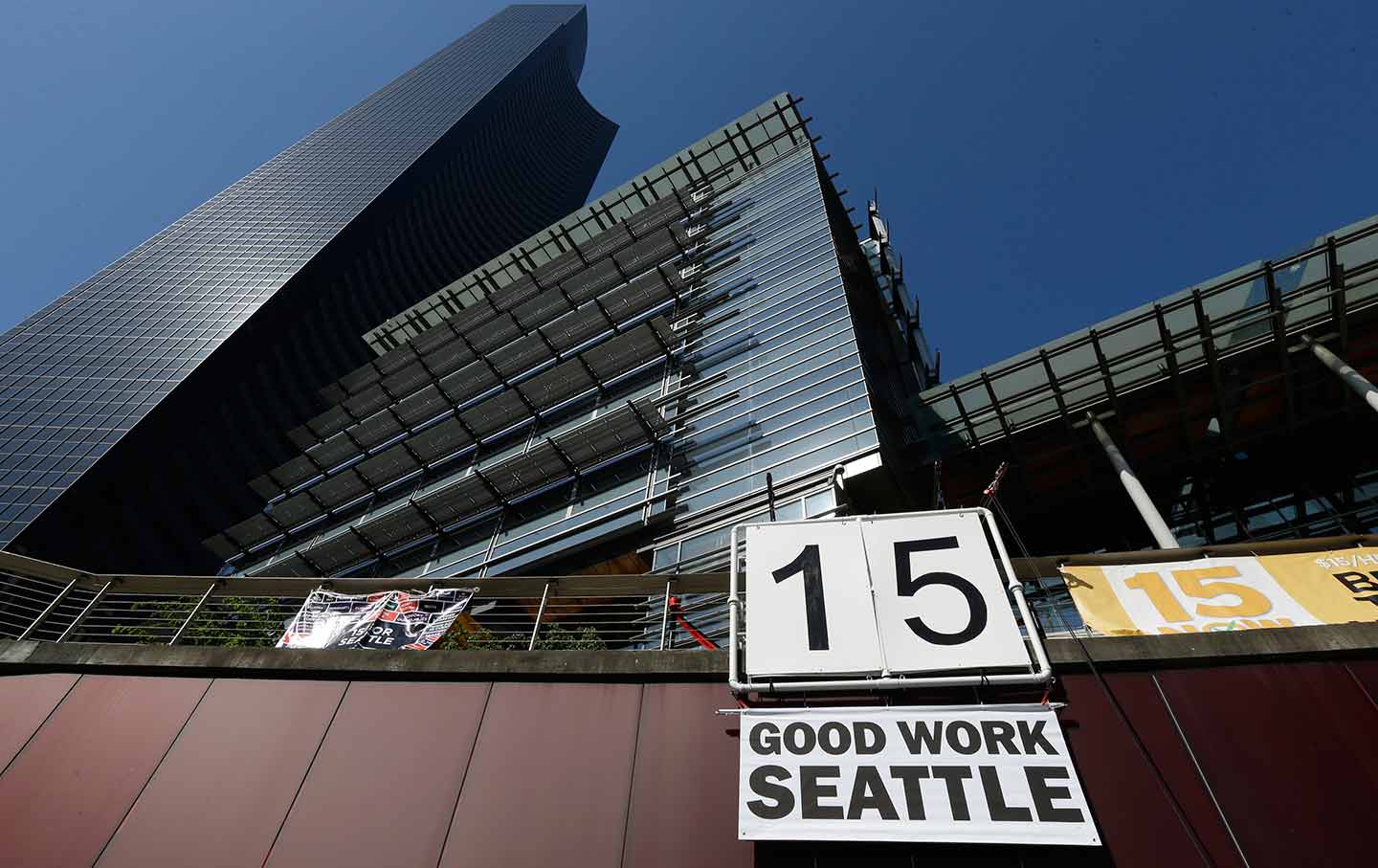
No, Seattle’s $15 Minimum Wage Is Not Hurting Workers
Contrary to what
one*unrepresentative study found, the city’s*workers are actually benefiting from the wage hike.
What happens when wages go up? Workers make more money. It seems intuitive, but now we have proof of concept. It’s happening in one of the first major cities to delve into the $15 wage experiment.
In April of 2015, Seattle implemented a new law that raised the city’s hourly base wage, with the ultimate target of reaching $15 per hour by 2021. The slow phase-in, which has increased the minimum wage each year at different levels depending on various factors like the size of the company paying a given worker, would eventually be indexed to inflation. In 2017, the increases finally began reaching the full $15 base wage, and now the nationwide “Fight for 15” campaign is finally bearing fruit in the industry where the mobilizations began: restaurants.
The study, by University of California-Berkeley’s Institute for Research on Labor and Employment (IRLE), tracks the policy’s initial implementation phases, starting with firms with 500 or more employees without insurance. Other researchers found that, at least for restaurant workers, bosses are complying with the law, and workers benefit. Much of the improvement accrues to so-called “limited service” restaurants (such as fast-food franchises), where some of the poorest workers, in the most precarious positions, are concentrated.
According to economist Sylvia Allegretto, coauthor of the study, the analysis shows that under the $15 minimum wage “we do see, especially in the limited service sector…a large and statistically significant increase in wages.” They concluded that “the policy is working as much as you want the policy to increase the wages of low-wage workers.”
The researchers also stress that food-service workers are generally reflective of other local low-wage workers, like retail workers, indicating that similar industries would also see gains as the $15 hourly wage is phased in.
There are, of course, naysayers. A recent University of Washington study argued that Seattle’s wage hike would actually hurt workers overall because an hourly increase would be offset by a reduction of workers’ hours and decreased employment. But IRLE researchers and others challenged that study as excessively limited in scope, based on an unrepresentative sample of workers. The Berkeley researchers contend that their analysis focuses on material impacts in a more representative sector.
https://www.thenation.com/article/no-seattles-15-minimum-wage-is-not-hurting-workers/
You don't know what you're talking about because you're standing on right-wing meme, not statistics, not compassion, not even common sense.
No disrespect intended.