

Legion Troll
A fine upstanding poster
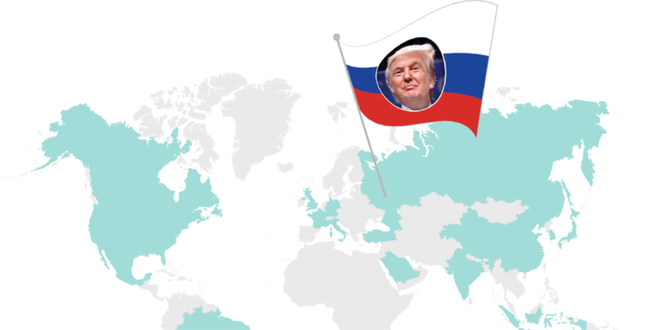
For decades, Russian intelligence agencies have used what they call “active measures” to destabilize their rivals.
Now they are turning those tools on the U.S. political system, though in the process they appear to have violated Rule No. 1 of the spy business: Don’t get caught.
U.S. officials say they have strong evidence that Russian intelligence agencies hacked the files of the Democratic National Committee.
Putin grew up in a KGB culture in which such use of active measures was a standard tool of the Cold War. He seems to have carried this tradecraft into the Kremlin — employing hacking, black propaganda and other covert tools as part of what’s politely described these days as “hybrid warfare.”
U.S. officials say that Russian intelligence has secretly funded right-wing political parties in Europe, sponsored covert propaganda channels, hacked the electrical grid of Ukraine and cyber-sabotaged other states, and created networks of “trolls” to attack enemies online.
Why does Putin use these active measures to destabilize his rivals? Because they work. They’re invisible and deniable and, for the most part, the targets don’t fight back.
When the United States discovers evidence of foreign hacking, it should “be public about it,” urged John Carlin, the assistant attorney general for national security. “Take it out of the intelligence channel. That’s the only way to change behavior,” he said. James Clapper, the director of national intelligence, said that from an intelligence standpoint, the United States is already “at war” with Russia.
“The Russians have had for years a doctrine of active measures,” said Elissa Slotkin, acting assistant secretary of defense for international security affairs. She said that the Kremlin’s tactics attempt “to sow dissent generally, either on a specific issue or just to cause political chaos in order to create an opening for themselves.”
That might mean releasing embarrassing emails, as GOP nominee Donald Trump has urged Moscow to do.
Moscow had a special animus toward Clinton. When she was secretary of state, she endorsed Russian dissenters in the 2011 and 2012 elections.
A furious Putin charged back then that she “gave them a signal” and that the dissidents, “with the support of the U.S. State Department, began active work.” In other words, Putin thinks Clinton shot first.
And what about Trump? Some have argued that he was the intended beneficiary of Moscow’s hack. Trump is what Russian intelligence officers sometimes describe as a “useful idiot” — a person who fosters Moscow’s campaign of instability.
https://www.washingtonpost.com/opinions/russias-dnc-hack-a-prelude-to-intervention-in-november/2016/07/29/ec242722-55c2-11e6-b7de-dfe509430c39_story.html?wpisrc=nl_draw2&wpmm=1