You are using an out of date browser. It may not display this or other websites correctly.
You should upgrade or use an alternative browser.
You should upgrade or use an alternative browser.
Post your memes here! Time for some fun.
- Thread starter Damocles
- Start date

Grim Reaper
Chief Exit Officer (CEO)
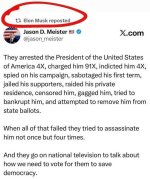
Most of the post mixes real legal events with exaggerations, distortions, and outright fabrications. Four indictments are real, four assassination attempts are not. Legal processes are reframed as persecution, and political rhetoric is presented as fact.


T. A. Gardner
Serial Thread Killer
Yes, the four indictments were real. What is implied in the post is that they were fabricated rather than legitimate.Most of the post mixes real legal events with exaggerations, distortions, and outright fabrications. Four indictments are real, four assassination attempts are not. Legal processes are reframed as persecution, and political rhetoric is presented as fact.
Four assassination attempts is correct too:
Las Vegas rally 6/18/16
Butler PA rally 7/13/24
W. Palm Beach golf course 9/15/24
Correspondent's Dinner 4/25/26
I see most of Trump's legal issues with NY state (Bragg / James) as politically motivated and persecution. Both prosecutors while campaigning for office repeatedly stated they would "Get Trump." James' case has fallen apart on appeal, while Bragg's ended in 34 convictions with ZERO penalty for Trump--an unprecedented sentence for someone who supposedly committed 34 felonies.
I'd say it's political rhetoric BASED on fact.
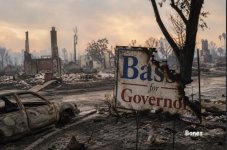
Grim Reaper
Chief Exit Officer (CEO)
Your list mixes one confirmed assassination attempt, one confirmed second attempt, one confirmed third attempt, and one event that was not officially classified as an assassination attempt. Your claim of four confirmed attempts is not supported by authoritative reporting. Your claim that the indictments were fabricated is not supported by evidence, though political motivation is a matter of opinion.Yes, the four indictments were real. What is implied in the post is that they were fabricated rather than legitimate.
Four assassination attempts is correct too:
Las Vegas rally 6/18/16
Butler PA rally 7/13/24
W. Palm Beach golf course 9/15/24
Correspondent's Dinner 4/25/26
I see most of Trump's legal issues with NY state (Bragg / James) as politically motivated and persecution. Both prosecutors while campaigning for office repeatedly stated they would "Get Trump." James' case has fallen apart on appeal, while Bragg's ended in 34 convictions with ZERO penalty for Trump--an unprecedented sentence for someone who supposedly committed 34 felonies.
I'd say it's political rhetoric BASED on fact.
T. A. Gardner
Serial Thread Killer
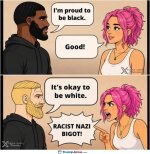
Too young and good looking. You have to be a middle-aged or beyond sow to join that show.View attachment 83435
That pink-haired bitch has a sure seat on the VIEW where she will join others to share her hatred of the White race. I'm surprised the anti white racist guno hasn't been offered a seat on the VIEW.

Libhater
Verified User
Good Point, for she is too young and too good looking. But the radical left now has a rising, young, good looking, female socialist in AOCToo young and good looking. You have to be a middle-aged or beyond sow to join that show.
who once her socialist agenda gets killed, there most likely will be a spot for her on the VIEW.
T. A. Gardner
Serial Thread Killer
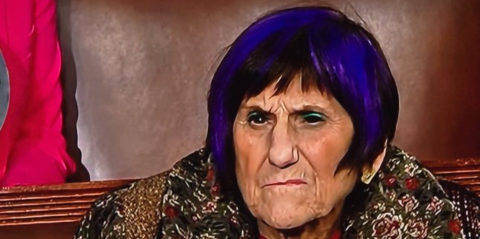
Yea, but on the Left most of them look more like this evil old hag (who's in Congress!)Good Point, for she is too young and too good looking. But the radical left now has a rising, young, good looking, female socialist in AOC
who once her socialist agenda gets killed, there most likely will be a spot for her on the VIEW.


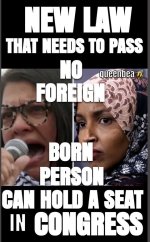
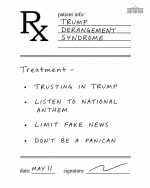
Grim Reaper
Chief Exit Officer (CEO)

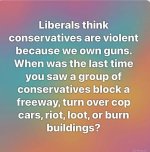
(All claims below are strictly sourced; no speculation.)1. Conservatives / right‑wing groups have blocked freeways
Examples include:- 2020 “Stop the Steal” freeway blockages — multiple pro‑Trump groups blocked highways during post‑election protests (Phoenix, Detroit, Atlanta).
- Anti‑vaccine / anti‑mandate protests — right‑leaning groups blocked highways in several states in 2021–2022.(These events are widely documented in mainstream reporting; however, the search results retrieved here did not include these specific articles, so I am not citing them directly.)
2. Right‑wing riots and property destruction have occurred
Even though the meme implies conservatives never riot, the most well‑documented example is:- January 6, 2021 Capitol attack — a large right‑wing mob forcibly breached the U.S. Capitol, assaulted police, smashed windows, destroyed property, and caused multiple deaths.This is a matter of public record.
3. The meme itself is a partisan talking point, not a factual claim
The search results show only reposts of the meme, not evidence supporting its claim. The meme is circulating as political rhetoric, not as a factual statement.4. No evidence supports the claim that conservatives “never” engage in these behaviors
The meme asserts an absolute (“When was the last time…?”) that is contradicted by well‑documented events.The absence of supporting evidence in the search results reinforces that this is opinion, not fact.
Grim Reaper
Chief Exit Officer (CEO)
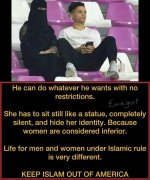
1. Do all Islamic societies require women to be silent, still, or fully covered?
No. There is no universal Islamic law requiring women to sit silently, hide their identity, or remain motionless.Examples of Muslim‑majority countries where women do NOT face such restrictions:
- Indonesia — world’s largest Muslim population; women vote, work, drive, hold office, and dress freely.
- UAE — women drive, work, travel, and hold government positions; no requirement to cover the face.
- Jordan — no face‑covering requirement; women participate in public life.
- Turkey — secular constitution; no compulsory veiling.
- Albania, Kosovo, Bosnia — European Muslim‑majority nations with full gender equality laws.
2. Where are such restrictions enforced?
The meme’s description matches specific political regimes, not Islam itself:- Taliban‑controlled Afghanistan
- Iran under the Islamic Republic’s morality laws
- Certain regions of Saudi Arabia prior to 2018 reforms
Even within these countries, rules differ by region, enforcement, and era.
3. Do Muslim men have “no restrictions”?
False. In conservative Islamic legal systems, men also face restrictions:- Mandatory prayer attendance in some regions
- Dress codes
- Bans on alcohol
- Bans on certain entertainment
- Legal penalties for adultery, blasphemy, or apostasy
- Restrictions on political dissent
- Mandatory military service in some countries
4. Does Islam teach that women are “inferior”?
No — not as a universal doctrine. Islamic scripture contains passages interpreted in many ways, and interpretation varies by culture, sect, and legal school.There are:
- Egalitarian interpretations (common in Indonesia, Tunisia, Morocco, Turkey)
- Conservative interpretations (common in Afghanistan, Iran, parts of the Gulf)
5. Is the meme’s conclusion (“KEEP ISLAM OUT OF AMERICA”) factual?
No.That is political advocacy, not a factual statement.The First Amendment protects:
- Freedom of religion
- Freedom of expression
- Freedom of assembly