prior reportage: 15 June 2015 he was (is?) a major long time player for AQ
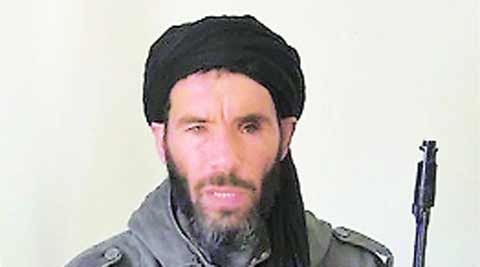
Mr. Marlboro - Mokhtar Belmokhtar: Top Islamist 'killed' in US strike
 ]Known as "the One-Eyed", as he often wore an eye patch, also as "Mr Marlboro", as he used cigarette smuggling to finance his jihad
Fought against Soviet forces in Afghanistan in the late 1980s
A former leading figure in al-Qaeda in the Islamic Maghreb (AQIM), but left after falling out with its leaders
Went on to lead the Islamist militia group al-Murabitoun, which has attacked local and international forces in Mali
++
Officials at Joint Special Operations Command had found the uncatchable man — they were sure of it.
Mokhtar Belmokhtar, the legendary Algerian militant, had eluded capture across North Africa and the Sahel for a dozen years, defying reports of his death to continue his campaign of kidnappings and guerrilla attacks. The United States and its allies had missed him before.
But in June of last year, JSOC, the secretive military outfit tasked with hunting al-Qaeda, believed they had Belmokhtar in its sights as he made his way to a dusty farm outside of Ajdabiya, in eastern Libya, where a group of militants assembled for a meeting.
American officials had been on high alert for several days. Belmokhtar and his associates were famously disciplined in avoiding electronic communications and cloaking their movements, but someone had slipped up. When two American F-15 jets screamed across the sky and unleashed several 500-pound bombs, they demolished the farmhouse, killing at least five militants.
But eight months later, U.S. military and intelligence agencies remain unsure whether Belmokhtar was indeed killed in the operation. The internal debate that followed the strike illustrates the challenges inherent to targeted attacks in places where the United States has little military presence, such as Libya, Syria, Yemen or Pakistan.
We’ve been after this guy for a long time’
The June 14 strike was the culmination of a years-long international effort against Belmokhtar, also known as Mister Marlboro, the ‘Uncatchable’ and ‘One-Eyed’ for the disfigurement he suffered to his face handling weapons as a young man.
A native of Algeria, Belmokhtar trained in Afghanistan in the early 1990s and fought with an Islamist group in Algeria’s decade-long civil war before joining another group that became known as al-Qaeda in the Islamic Maghreb (AQIM).
He financed his militant activity by snatching and ransoming foreigners, including the kidnapping of two Westerners working for the United Nations, and was known for his prolific smuggling of cigarettes and other goods across the porous borders of North Africa and the Sahel. He gained local support by marrying into local tribes.
Charismatic, ambitious figure, the 43-year-old Belmokthar clashed with others in the African al-Qaeda outfit and twice helped form new splinter brigades, known as al-Mulathameen and, more recently, al-Murabitoun.
African allies had tried — and failed — to capture him. In 2013, the government in Chad announced his death in an operation in Mali, but he later resurfaced alive. There were other false reports of this death.
Given his stature, intelligence officials thought Belmokhtar would be harder to replace than militants from groups with a deeper bench, such as the Islamic State. It made him an attractive target.
In 2003, the U.S. government considered trying to kill Belmokhtar from the air in northern Mali, but concerns about the political backlash stopped that attack.
A decade later, militants under his command laid siege to a gas plant in Algeria, killing three Americans. that prompted U.S. prosecutors to bring charges against Belmokhtar in a federal court in New York.
https://www.washingtonpost.com/news...p-top-table-main_mokhtar-715pm:homepage/story
Mr. Marlboro - Mokhtar Belmokhtar: Top Islamist 'killed' in US strike
]Known as "the One-Eyed", as he often wore an eye patch, also as "Mr Marlboro", as he used cigarette smuggling to finance his jihadFought against Soviet forces in Afghanistan in the late 1980sA former leading figure in al-Qaeda in the Islamic Maghreb (AQIM), but left after falling out with its leadersWent on to lead the Islamist militia group al-Murabitoun, which has attacked local and international forces in Mali
++
Officials at Joint Special Operations Command had found the uncatchable man — they were sure of it.
Mokhtar Belmokhtar, the legendary Algerian militant, had eluded capture across North Africa and the Sahel for a dozen years, defying reports of his death to continue his campaign of kidnappings and guerrilla attacks. The United States and its allies had missed him before.
But in June of last year, JSOC, the secretive military outfit tasked with hunting al-Qaeda, believed they had Belmokhtar in its sights as he made his way to a dusty farm outside of Ajdabiya, in eastern Libya, where a group of militants assembled for a meeting.
American officials had been on high alert for several days. Belmokhtar and his associates were famously disciplined in avoiding electronic communications and cloaking their movements, but someone had slipped up. When two American F-15 jets screamed across the sky and unleashed several 500-pound bombs, they demolished the farmhouse, killing at least five militants.
But eight months later, U.S. military and intelligence agencies remain unsure whether Belmokhtar was indeed killed in the operation. The internal debate that followed the strike illustrates the challenges inherent to targeted attacks in places where the United States has little military presence, such as Libya, Syria, Yemen or Pakistan.
We’ve been after this guy for a long time’
The June 14 strike was the culmination of a years-long international effort against Belmokhtar, also known as Mister Marlboro, the ‘Uncatchable’ and ‘One-Eyed’ for the disfigurement he suffered to his face handling weapons as a young man.
A native of Algeria, Belmokhtar trained in Afghanistan in the early 1990s and fought with an Islamist group in Algeria’s decade-long civil war before joining another group that became known as al-Qaeda in the Islamic Maghreb (AQIM).
He financed his militant activity by snatching and ransoming foreigners, including the kidnapping of two Westerners working for the United Nations, and was known for his prolific smuggling of cigarettes and other goods across the porous borders of North Africa and the Sahel. He gained local support by marrying into local tribes.
Charismatic, ambitious figure, the 43-year-old Belmokthar clashed with others in the African al-Qaeda outfit and twice helped form new splinter brigades, known as al-Mulathameen and, more recently, al-Murabitoun.
African allies had tried — and failed — to capture him. In 2013, the government in Chad announced his death in an operation in Mali, but he later resurfaced alive. There were other false reports of this death.
According to a former Pentagon official, U.S. military leaders for years resisted going after Belmokhtar, who they then saw as a peripheral threat, as they struggled to manage the wars in Iraq and Afghanistan.“We’ve been after this guy for a long time,” the former senior U.S. official said. “There were moments where we knew where he was, or thought we knew, but couldn’t get the bureaucracy together to act or to support allies” quickly enough.
Given his stature, intelligence officials thought Belmokhtar would be harder to replace than militants from groups with a deeper bench, such as the Islamic State. It made him an attractive target.
In 2003, the U.S. government considered trying to kill Belmokhtar from the air in northern Mali, but concerns about the political backlash stopped that attack.
A decade later, militants under his command laid siege to a gas plant in Algeria, killing three Americans. that prompted U.S. prosecutors to bring charges against Belmokhtar in a federal court in New York.
https://www.washingtonpost.com/news...p-top-table-main_mokhtar-715pm:homepage/story