volsrocks
Verified User
Not in this post, you didn't.
Ok
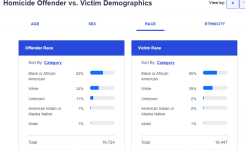
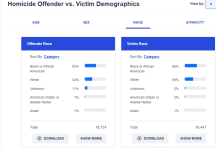
When that 52% gets way below the white number..I will stop posting about black violent crime

Not in this post, you didn't.
Thanks for proving what I said was true because it wasn't just a result of "I said it."I'll be happy to.
If saying and proving were the same act, then every uttered statement would automatically constitute proof, meaning contradictions could not exist (e.g., both “The sky is blue” and “The sky is green” would be simultaneously proven true). This violates the law of non-contradiction and leads to absurdity. Therefore, by reductio ad absurdum, the two are necessarily distinct.
- Saying something is simply the act of making an assertion or claim (uttering or writing a statement). It requires no evidence, verification, or logical support—it can be true, false, mistaken, or even fabricated. For example, anyone can say “The Earth is flat” or “I am innocent” without any basis.
- Proving something requires demonstrating the truth of that claim through evidence, reasoning, data, or repeatable verification that meets an objective standard (e.g., logical deduction, empirical data, or legal burden of proof). It is an additional, distinct process that the mere assertion does not fulfill.
This everyday distinction is explicitly recognized in public discourse. A verifiable historical source is the April 17, 1992 Chicago Tribune article “Daley Aide Reyes Denies Tunnel Responsibility,” in which Chicago General Services Commissioner Benjamin Reyes stated verbatim:
”But saying something and proving it are two different things.”
Full article (publicly archived and verifiable): https://www.chicagotribune.com/1992/04/17/daley-aide-reyes-denies-tunnel-responsibility/
The quote appears in the context of Reyes denying personal responsibility for a city tunnel flood scandal, underscoring that accusations (mere statements) do not equal substantiated proof. This usage confirms the phrase as a standard acknowledgment of the logical gap between assertion and demonstration.

Thanks for proving what I said was true because it wasn't just a result of "I said it."
So u are OK with blacks being victims of murder at a higher rate of whites...most of them killed by other blacks not whitesThanks for proving what I said was true because it wasn't just a result of "I said it."