Maybe you have no idea what is going on, maybe you are lying....I dont particularly care which is you critical failure.Do not develop the mindset that "Iran is very important to China, and China needs Iran to help it counter the United States." This kind of bloc-confrontation thinking essentially forces China to align with some of the world’s lowest-quality, most unreliable countries, demanding that China form a coalition with them to oppose the United States, while the U.S. coalition would consist of the most successful nations. If China were to operate under this logic, failure would be inevitable.

You are using an out of date browser. It may not display this or other websites correctly.
You should upgrade or use an alternative browser.
You should upgrade or use an alternative browser.
Made in China
- Thread starter FastLane
- Start date

FastLane
Verified User
Their systems failed miserably.The Chinese a great planners....testing their gear in Iran was a fab idea....the failing Imperial Empire launching military operations against them is not if it is when.
FastLane
Verified User
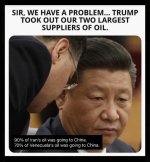
Russia's drone supply has been blown up. China's discount oil from Venezuela and Iran has been cut off.The Russians and the Chinese are now blood brothers, they share everything......Ukraine and Iran are great teachers for the Resistance as they prepare for the final battle.

Libhater
Verified User
This Imperial Empire you keep referring to is what evil Iran had been striving to become with all its former proxies et al. Before the great Trump stepped in to eliminate Iran's imperial leader and its regime....Iran had basically had the entire Mideast (minus Israel) on its side. Now many of those Gulf states are actually on America's side, with some of them actually getting bombed by their former ally Iran.You certainly know how important Iran is the the future China is trying to build.
You also know that one of the main motivations for this Imperial Empire operation is weakening China and Russia.
FastLane
Verified User
Iran shot a couple of ballistic missiles at Turkey today.This Imperial Empire you keep referring to is what evil Iran had been striving to become with all its former proxies et al. Before the great Trump stepped in to eliminate Iran's imperial leader and its regime....Iran had basically had the entire Mideast (minus Israel) on its side. Now many of those Gulf states are actually on America's side, with some of them actually getting bombed by their former ally Iran.
Libhater
Verified User
Yeah, Iran is bombing anyone in sight, and according to Hawkeye it's America who is the Imperialist nation. Go figure!Iran shot a couple of ballistic missiles at Turkey today.

Oh okay, I misunderstood. I thought you were talking about our military hardware. Sorry about that.
He gets lost sometimes...
FastLane
Verified User
Hawkeye says what ever his handlers tell him to say.Yeah, Iran is bombing anyone in sight, and according to Hawkeye it's America who is the Imperialist nation. Go figure!



Matt Dillon
Retardium User
Iran proves China's anti-radar stuff is ass.The Chinese a great planners....testing their gear in Iran was a fab idea....the failing Imperial Empire launching military operations against them is not if it is when.
We are not the same.
Matt Dillon
Retardium User
Well, that is super-tarded. I was kinda worried about Turkey helping their Islamic brethren.Iran shot a couple of ballistic missiles at Turkey today.
Guess not, after that!

Positive news, but I wouldn’t get too excited, surely China didnt unload its best on a wild card as IranDid China’s HQ-9B fall short in Iran? How US–Israel airstrikes broke through Tehran’s air defence network
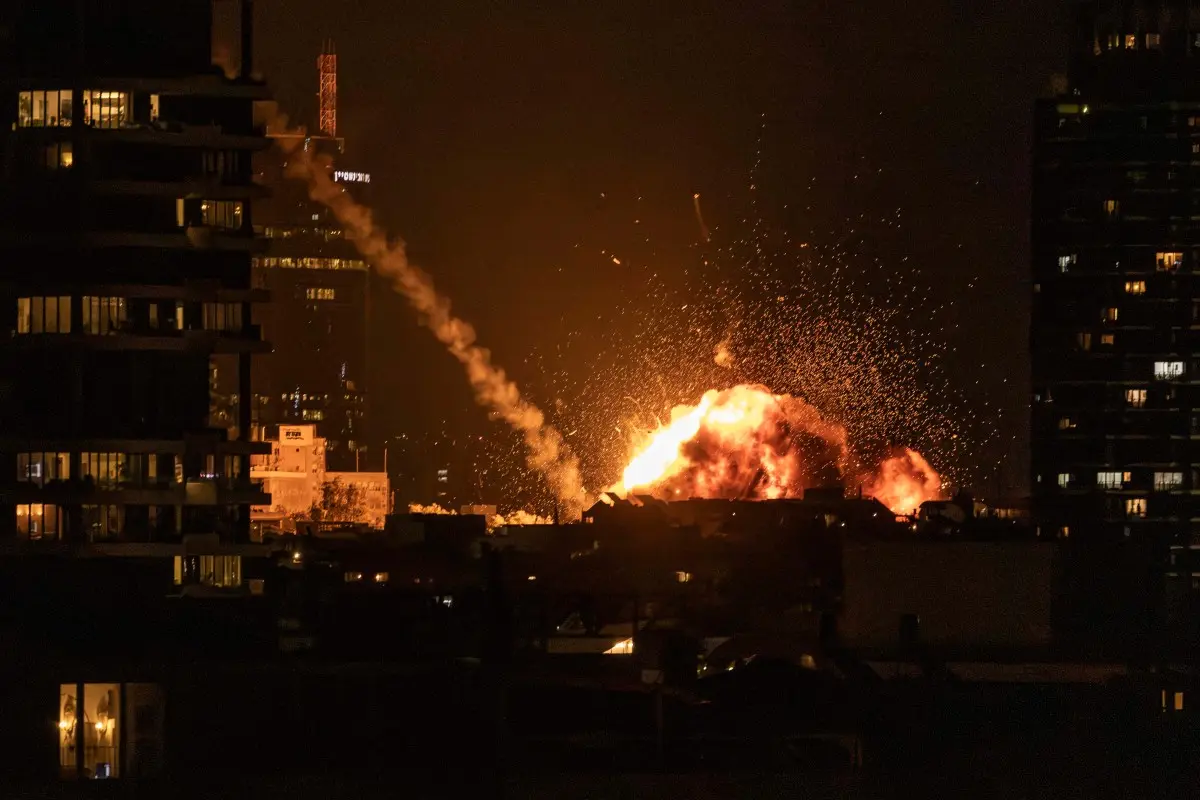
The scale of the destruction has focused attention on the performance of the Chinese-origin HQ-9B long-range surface-to-air missile system, which Iran is believed to have recently acquired.
1 / 6
(Photograph: AFP)
Scale of destruction raises urgent questions
Coordinated airstrikes by the United States and Israel across more than 20 Iranian provinces have triggered scrutiny of Tehran’s air defence network. The attacks targeted military infrastructure, missile and UAV bases, airfields and strategic installations, reportedly causing widespread damage, including in Tehran. The scale of the destruction has focused attention on the performance of the Chinese-origin HQ-9B long-range surface-to-air missile system, which Iran is believed to have recently acquired.
Broader context of the strikes
The coordinated strikes carried out on Saturday by forces from the United States under US President Donald Trump and Israel under Prime Minister Benjamin Netanyahu, targeted key Iranian military assets and resulted in the killing of Supreme Leader Ayatollah Ali Khamenei along with several senior Iranian figures. The IDF claimed it had killed 40 senior commanders, including Chief of Staff Lt. Gen. Abdolrahim Mousavi, although full details have not been released.
Layered shield under pressure
Iran’s air defence architecture is designed to function in tiers. The long-range layer was reportedly anchored by the HQ-9B, supported by Russian-origin S-300PMU-2 systems and Iran’s indigenous Bavar-373. Medium-range systems such as Khordad-15 and Raad were intended to plug coverage gaps, while short-range systems including Tor-M2, Pantsir-S1, Zolfaqar and shoulder-fired MANPADS were tasked with countering low-flying threats and precision-guided munitions. Despite its layered air defence network, large numbers of incoming projectiles appear to have penetrated Iran’s defences, and the Israel Defence Forces said it had “dismantled the majority of aerial defence systems in western and central Iran,” paving the way toward establishing aerial superiority over Tehran’s skies after the coordinated strikes.
What is the HQ-9B?
Developed by the China Aerospace Science and Industry Corporation, the HQ-9B draws on design influences from the Russian
Earlier concerns and operational strain
The system had previously drawn scrutiny after reports that it failed to adequately shield targets in Pakistan during India’s Operation Sindoor. Analysts now suggest two broad explanations for its apparent shortcomings in Iran: technical constraints such as radar coverage, reaction time and interceptor inventory, or operational overwhelm. The combined US–Israeli campaign reportedly involved stealth aircraft, electronic warfare, precision-guided munitions and cyber operations. If early strikes degraded radar and command nodes, even advanced systems could struggle.
and the American Patriot PAC-2 but is described by Beijing as an indigenous platform. First tested in 2006 and operational for over a decade, it reportedly has a maximum engagement range of about 260 kilometres and an interception altitude of up to 50 kilometres. It is designed to counter aircraft, cruise missiles and certain ballistic missile classes.
Technical capabilities on paper
The system reportedly employs active radar homing and a passive infrared seeker, features intended to improve performance against stealth aircraft and electronic countermeasures. It is said to track up to 100 targets simultaneously and engage six to eight at a time. China has deployed the HQ-9B around Beijing, Tibet and the South China Sea, underlining its centrality to Chinese air defence.
Earlier concerns and operational strain
The system had previously drawn scrutiny after reports that it failed to adequately shield targets in Pakistan during India’s Operation Sindoor. Analysts now suggest two broad explanations for its apparent shortcomings in Iran: technical constraints such as radar coverage, reaction time and interceptor inventory, or operational overwhelm. The combined US–Israeli campaign reportedly involved stealth aircraft, electronic warfare, precision-guided munitions and cyber operations. If early strikes degraded radar and command nodes, even advanced systems could struggle.
============================================
Israel and the US defeated Iran's air defense system in the first 24 hours. Apparently a Chinese knockoff of a Russian S-300PMU-2 is still just a piece of Shit.


That was very dumb on Irans part.Iran shot a couple of ballistic missiles at Turkey today.
Libhater
Verified User
I am a bit surprised that hawkeye's handlers in his psyche ward actually allow him to say anything.Hawkeye says what ever his handlers tell him to say.

Ichabod Stain
Was it me?
you were defeated with tariffs.The Chinese a great planners....testing their gear in Iran was a fab idea....the failing Imperial Empire launching military operations against them is not if it is when.
now sit down and stfu.
Matt Dillon
Retardium User
You know what's critical failure? Chinese equipment that was in Iran, boy.Maybe you have no idea what is going on, maybe you are lying....I dont particularly care which is you critical failure.
Would you like a picture?
B-52s are rolling over Iran right now, and armed battle-hardened Kurds are streaming in to take out the street blockers.
Iran needs to help the Kurds. We should more, IMO.
Ichabod Stain
Was it me?
this, my friends, is PNAC.
not that israel first crap.
not that israel first crap.
Matt Dillon
Retardium User
What is "PNAC"?this, my friends, is PNAC.
not that israel first crap.
Ichabod Stain
Was it me?
people for the new American century.What is "PNAC"?
it's a 90's, 00's thing.
but it was insincere and globalism infested.