PostmodernProphet
fully immersed in faith..
Goldwater was pretty extreme, he wanted to use nuclear weapons in Vietnam and opposed civil rights.
Sent from my Lenovo K50-t5 using Tapatalk
see, the fear mongering is still working......

Goldwater was pretty extreme, he wanted to use nuclear weapons in Vietnam and opposed civil rights.
Sent from my Lenovo K50-t5 using Tapatalk
He suggested using low yield weapons to clear forests, I know he didn't advocate using them on Hanoi or on the Vietcong directly. He did vote against the Civil Rights Act though.see, the fear mongering is still working......

He suggested using low yield weapons to clear forests, I know he didn't advocate using them on Hanoi or on the Vietcong directly. He did vote against the Civil Rights Act though.
https://m.youtube.com/watch?v=tacJtYPHKiE
Sent from my Lenovo K50-t5 using Tapatalk
The Southern Democrats were a nasty lot to be sure.so did nearly every Democrat in Congress....do you still fear them as well?.......
Don't care
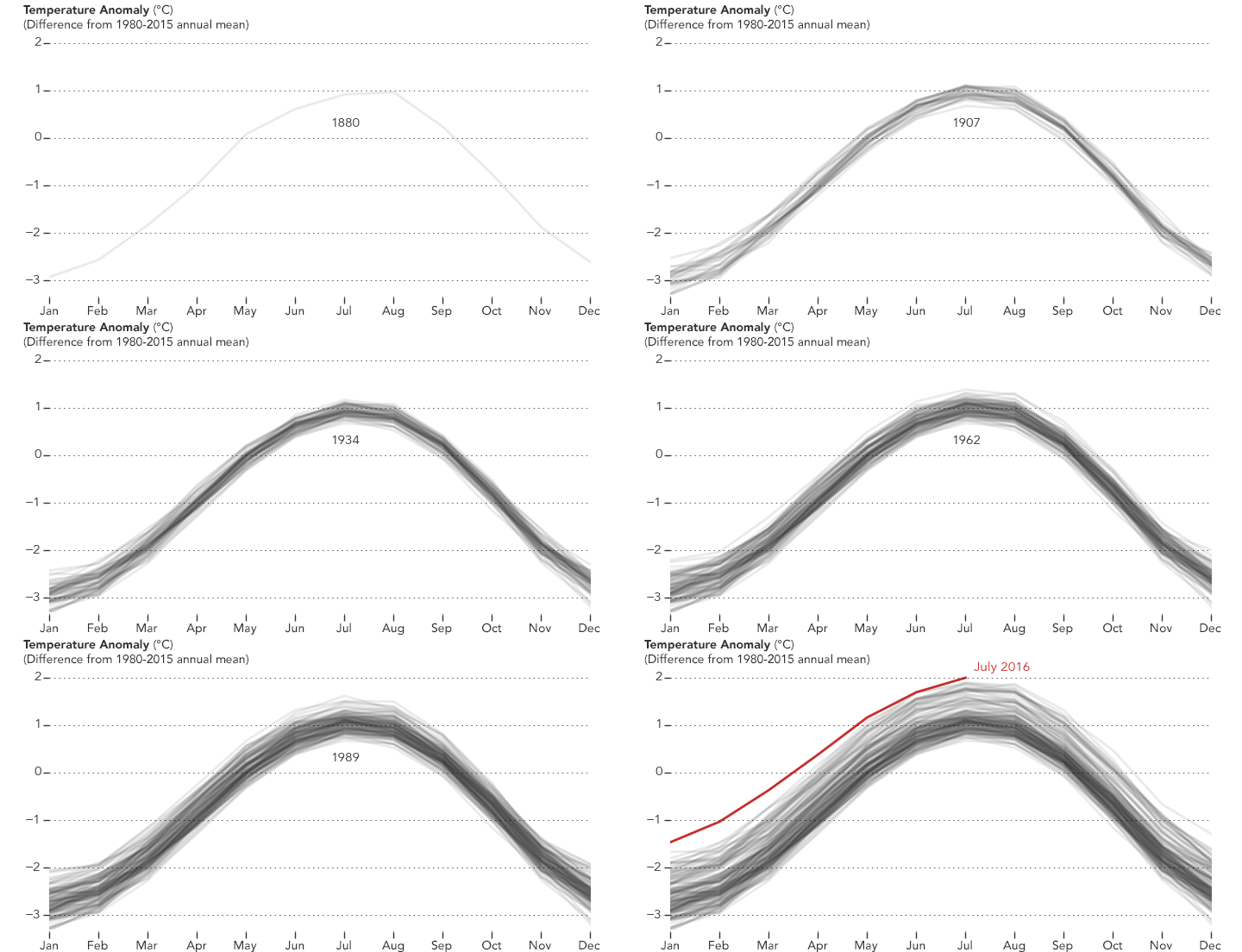
It's funny how NASA still insist on using ground temperatures to plot these meaningless graphs rather than use their own satellites. There has been a massive El Nino comparable to that of 1998, it remains to be seen how much of an effect the coming La Nina will have on global temperatures. There is more and more evidence that the Sun may well be entering its quietest period since the Maunder Minimum, although you can guarantee that even that will be blamed on Man.
Sent from my Lenovo K50-t5 using Tapatalk
Why would you expect thermometers at ground level to be less accurate than a satellite in space? If you wanted to know the temperature outside your house, what would you trust more? A thermometer outside your home, or some satellite?
Regardless, the errors in the satellite models have been corrected:
https://www.gfdl.noaa.gov/bibliography/related_files/tmlw0602.pdf
The only reason you trusted them more in the first place is because they agreed with your preconceived notions.