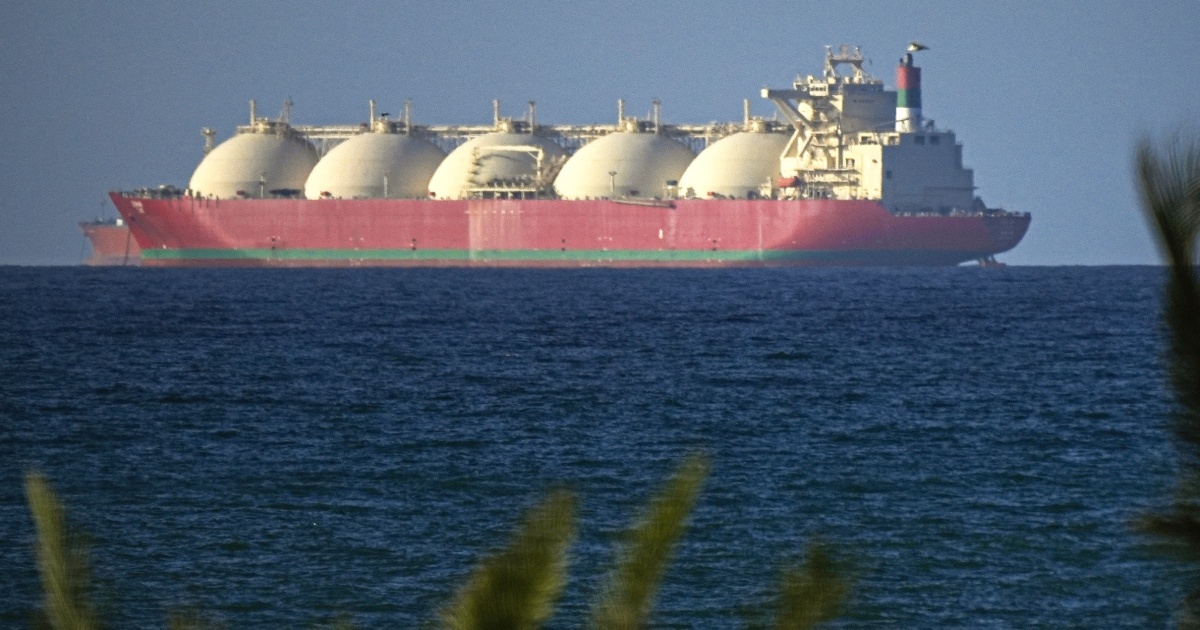
Iran closes Strait of Hormuz again.

Pretty much. A ship can make the passage and yes, there's some chance whatever it is, and it is likely pretty low right now, that Iran may try to stop that ship by attacking it, but the straight isn't closed.
Yesterday 6 ships passed through the strait, including one single oil tanker. That's less than 5% of normal traffic. It's closed. Iran closed it because TACO is the dumbest person who has ever left skid marks on the chair behind the Resolute Desk.
 
Yesterday 6 ships passed through the strait, including one single oil tanker. That's less than 5% of normal traffic. It's closed. Iran closed it because TACO is the dumbest person who has ever left skid marks on the chair behind the Resolute Desk.
So, the strait isn't closed. It is just shippers and insurers being overly cautious and not allowing their ships to sail through it.
 
So, the strait isn't closed. It is just shippers and insurers being overly cautious and not allowing their ships to sail through it.
And why are they being "overly cautious"? Why did only five ships pass the Strait on Wednesday?

Because Iran is claiming the right to approve who can pass through the Strait, claiming the right to escort ships, and claiming the right to possibly charge tolls.

Before your war, the Strait of Hormuz was international maritime waters where ships could transit unimpeded.
 
And why are they being "overly cautious"? Why did only five ships pass the Strait on Wednesday?

Because shippers put themselves in a position where they have maximized efficiency and profit using extremely large and few in number ships. That means the loss of any one ship is a disaster for them and the insurer. If instead, the norm for the transit was to use smaller coastal freighters in larger numbers and then put the cargo on large ships for open ocean transit, this problem wouldn't exist.

Some shippers are seeing the risk of a passage as lower than the cost of a loss of the ship and having it sit waiting for the strait to become completely safe again.
Because Iran is claiming the right to approve who can pass through the Strait, claiming the right to escort ships, and claiming the right to possibly charge tolls.

Iran can claim whatever they want. It's being able to enforce that that counts. If shippers won't pay and Iran can't force them then Iran's threats are hollow.
Before your war, the Strait of Hormuz was international maritime waters where ships could transit unimpeded.

What's your point? The Houthi made the same sort of threats about the Red Sea and were unable to make good on them there. I doubt Iran, using the same weapons and tactics, can do it to the Strait of Hormuz.
 
Ships CAN and DO transit the Strait every single day. It is NOT closed (otherwise ships wouldn't be transiting through it). It is only "closed" within people's imaginations (and this is largely related to the insurance issue that Damocles mentioned).

Ergo, the Strait is only "closed" within people's imaginations. Ships can and do go through it every single day.

Iran doesn't have the power to do much more than hurl threats (and some basic projectiles that can harass and/or damage a ship as it passes through). That sort of harassment is what insurance freaks out about, which "closes" the Strait (even though it isn't really closed).

Gardner's idea would work. It might not be the prettiest way to go about it, but it would work.
Any veritable report that ALL ships are allowed through?
 
Because shippers put themselves in a position where they have maximized efficiency and profit using extremely large and few in number ships. That means the loss of any one ship is a disaster for them and the insurer. If instead, the norm for the transit was to use smaller coastal freighters in larger numbers and then put the cargo on large ships for open ocean transit, this problem wouldn't exist.

Some shippers are seeing the risk of a passage as lower than the cost of a loss of the ship and having it sit waiting for the strait to become completely safe again.


Iran can claim whatever they want. It's being able to enforce that that counts. If shippers won't pay and Iran can't force them then Iran's threats are hollow.


What's your point? The Houthi made the same sort of threats about the Red Sea and were unable to make good on them there. I doubt Iran, using the same weapons and tactics, can do it to the Strait of Hormuz.
So it's a success and it is effectively closed to those ships?
 
Any veritable report that ALL ships are allowed through?
All ships can go through if they want to go through. Iran can't stop them.

Irrational fear, however, can stop them. Until that fear is removed, the Strait will be "closed" (within people's imaginations). However, the truth of the matter is that the Strait is open for any ship to sail through.
 
Back
Top