The Empires program to collapse the West is going fantastically well already and the Chinese first and foremost want Afghanistan stable, I rather doubt that that Taliban will allow Afghanistan to openly be a terrorist training area. There certainly will be no Muslim attacks on China.

You are using an out of date browser. It may not display this or other websites correctly.
You should upgrade or use an alternative browser.
You should upgrade or use an alternative browser.
Don’t be fooled: the Taliban hasn’t changed its spots
- Thread starter cancel2 2022
- Start date
cancel2 2022
Canceled
.
A highly decorated British Army officer said he is “absolutely shocked” at President Joe Biden’s Afghanistan withdrawal, rendering the 20-year war “a total waste.”
“6,500 people died, including 3,000 deaths at Twin Towers, and we didn’t achieve a single thing,” said retired Special Operations Staff Sgt. Trevor Coult, who has been feted by both the queen and President George W. Bush.
“He destroyed 20 years’ work in less than 24 hours.”
Coult served for 21 years in Bosnia, Iraq, and Afghanistan, where he was involved in 178 enemy engagements and survived three bomb blasts. The queen awarded him one of the United Kingdom’s highest honors, the military cross, for saving allied lives during an ambush. Bush also awarded him a presidential citation during a White House dinner.
Trevor Coult
“Biden is the most incompetent president in the history of the United States,” Coult told the Washington Examiner. “He has befriended terrorists. The White House is not a friend to the West. It’s a danger while he is president.”
Coult said he has spoken to numerous British generals and Special Operations officers about Biden, and they all agree that no one can understand his logic.
Trevor Coult
“We believe Biden is more of a threat to the West than the Taliban ever was. Without a shadow of a doubt. He betrayed us,” Coult said.
These comments come after former British prime minister Tony Blair said Europe and NATO should prepare to act when the U.S. is unwilling.
“For me, one of the most alarming developments of recent times has been the sense that the West lacks the capacity to formulate strategy,” Blair said. “That its short-term political imperatives have simply squeezed the space for long-term thinking.”
Blair is just one of several British politicians who have criticized Biden’s handling of the Afghanistan withdrawal, spurred on by reports that calls to the White House by Prime Minister Boris Johnson were ignored for 36 hours during the initial chaos. The U.K. Parliament held Biden in contempt.
As for future relations with the U.S., any military cooperation with its Western allies is likely finished until a new president is elected, Coult said, reiterating his conversations with military leaders and public sentiment.
“We don’t know what he is going to do. Why would you help someone who would turn your back on us?” Coult said. “He has nailed that door closed.”
https://news.yahoo.com/british-military-officer-biden-more-011700078.html
A highly decorated British Army officer said he is “absolutely shocked” at President Joe Biden’s Afghanistan withdrawal, rendering the 20-year war “a total waste.”
“6,500 people died, including 3,000 deaths at Twin Towers, and we didn’t achieve a single thing,” said retired Special Operations Staff Sgt. Trevor Coult, who has been feted by both the queen and President George W. Bush.
“He destroyed 20 years’ work in less than 24 hours.”
Coult served for 21 years in Bosnia, Iraq, and Afghanistan, where he was involved in 178 enemy engagements and survived three bomb blasts. The queen awarded him one of the United Kingdom’s highest honors, the military cross, for saving allied lives during an ambush. Bush also awarded him a presidential citation during a White House dinner.
Trevor Coult
“Biden is the most incompetent president in the history of the United States,” Coult told the Washington Examiner. “He has befriended terrorists. The White House is not a friend to the West. It’s a danger while he is president.”
Coult said he has spoken to numerous British generals and Special Operations officers about Biden, and they all agree that no one can understand his logic.
Trevor Coult
“We believe Biden is more of a threat to the West than the Taliban ever was. Without a shadow of a doubt. He betrayed us,” Coult said.
These comments come after former British prime minister Tony Blair said Europe and NATO should prepare to act when the U.S. is unwilling.
“For me, one of the most alarming developments of recent times has been the sense that the West lacks the capacity to formulate strategy,” Blair said. “That its short-term political imperatives have simply squeezed the space for long-term thinking.”
Blair is just one of several British politicians who have criticized Biden’s handling of the Afghanistan withdrawal, spurred on by reports that calls to the White House by Prime Minister Boris Johnson were ignored for 36 hours during the initial chaos. The U.K. Parliament held Biden in contempt.
As for future relations with the U.S., any military cooperation with its Western allies is likely finished until a new president is elected, Coult said, reiterating his conversations with military leaders and public sentiment.
“We don’t know what he is going to do. Why would you help someone who would turn your back on us?” Coult said. “He has nailed that door closed.”
https://news.yahoo.com/british-military-officer-biden-more-011700078.html
The claim that there is always a clear distinction between the Taliban, Al-Qaeda (Al Qaeda) and Islamic State Khorasan (ISK) is debatable.
It is true they each originate from different parts of the Islamist swamp. ISK has fought savagely with its rivals in the past, and contains some disgruntled defectors from both the Pakistani and Afghan Taliban.
What's more, the Haqqani network – one of whose senior members, Khalil Haqqani now controls security in Kabul – appears to bridge the two organisations.
~~
I have been saying this despite the constant meme from the morons that "ISIS-K and the Taliban are enemies"
At best they are rivals, at worse just different manifestations of jihadists
It is true they each originate from different parts of the Islamist swamp. ISK has fought savagely with its rivals in the past, and contains some disgruntled defectors from both the Pakistani and Afghan Taliban.
What's more, the Haqqani network – one of whose senior members, Khalil Haqqani now controls security in Kabul – appears to bridge the two organisations.
~~
I have been saying this despite the constant meme from the morons that "ISIS-K and the Taliban are enemies"
At best they are rivals, at worse just different manifestations of jihadists
ExpressLane
Verified User
Its sad that Biden has betrayed America's closest ally..
A highly decorated British Army officer said he is “absolutely shocked” at President Joe Biden’s Afghanistan withdrawal, rendering the 20-year war “a total waste.”
“6,500 people died, including 3,000 deaths at Twin Towers, and we didn’t achieve a single thing,” said retired Special Operations Staff Sgt. Trevor Coult, who has been feted by both the queen and President George W. Bush.
“He destroyed 20 years’ work in less than 24 hours.”
Coult served for 21 years in Bosnia, Iraq, and Afghanistan, where he was involved in 178 enemy engagements and survived three bomb blasts. The queen awarded him one of the United Kingdom’s highest honors, the military cross, for saving allied lives during an ambush. Bush also awarded him a presidential citation during a White House dinner.
Trevor Coult
“Biden is the most incompetent president in the history of the United States,” Coult told the Washington Examiner. “He has befriended terrorists. The White House is not a friend to the West. It’s a danger while he is president.”
Coult said he has spoken to numerous British generals and Special Operations officers about Biden, and they all agree that no one can understand his logic.
Trevor Coult
“We believe Biden is more of a threat to the West than the Taliban ever was. Without a shadow of a doubt. He betrayed us,” Coult said.
These comments come after former British prime minister Tony Blair said Europe and NATO should prepare to act when the U.S. is unwilling.
“For me, one of the most alarming developments of recent times has been the sense that the West lacks the capacity to formulate strategy,” Blair said. “That its short-term political imperatives have simply squeezed the space for long-term thinking.”
Blair is just one of several British politicians who have criticized Biden’s handling of the Afghanistan withdrawal, spurred on by reports that calls to the White House by Prime Minister Boris Johnson were ignored for 36 hours during the initial chaos. The U.K. Parliament held Biden in contempt.
As for future relations with the U.S., any military cooperation with its Western allies is likely finished until a new president is elected, Coult said, reiterating his conversations with military leaders and public sentiment.
“We don’t know what he is going to do. Why would you help someone who would turn your back on us?” Coult said. “He has nailed that door closed.”
https://news.yahoo.com/british-military-officer-biden-more-011700078.html
ExpressLane
Verified User
I heard a former Afghan ambassador the Taliban a Al Qaeda is like Coke and Pepsi if you don't have a label its hard to tell the difference.The claim that there is always a clear distinction between the Taliban, Al-Qaeda (Al Qaeda) and Islamic State Khorasan (ISK) is debatable.
It is true they each originate from different parts of the Islamist swamp. ISK has fought savagely with its rivals in the past, and contains some disgruntled defectors from both the Pakistani and Afghan Taliban.
What's more, the Haqqani network – one of whose senior members, Khalil Haqqani now controls security in Kabul – appears to bridge the two organisations.
~~
I have been saying this despite the constant meme from the morons that "ISIS-K and the Taliban are enemies"
At best they are rivals, at worse just different manifestations of jihadists
reagansghost
eternal
Don’t be fooled: the Taliban hasn’t changed its spots
too bad someone didn't tell Trump that before he made a deal with them let 5,000 of their fighters out of prison
reagansghost
eternal
I have been saying this despite the constant meme from the morons that "ISIS-K and the Taliban are enemies"
At best they are rivals, at worse just different manifestations of jihadists
and your point, moron?
who gives a fuck?
gemini104104
Verified User
Nothing has changed, the Left are always fooled by Islamists.
Don’t be fooled: the Taliban hasn’t changed its spots
Has the Taliban really changed its spots? Those who advocate talking to the Taliban make the case that they have. The organisation, they say, has recognised the mistakes it made in the years culminating in 9/11. Others claim that the organisation is now committed to local and national aims, not international terrorism, and that the Taliban have – or can be moderated – via the tool of engagement. All of these approaches seem to share the view there is a disconnect between the West’s reaction to events in Afghanistan, and the reality. But is this really the case?
Pakistan's national security adviser, Dr Moeed W Yusuf, has suggested the time has come to face facts: we need to accept the Taliban has won, negotiate with them and treat them as partners. In an event at Policy Exchange last month, he said Afghanistan needs international assistance not opprobrium. After a diplomatic career spent overwhelmingly in the Muslim majority world – and as author of the 2015 government review of the Muslim Brotherhood – I am sceptical the Taliban have really changed. Here’s why.
The claim that there is always a clear distinction between the Taliban, Al-Qaeda (Al Qaeda) and Islamic State Khorasan (ISK) is debatable. It is true they each originate from different parts of the Islamist swamp. ISK has fought savagely with its rivals in the past, and contains some disgruntled defectors from both the Pakistani and Afghan Taliban. The recent attacks at Kabul airport seem designed, at least in part, to challenge Taliban claims of complete control. But there are many shared areas of understanding of the world and of the necessity of armed jihad.
Some elements of the Taliban have long cooperated with Al Qaeda. There are consistent reports of AQ fighters embedded in certain Taliban structures, and that others are now heading to Afghanistan. Amin ul-Haq, a former associate of bin Laden, for example, has been filmed in Nangahar province, returning from Pakistan in a convoy that waved Taliban flags.
What's more, the Haqqani network – one of whose senior members, Khalil Haqqani now controls security in Kabul – appears to bridge the two organisations. As for Al Qaeda, this week they issued a statement expressing their delight at the Taliban’s victory, in which they referred to America as the ‘head of disbelief’. They speak of an ‘Islamic Emirate’, and Al Qaeda continues to pledge allegiance to Mullah Haibatullah Akhundzada, the Emir of the Taliban. Last time out, neither Saudi Arabia nor the United States were able to persuade the Taliban to break with bin Laden and Al Qaeda, despite the likely consequences. Al Qaeda’s respect for the Taliban is clear. Are we sure the Taliban’s view of these matters has changed substantially in the meantime?
A clear warning from history exists for those who would believe some form of ‘new Taliban’ is to be found in Kabul. In January 1979, the former US Attorney-General, Ramsey Clark, flew to France to meet Ayatollah Khomeini, the leader of the religious opposition to the Shah of Iran. This took place shortly before the Shah’s flight from – and Khomeini’s triumphant return to – Tehran, which ended the first phase of the Iranian Revolution.
Clark told the New York Times that Khomeini hoped:
'The American people, the United States Congress and President Carter will respect our wishes and the United States will not interfere through the army, with American advisers, the CIA...and let the nation determine its own fate.'
.
He added that Khomeini was 'a brave man' and that 'the greatest risk' in fact came from the thousands of US military advisers based in Iran. This wasn’t an isolated view. Then US permanent representative to the UN, Andrew Young, described Khomeini as 'a sort of saint'. The US ambassador in Tehran, Bill Sullivan, had compared him to Gandhi.
Michel Foucault, the French philosopher and theorist (and patron saint of critical theory) had been there first. He met Khomeini in France in 1978 and had seen in him and his followers the intoxicating birth of a new 'political spirituality' (as I have extensively discussed in my recent Policy Exchange paper on Islamism and the Left).
There were many others at the time prepared to welcome the overthrow of the Shah and the capture of a large Muslim-majority state by the forces of Islamist revolution. And Khomeini played along.
While still in exile, he called simply for independence, freedom and democracy. He promised to preserve the rights that women had acquired under the Pahlavis. He allowed the drafting of a constitution, reflecting the importance many attached to the thwarted constitutional revolution 70 years earlier. But the minute he came to power, he ignored any constitutional constraints and proclaimed Islamic rule under a single authoritarian leader: himself. He brutally reimposed severe restrictions on women that continue to this day. And he sanctioned the persecution, arrest, judicial murder and assassination of his opponents. So yes. Just like Gandhi. Or a sort of saint.
The Taliban have spent much of the last five years murdering Afghan women, teachers, intellectuals, lawyers and activists. This is a standard Islamist revolutionary tactic: thin the ranks of those who might persuasively oppose the Islamist tide. It happened in East Pakistan/Bangladesh in 1971, Iran after 1979, Algeria after 1991, Syria after 2000, in Libya and Tunisia after 2011, and in Lebanon and Iraq throughout the last 20 years. This has happened through targeted assassinations, car bombs, suicide bombings and drive-by shootings. Why stop now?
It's also worth remembering that the Taliban’s commitments to protecting the rights of women and others are always qualified by the phrase 'within an Islamic context'. This again is a standard Islamist tactic. It is one Khomeini used in 1979. Too many Westerners hear it as a qualified undertaking to respect international norms. What it really means is 'Sharia courts alone will decide'.
Will the Taliban moderate itself?
There is a curious desire by many in the West, often among people who think of themselves as liberals, to see only what they want to see in Islamist movements from the Muslim Brotherhood to Al Qaeda, Hezbollah, Hamas and the Iranian-backed militias in Iraq. When Islamic State were at their height, there were even voices claiming that we would need to talk to them too. Foreign fighters in Syria were compared to the International Brigades. Here were rational actors who would be amenable to the voice of reason.
Now we hear the same siren song about the Taliban. They have learned from their previous experience of ruling Afghanistan that alienating the international community is a bad thing. They have moderated their behaviour and are now making most of the right noises about human rights and their relationship to Al Qaeda.
In any case, they share the same enemy as the West: Islamic State. They have fought effectively in the recent past against its ISK franchise. In that sense, perhaps they will be our allies in the war against terror, a bulwark against globalised jihad? If they want to enact a version of Islamist rule inside Afghanistan, well, that’s their business. Islam is the prevailing faith in Afghanistan and many Afghans, perhaps a majority, are deeply conservative. Besides, we tried to impose a western liberal model on the country and failed, like so many before who sought to hustle the East.
There’s a suggestive parallel perhaps with Iran and Al Qaeda. Shia Iran is, in theory, deeply at odds with Sunni Al Qaeda. Yet Iran provided refuge – admittedly under strict supervision – to senior members of Al Qaeda. This even included members of bin Laden’s own family and, by all accounts, Saif al Adel, perhaps his most trusted deputy, after 2002. Ideological purity, it seems, can exist alongside brutal pragmatism.
It is clear that there is a need in western capitals for pragmatism. But pragmatism implies realism. And realistically the Taliban are unlikely to change their fundamental positions. That is what makes the Taliban the Taliban, after all. And it is these positions that tell them they have to ban music and unnecessary laughter – and murder musicians and comedians. This is why they sought to confine women to the home 25 years ago and persecute ethnic and religious minorities. What would they do differently this time?
https://www.spectator.co.uk/article/...nged-its-spotsLast edited by Primavera; Yesterday at 01:17 PM.
In terms of the tRump's buddies as in the Afghan Taliban not changing it's spots, so hasn't the GQP or repuke and enemy from within Taliban that needs to be dealt with too at war against Democracy and the common decency of humanity.
Last edited:

In terms of the tRump's buddies as in the Afghan Taliban not changing it's spots, so hasn't the GQP or repuke and enemy from within Taliban that needs to be dealt with too at war against Democracy and the common decency of humanity.
We REALLY need to find the mule that kicked you in the head as a child so it cant do the same thing to anyone else. You poor poor bastard,.....must be hell going thru life like that.
gemini104104
Verified User
We REALLY need to find the mule that kicked you in the head as a child so it cant do the same thing to anyone else. You poor poor bastard,.....must be hell going thru life like that.
You are a miscreant and would be a insult to the dignity of a mule. Utterly useless and worthless as a so-called human being as it appears.
cancel2 2022
Canceled
We REALLY need to find the mule that kicked you in the head as a child so it cant do the same thing to anyone else. You poor poor bastard,.....must be hell going thru life like that.
He's one weird mofo.
well put. there are differences in ideology.I heard a former Afghan ambassador the Taliban a Al Qaeda is like Coke and Pepsi if you don't have a label its hard to tell the difference.
AQ wants to work in the background, and ISIS wants the caliphate.
But for our counter-terrorism they are much the same

Nothing has changed, the Left are always fooled by Islamists.
Don’t be fooled: the Taliban hasn’t changed its spots
Has the Taliban really changed its spots? Those who advocate talking to the Taliban make the case that they have. The organisation, they say, has recognised the mistakes it made in the years culminating in 9/11. Others claim that the organisation is now committed to local and national aims, not international terrorism, and that the Taliban have – or can be moderated – via the tool of engagement. All of these approaches seem to share the view there is a disconnect between the West’s reaction to events in Afghanistan, and the reality. But is this really the case?
Pakistan's national security adviser, Dr Moeed W Yusuf, has suggested the time has come to face facts: we need to accept the Taliban has won, negotiate with them and treat them as partners. In an event at Policy Exchange last month, he said Afghanistan needs international assistance not opprobrium. After a diplomatic career spent overwhelmingly in the Muslim majority world – and as author of the 2015 government review of the Muslim Brotherhood – I am sceptical the Taliban have really changed. Here’s why.
The claim that there is always a clear distinction between the Taliban, Al-Qaeda (Al Qaeda) and Islamic State Khorasan (ISK) is debatable. It is true they each originate from different parts of the Islamist swamp. ISK has fought savagely with its rivals in the past, and contains some disgruntled defectors from both the Pakistani and Afghan Taliban. The recent attacks at Kabul airport seem designed, at least in part, to challenge Taliban claims of complete control. But there are many shared areas of understanding of the world and of the necessity of armed jihad.
Some elements of the Taliban have long cooperated with Al Qaeda. There are consistent reports of AQ fighters embedded in certain Taliban structures, and that others are now heading to Afghanistan. Amin ul-Haq, a former associate of bin Laden, for example, has been filmed in Nangahar province, returning from Pakistan in a convoy that waved Taliban flags.
What's more, the Haqqani network – one of whose senior members, Khalil Haqqani now controls security in Kabul – appears to bridge the two organisations. As for Al Qaeda, this week they issued a statement expressing their delight at the Taliban’s victory, in which they referred to America as the ‘head of disbelief’. They speak of an ‘Islamic Emirate’, and Al Qaeda continues to pledge allegiance to Mullah Haibatullah Akhundzada, the Emir of the Taliban. Last time out, neither Saudi Arabia nor the United States were able to persuade the Taliban to break with bin Laden and Al Qaeda, despite the likely consequences. Al Qaeda’s respect for the Taliban is clear. Are we sure the Taliban’s view of these matters has changed substantially in the meantime?
A clear warning from history exists for those who would believe some form of ‘new Taliban’ is to be found in Kabul. In January 1979, the former US Attorney-General, Ramsey Clark, flew to France to meet Ayatollah Khomeini, the leader of the religious opposition to the Shah of Iran. This took place shortly before the Shah’s flight from – and Khomeini’s triumphant return to – Tehran, which ended the first phase of the Iranian Revolution.
Clark told the New York Times that Khomeini hoped:
'The American people, the United States Congress and President Carter will respect our wishes and the United States will not interfere through the army, with American advisers, the CIA...and let the nation determine its own fate.'
.
He added that Khomeini was 'a brave man' and that 'the greatest risk' in fact came from the thousands of US military advisers based in Iran. This wasn’t an isolated view. Then US permanent representative to the UN, Andrew Young, described Khomeini as 'a sort of saint'. The US ambassador in Tehran, Bill Sullivan, had compared him to Gandhi.
Michel Foucault, the French philosopher and theorist (and patron saint of critical theory) had been there first. He met Khomeini in France in 1978 and had seen in him and his followers the intoxicating birth of a new 'political spirituality' (as I have extensively discussed in my recent Policy Exchange paper on Islamism and the Left).
There were many others at the time prepared to welcome the overthrow of the Shah and the capture of a large Muslim-majority state by the forces of Islamist revolution. And Khomeini played along.
While still in exile, he called simply for independence, freedom and democracy. He promised to preserve the rights that women had acquired under the Pahlavis. He allowed the drafting of a constitution, reflecting the importance many attached to the thwarted constitutional revolution 70 years earlier. But the minute he came to power, he ignored any constitutional constraints and proclaimed Islamic rule under a single authoritarian leader: himself. He brutally reimposed severe restrictions on women that continue to this day. And he sanctioned the persecution, arrest, judicial murder and assassination of his opponents. So yes. Just like Gandhi. Or a sort of saint.
The Taliban have spent much of the last five years murdering Afghan women, teachers, intellectuals, lawyers and activists. This is a standard Islamist revolutionary tactic: thin the ranks of those who might persuasively oppose the Islamist tide. It happened in East Pakistan/Bangladesh in 1971, Iran after 1979, Algeria after 1991, Syria after 2000, in Libya and Tunisia after 2011, and in Lebanon and Iraq throughout the last 20 years. This has happened through targeted assassinations, car bombs, suicide bombings and drive-by shootings. Why stop now?
It's also worth remembering that the Taliban’s commitments to protecting the rights of women and others are always qualified by the phrase 'within an Islamic context'. This again is a standard Islamist tactic. It is one Khomeini used in 1979. Too many Westerners hear it as a qualified undertaking to respect international norms. What it really means is 'Sharia courts alone will decide'.
Will the Taliban moderate itself?
There is a curious desire by many in the West, often among people who think of themselves as liberals, to see only what they want to see in Islamist movements from the Muslim Brotherhood to Al Qaeda, Hezbollah, Hamas and the Iranian-backed militias in Iraq. When Islamic State were at their height, there were even voices claiming that we would need to talk to them too. Foreign fighters in Syria were compared to the International Brigades. Here were rational actors who would be amenable to the voice of reason.
Now we hear the same siren song about the Taliban. They have learned from their previous experience of ruling Afghanistan that alienating the international community is a bad thing. They have moderated their behaviour and are now making most of the right noises about human rights and their relationship to Al Qaeda.
In any case, they share the same enemy as the West: Islamic State. They have fought effectively in the recent past against its ISK franchise. In that sense, perhaps they will be our allies in the war against terror, a bulwark against globalised jihad? If they want to enact a version of Islamist rule inside Afghanistan, well, that’s their business. Islam is the prevailing faith in Afghanistan and many Afghans, perhaps a majority, are deeply conservative. Besides, we tried to impose a western liberal model on the country and failed, like so many before who sought to hustle the East.
There’s a suggestive parallel perhaps with Iran and Al Qaeda. Shia Iran is, in theory, deeply at odds with Sunni Al Qaeda. Yet Iran provided refuge – admittedly under strict supervision – to senior members of Al Qaeda. This even included members of bin Laden’s own family and, by all accounts, Saif al Adel, perhaps his most trusted deputy, after 2002. Ideological purity, it seems, can exist alongside brutal pragmatism.
It is clear that there is a need in western capitals for pragmatism. But pragmatism implies realism. And realistically the Taliban are unlikely to change their fundamental positions. That is what makes the Taliban the Taliban, after all. And it is these positions that tell them they have to ban music and unnecessary laughter – and murder musicians and comedians. This is why they sought to confine women to the home 25 years ago and persecute ethnic and religious minorities. What would they do differently this time?
https://www.spectator.co.uk/article/...nged-its-spotsLast edited by Primavera; Yesterday at 01:17 PM.
The Taliban has not changed one bit, perfect example for why Afghanistan was a mistake, after 20 years and 2 Trillion dollars we could not cause an inch of change. That way does not work!
cancel2 2022
Canceled
The Taliban has not changed one bit, perfect example for why Afghanistan was a mistake, after 20 years and 2 Trillion dollars we could not cause an inch of change. That way does not work!
Biden the dozy cunt has given the Taliban the means to kill more efficiently. Yet all an obnoxious snidy cunt like you cares about is your own precious fucking ego.
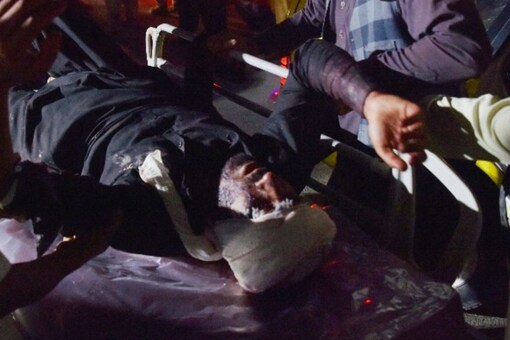
https://www.news18.com/news/world/h...ing-protesting-existing-as-women-4151411.html
Biden the dozy cunt has given the Taliban the means to kill more efficiently. Yet all an obnoxious snidy cunt like you cares about is your own precious fucking ego.
https://www.news18.com/news/world/h...ing-protesting-existing-as-women-4151411.html
False, and you are the cunt.
This should be posted on. Bloody Biden’s desk.

This should be posted on. Bloody Biden’s desk.
He is never at his desk.
He is never at his desk.
You just say anything without any info. Biden is working the job. Trump golfed it into submission.