100 years ago with Naziism in 1926

Jake Starkey

Verified User
Naziism was in full swing 100 years ago.

Here is a list of events that year.

The Bamberg Conference

  • Date: 14 February 1926
  • Location: Bamberg, Bavaria
  • What it was:
    • A closed‑door leadership conference, not a mass rally, but historically crucial.
    • Hitler reasserted control over the party after internal northern–southern factionalism.
    • Set ideological direction for the next decade.
  • Why it matters:
    • Reunified the party after the Putsch ban.
    • Re‑centralized authority under Hitler.

2. Nuremberg Party Rally of 1926 (Reichsparteitag)

  • Dates: 1–4 August 1926
  • Location: Nuremberg, Franconia
  • What it was:
    • The first full‑scale Nazi Party Rally since 1923.
    • Sometimes called the “Rally of the Flag” (Reichsparteitag der Wiedergeburt).
    • Featured SA and SS parades, mass meetings, and Hitler’s keynote speeches.
  • Why it matters:
    • Reintroduced the Nazi movement to the German public as a unified, disciplined force.
    • Established Nuremberg as the permanent symbolic home of future rallies.

3. Munich Commemorative Events (Beer Hall Putsch Anniversary)

  • Date: 8–9 November 1926
  • Location: Munich, Bavaria
  • What it was:
    • Annual remembrance of the 1923 Putsch.
    • Torchlight procession from the Bürgerbräukeller to the Feldherrnhalle.
    • Swearing‑in ceremonies for new party members.
  • Why it matters:
    • Helped build the “martyr cult” around the failed coup.
    • Reinforced Munich as the spiritual center of the movement.

4. Regional SA and Party Rallies (Throughout 1926)

These were not “major” national rallies but were important for party growth:

Saxony & Thuringia (Spring–Autumn 1926)

  • Frequent SA marches and propaganda rallies in cities like Weimar, Jena, Gera, Erfurt, and Chemnitz.
  • Often met with counter‑demonstrations from Social Democrats and Communists.

Ruhr Region (1926)

  • Smaller rallies in Essen, Dortmund, and Bochum aimed at industrial workers.
  • These were attempts to break into left‑leaning labor strongholds.

Berlin (Late 1926)

  • Still a weak area for the Nazis, but Goebbels (appointed Gauleiter in October 1926) began organizing more visible propaganda events.
  • These were the seeds of the later Berlin propaganda machine.

🧭 Summary Table​

EventDateLocationSignificance
Bamberg Conference14 Feb 1926BambergReunified party leadership; ideological consolidation
Nuremberg Party Rally1–4 Aug 1926NurembergFirst major rally since 1923; symbolic rebirth
Putsch Anniversary Events8–9 Nov 1926MunichRitual commemoration; reinforced party mythology
Regional SA RalliesThroughout 1926Saxony, Thuringia, Ruhr, BerlinGrassroots mobilization and propaganda
 
Citations for the above post.
  • Ian Kershaw, Hitler: 1889–1936 Hubris
    • Detailed discussion of the Bamberg Conference and its role in consolidating Hitler’s authority.
    • See especially pp. 265–272.
  • Joachim Fest, Hitler
    • Covers the ideological disputes between northern and southern factions and how Bamberg resolved them.
  • Peter Longerich, Hitler: A Biography
    • Provides a close reading of Hitler’s speeches and the internal party dynamics leading up to Bamberg.

2. Nuremberg Party Rally of 1926 — 1–4 August 1926

Primary and Secondary Sources

  • Klaus P. Fischer, Nazi Germany: A New History
    • Identifies the 1926 rally as the first major post‑Putsch mass rally and explains its symbolic importance.
  • Richard J. Evans, The Coming of the Third Reich
    • Discusses the revival of Nazi propaganda and the reestablishment of Nuremberg as the rally site.
  • The Nuremberg Municipal Archives (Stadtarchiv Nürnberg)
    • Hold original photographs, programs, and police reports from the 1926 rally.
  • Cornelia Schmitz‑Berning, Vokabular des Nationalsozialismus
    • Provides context for the “Rally of the Flag” (Reichsparteitag der Wiedergeburt).

3. Munich Putsch Anniversary Events — 8–9 November 1926

Primary and Secondary Sources

  • David Jablonsky, The Nazi Party in Dissolution: Hitler and the Verbotzeit, 1923–1925
    • Explains how the Putsch anniversary became a ritualized event after the party’s re‑legalization.
  • Ulrich Herbert (ed.), National Socialist Extermination Policies
    • Contains essays on the development of Nazi political ritual and myth‑making.
  • Michael Burleigh, The Third Reich: A New History
    • Describes the cult of the “martyrs” and the annual commemorations in Munich.

4. Regional SA and Propaganda Rallies (Saxony, Thuringia, Ruhr, Berlin)

Primary and Secondary Sources

  • Bruce Campbell, The SA Generals and the Rise of Nazism
    • Documents SA activity in Saxony, Thuringia, and the Ruhr during 1925–1927.
  • Conan Fischer, The Rise of the Nazis
    • Provides a regional breakdown of Nazi propaganda efforts in industrial and urban centers.
  • Joseph Goebbels, The Goebbels Diaries: 1925–1926 (edited editions)
    • First‑hand accounts of early propaganda events in Berlin after Goebbels became Gauleiter in late 1926.
  • Detlef Mühlberger, Hitler’s Followers: Studies in the Sociology of the Nazi Movement
    • Analyzes regional variations in Nazi support and rally activity.

🧭

These works are widely used by historians of the Weimar Republic and the Third Reich because they:

  • Rely on archival material
  • Provide detailed chronologies
  • Distinguish between national rallies, regional propaganda events, and internal party meetings
  • Offer context for how 1926 fits into the broader reconstruction of the Nazi Party after the Putsch ban
 
Naziism was in full swing 100 years ago.

Here is a list of events that year.

The Bamberg Conference

  • Date: 14 February 1926
  • Location: Bamberg, Bavaria
  • What it was:
    • A closed‑door leadership conference, not a mass rally, but historically crucial.
    • Hitler reasserted control over the party after internal northern–southern factionalism.
    • Set ideological direction for the next decade.
  • Why it matters:
    • Reunified the party after the Putsch ban.
    • Re‑centralized authority under Hitler.

2. Nuremberg Party Rally of 1926 (Reichsparteitag)

  • Dates: 1–4 August 1926
  • Location: Nuremberg, Franconia
  • What it was:
    • The first full‑scale Nazi Party Rally since 1923.
    • Sometimes called the “Rally of the Flag” (Reichsparteitag der Wiedergeburt).
    • Featured SA and SS parades, mass meetings, and Hitler’s keynote speeches.
  • Why it matters:
    • Reintroduced the Nazi movement to the German public as a unified, disciplined force.
    • Established Nuremberg as the permanent symbolic home of future rallies.

3. Munich Commemorative Events (Beer Hall Putsch Anniversary)

  • Date: 8–9 November 1926
  • Location: Munich, Bavaria
  • What it was:
    • Annual remembrance of the 1923 Putsch.
    • Torchlight procession from the Bürgerbräukeller to the Feldherrnhalle.
    • Swearing‑in ceremonies for new party members.
  • Why it matters:
    • Helped build the “martyr cult” around the failed coup.
    • Reinforced Munich as the spiritual center of the movement.

4. Regional SA and Party Rallies (Throughout 1926)

These were not “major” national rallies but were important for party growth:

Saxony & Thuringia (Spring–Autumn 1926)

  • Frequent SA marches and propaganda rallies in cities like Weimar, Jena, Gera, Erfurt, and Chemnitz.
  • Often met with counter‑demonstrations from Social Democrats and Communists.

Ruhr Region (1926)

  • Smaller rallies in Essen, Dortmund, and Bochum aimed at industrial workers.
  • These were attempts to break into left‑leaning labor strongholds.

Berlin (Late 1926)

  • Still a weak area for the Nazis, but Goebbels (appointed Gauleiter in October 1926) began organizing more visible propaganda events.
  • These were the seeds of the later Berlin propaganda machine.

🧭 Summary Table​

EventDateLocationSignificance
Bamberg Conference14 Feb 1926BambergReunified party leadership; ideological consolidation
Nuremberg Party Rally1–4 Aug 1926NurembergFirst major rally since 1923; symbolic rebirth
Putsch Anniversary Events8–9 Nov 1926MunichRitual commemoration; reinforced party mythology
Regional SA RalliesThroughout 1926Saxony, Thuringia, Ruhr, BerlinGrassroots mobilization and propaganda
There are going to be Nuremberg type trials in America in 2029. Hauled before the people will be Miller, Bovino, Noem, that Tricia whatshername, DHS's "Tokyo Rose" and of course Bondi.
 
There are going to be Nuremberg type trials in America in 2029. Hauled before the people will be Miller, Bovino, Noem, that Tricia whatshername, DHS's "Tokyo Rose" and of course Bondi.
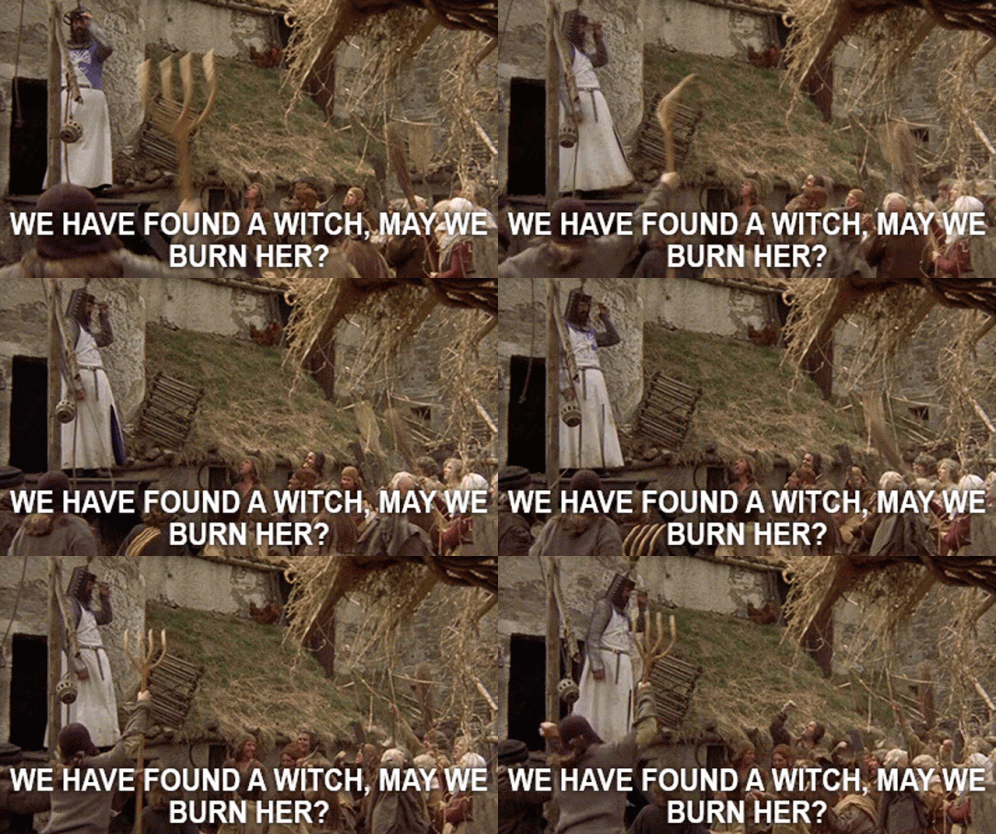
So, you're advocating something more like this, hum?

burn-the-witch-monty-python.gif
 
So, you're advocating something more like this, hum?

burn-the-witch-monty-python.gif

So, you're advocating something more like this, hum?
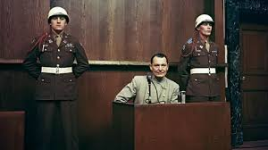
Oh ho ho ho.. that was so fucking funny beeyatch. Naw.. I was thinking more along the lines of this:

1769754699943.png

Oh, Teresa. That fact you can joke while there are thousands of masked goons with zero accountability and total immunity roaming our city's streets murdering and beating American citizens.

I'm offering you a way out for both of us, bitch. All you gotta do is get up on that chair boss. I hear it doesn't even hurt - you just go to sleep..

Forever.

1769754814936.png
 
Oh ho ho ho.. that was so fucking funny beeyatch. Naw.. I was thinking more along the lines of this:

View attachment 72633

Oh, Teresa. That fact you can joke while there are thousands of masked goons with zero accountability and total immunity roaming our city's streets murdering and beating American citizens.

I'm offering you a way out for both of us, bitch. All you gotta do is get up on that chair boss. I hear it doesn't even hurt - you just go to sleep..

Forever.

View attachment 72634
Ah! So not so much medieval or mob violence but rather more like...

nkorea3-articleLarge.jpg
 
Back
Top