It's super common to see pronouns listed like this: he/his, she/her, they/their. But occasionally, you might also find a list like this: he/him/bun/bunny. More than any other generation, Gen Z is broadening their view and challenging the traditional idea of gender. In fact, Time Magazine reported in 2023 that more than half of Gen Z-ers believe that there are more than two genders.
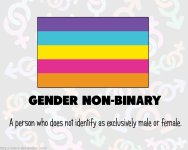
A gender that goes beyond the traditional binary of male and female is called "nonbinary." If you don't personally know someone who is nonbinary, you've probably noticed that some big-name celebrities — like Atypical star Brigette Lundy-Pain and The Last of Us star Bella Ramsey — have publicized their nonbinary identities.
Within the nonbinary community, there is a small percentage of people who are choosing to take gender outside of the human realm altogether. If you’re the parent of a child who falls within this percentage, you’re probably wondering how you can support your kid’s identity. I asked experts for insight and advice, and here’s what I learned.
These pronouns, created using existing words or themes, might look like this: wol/wolf/wolfself or fae/faer/faeself or vamp/vampself.
According to research from The Trevor Project, the number of people using nounself pronouns is very small. They tend to pop up among intense fandoms, gaming communities, and neurodiverse youth. Some kids choose to use them only in certain contexts, such as online roleplay, or only with certain people, like friends or relatives.
A gender that goes beyond the traditional binary of male and female is called "nonbinary." If you don't personally know someone who is nonbinary, you've probably noticed that some big-name celebrities — like Atypical star Brigette Lundy-Pain and The Last of Us star Bella Ramsey — have publicized their nonbinary identities.
Within the nonbinary community, there is a small percentage of people who are choosing to take gender outside of the human realm altogether. If you’re the parent of a child who falls within this percentage, you’re probably wondering how you can support your kid’s identity. I asked experts for insight and advice, and here’s what I learned.
What are xenogenders and neopronouns?
The xenogender label popped up on Tumblr about 10 years ago for people who describe their gender using plants, animals, creatures, and objects. This practice is accompanied by a separate but related one involving pronouns, with some kids and teens choosing to use "nounself" pronouns.These pronouns, created using existing words or themes, might look like this: wol/wolf/wolfself or fae/faer/faeself or vamp/vampself.
According to research from The Trevor Project, the number of people using nounself pronouns is very small. They tend to pop up among intense fandoms, gaming communities, and neurodiverse youth. Some kids choose to use them only in certain contexts, such as online roleplay, or only with certain people, like friends or relatives.