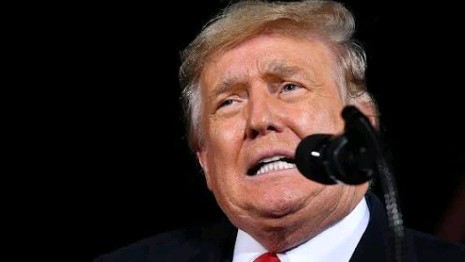
Trump goes into full panic mode over fear of losing, then calls himself ‘the affordability president’ as midterms ‘look ugly’ for Republicans

Maze

吃瓜群众

Trump goes into full panic mode over fear of losing, then calls himself ‘the affordability president’ as midterms ‘look ugly’ for Republicans​


Washington D.C. – President Donald Trump has crowned himself the “Affordability President” in a bombastic Truth Social rant, crediting his “Most Favored Nation” pricing policy with slashing prescription drug costs by astronomical figures—”500%, 600%, 700%,” and beyond.

The Saturday morning missive, laced with hyperbolic praise and a call to arms for Republicans, arrives amid mounting GOP anxiety over economic headwinds that could jeopardize their congressional majorities in the 2026 midterms.

In the post, Trump urged his party to “TALK LOUDLY AND PROUDLY” about what he described as a “revolution in medicine, the biggest and most important event, EVER,” insisting it would propel Republicans to “RECORD NUMBERS” in next year’s elections.

The declaration follows a bruising November off-year sweep by Democrats, where affordability emerged as a decisive voter issue, and comes as fact-checkers once again dismantle the president’s elastic use of percentages.


The Truth Social Tirade: Fuzzy Math Meets Bold Claims

Trump’s message, timestamped early Saturday, opened with a flourish of all-caps bravado: “Because I have invoked FAVORED NATIONS STATUS FOR THE UNITED STATES OF AMERICA, DRUG PRICES ARE FALLING AT LEVELS NEVER SEEN BEFORE, 500%, 600%, 700%, and more.” He positioned the achievement as uniquely his own—”No other President has been able to do this, BUT I HAVE!”—and extended it to a broader vision of “much less expensive, and far better, HEALTHCARE.”

The MFN policy, revived from Trump’s first term, aims to tie U.S. drug prices to the lowest rates paid by other developed nations, pressuring pharmaceutical giants to lower costs or risk losing Medicare reimbursements.

Recent White House announcements highlighted deals with Eli Lilly and Novo Nordisk to cap prices on drugs like Ozempic and Wegovy at $150 per month for initial doses—potentially saving Medicare billions but not yet translating to immediate, widespread consumer relief.

Trump framed these as immediate windfalls, but the math has drawn swift ridicule from economists and fact-checkers.

A 500% price cut, for instance, would reduce a $100 medication to -$400—effectively paying patients to take it home. Health economist Timothy McBride called such claims “just not logical,” noting that reductions over 100% defy basic arithmetic.

This isn’t Trump’s first foray into percentage hyperbole; in July, he promised 1,500% cuts, prompting similar debunkings from major outlets. Analysts emphasize that while U.S. prices remain 3-10 times higher than in peer nations, actual savings under MFN—estimated at 36% for 15 high-cost drugs starting in 2027—fall far short of the president’s figures.

White House spokesperson Kush Desai defended the rhetoric as highlighting “exponentially” higher U.S. costs abroad, but critics argue it risks eroding trust amid real economic strains like inflation and stagnant wages.

Trump’s embrace of “affordability” marks an evolution. Just weeks ago, he dismissed the term as a “new word” coined by Democrats, insisting prices had already plummeted under his watch and faulting Republicans for not touting victories loudly enough.

During Thanksgiving remarks, he cited a 25% cheaper holiday meal at Walmart compared to the Biden era as proof—though broader data shows grocery costs up 20% since 2021.

The shift intensified after Democrats’ November triumphs in governors’ races in New Jersey, Ohio, and Pennsylvania, where affordability dominated exit polls and campaigns.

Trump blamed the losses on a protracted government shutdown—ironically extended by GOP demands for spending cuts—and quipped that Democrats won only because “TRUMP WASN’T ON THE BALLOT.” Now, with midterms looming, he’s seizing the narrative, directing aides to center economic messaging on his wins and warning against ceding ground to opponents.

Republicans are heeding the alarm bells. Former Fox News host Bill O’Reilly urged GOP leaders to “get something going” on costs, while Laura Ingraham warned that 2026 “look ugly” without action.

Rep. Jeff Van Drew (R-N.J.) echoed this, predicting his party would “get killed” if it ignores rising health care premiums amid the Affordable Care Act open enrollment. GOP strategists like Karl Rove advocate uniting behind a growth agenda, with Trump planning a cross-country “affordability tour” to rally the base.

Private fears run deeper: Lawmakers whisper of a potential House wipeout and Senate losses in battlegrounds like North Carolina and Maine, with up to 60 competitive House races on the horizon.

Even party switchers, like former Republican Robb Ryerse running as a
Democrat in Arkansas, cite affordability as a motivator. Public sentiment reflects frustration, with many urging Trump to prioritize middle-class wallets over distractions.


House Speaker Mike Johnson has teased an “affordability agenda” for December, potentially including tax tweaks from the One Big Beautiful Bill Act, but skeptics doubt unity amid a razor-thin majority.

For Trump, the midterms are personal: Losing Congress could stall his agenda, from border security to tax overhauls. Yet, real savings—like $685 million for patients from Medicare negotiations—pale against the “fantasy math” of 700% drops. Whether voters buy the spin or demand substance will define not just 2026, but the affordability of Trump’s second-term legacy.
 
Last edited by a moderator:
I want to know how does he reduce drug prices 500,,. 600, 700 Percent?
Are the drug companies going to be paying us to take their drugs?
If you reduce the price of something 100% then it is free , so if the price of a drug is say $10 are the drug companies going to pay us 40, 50, 60 dollars to use their drugs?
Trump has to be one of the most stupidest people on earth.
 

Trump goes into full panic mode over fear of losing, then calls himself ‘the affordability president’ as midterms ‘look ugly’ for Republicans​


Washington D.C. – President Donald Trump has crowned himself the “Affordability President” in a bombastic Truth Social rant, crediting his “Most Favored Nation” pricing policy with slashing prescription drug costs by astronomical figures—”500%, 600%, 700%,” and beyond.

The Saturday morning missive, laced with hyperbolic praise and a call to arms for Republicans, arrives amid mounting GOP anxiety over economic headwinds that could jeopardize their congressional majorities in the 2026 midterms.

In the post, Trump urged his party to “TALK LOUDLY AND PROUDLY” about what he described as a “revolution in medicine, the biggest and most important event, EVER,” insisting it would propel Republicans to “RECORD NUMBERS” in next year’s elections.

The declaration follows a bruising November off-year sweep by Democrats, where affordability emerged as a decisive voter issue, and comes as fact-checkers once again dismantle the president’s elastic use of percentages.


The Truth Social Tirade: Fuzzy Math Meets Bold Claims

Trump’s message, timestamped early Saturday, opened with a flourish of all-caps bravado: “Because I have invoked FAVORED NATIONS STATUS FOR THE UNITED STATES OF AMERICA, DRUG PRICES ARE FALLING AT LEVELS NEVER SEEN BEFORE, 500%, 600%, 700%, and more.” He positioned the achievement as uniquely his own—”No other President has been able to do this, BUT I HAVE!”—and extended it to a broader vision of “much less expensive, and far better, HEALTHCARE.”

The MFN policy, revived from Trump’s first term, aims to tie U.S. drug prices to the lowest rates paid by other developed nations, pressuring pharmaceutical giants to lower costs or risk losing Medicare reimbursements.

Recent White House announcements highlighted deals with Eli Lilly and Novo Nordisk to cap prices on drugs like Ozempic and Wegovy at $150 per month for initial doses—potentially saving Medicare billions but not yet translating to immediate, widespread consumer relief.

Trump framed these as immediate windfalls, but the math has drawn swift ridicule from economists and fact-checkers.

A 500% price cut, for instance, would reduce a $100 medication to -$400—effectively paying patients to take it home. Health economist Timothy McBride called such claims “just not logical,” noting that reductions over 100% defy basic arithmetic.

This isn’t Trump’s first foray into percentage hyperbole; in July, he promised 1,500% cuts, prompting similar debunkings from major outlets. Analysts emphasize that while U.S. prices remain 3-10 times higher than in peer nations, actual savings under MFN—estimated at 36% for 15 high-cost drugs starting in 2027—fall far short of the president’s figures.

White House spokesperson Kush Desai defended the rhetoric as highlighting “exponentially” higher U.S. costs abroad, but critics argue it risks eroding trust amid real economic strains like inflation and stagnant wages.

Trump’s embrace of “affordability” marks an evolution. Just weeks ago, he dismissed the term as a “new word” coined by Democrats, insisting prices had already plummeted under his watch and faulting Republicans for not touting victories loudly enough.

During Thanksgiving remarks, he cited a 25% cheaper holiday meal at Walmart compared to the Biden era as proof—though broader data shows grocery costs up 20% since 2021.

The shift intensified after Democrats’ November triumphs in governors’ races in New Jersey, Ohio, and Pennsylvania, where affordability dominated exit polls and campaigns.

Trump blamed the losses on a protracted government shutdown—ironically extended by GOP demands for spending cuts—and quipped that Democrats won only because “TRUMP WASN’T ON THE BALLOT.” Now, with midterms looming, he’s seizing the narrative, directing aides to center economic messaging on his wins and warning against ceding ground to opponents.

Republicans are heeding the alarm bells. Former Fox News host Bill O’Reilly urged GOP leaders to “get something going” on costs, while Laura Ingraham warned that 2026 “look ugly” without action.

Rep. Jeff Van Drew (R-N.J.) echoed this, predicting his party would “get killed” if it ignores rising health care premiums amid the Affordable Care Act open enrollment. GOP strategists like Karl Rove advocate uniting behind a growth agenda, with Trump planning a cross-country “affordability tour” to rally the base.

Private fears run deeper: Lawmakers whisper of a potential House wipeout and Senate losses in battlegrounds like North Carolina and Maine, with up to 60 competitive House races on the horizon.

Even party switchers, like former Republican Robb Ryerse running as a
Democrat in Arkansas, cite affordability as a motivator. Public sentiment reflects frustration, with many urging Trump to prioritize middle-class wallets over distractions.


House Speaker Mike Johnson has teased an “affordability agenda” for December, potentially including tax tweaks from the One Big Beautiful Bill Act, but skeptics doubt unity amid a razor-thin majority.

For Trump, the midterms are personal: Losing Congress could stall his agenda, from border security to tax overhauls. Yet, real savings—like $685 million for patients from Medicare negotiations—pale against the “fantasy math” of 700% drops. Whether voters buy the spin or demand substance will define not just 2026, but the affordability of Trump’s second-term legacy.
Delusional Crazy Trump's mental state is starting to become obvious.
 

Trump goes into full panic mode over fear of losing, then calls himself ‘the affordability president’ as midterms ‘look ugly’ for Republicans​


Washington D.C. – President Donald Trump has crowned himself the “Affordability President” in a bombastic Truth Social rant, crediting his “Most Favored Nation” pricing policy with slashing prescription drug costs by astronomical figures—”500%, 600%, 700%,” and beyond.

The Saturday morning missive, laced with hyperbolic praise and a call to arms for Republicans, arrives amid mounting GOP anxiety over economic headwinds that could jeopardize their congressional majorities in the 2026 midterms.

In the post, Trump urged his party to “TALK LOUDLY AND PROUDLY” about what he described as a “revolution in medicine, the biggest and most important event, EVER,” insisting it would propel Republicans to “RECORD NUMBERS” in next year’s elections.

The declaration follows a bruising November off-year sweep by Democrats, where affordability emerged as a decisive voter issue, and comes as fact-checkers once again dismantle the president’s elastic use of percentages.


The Truth Social Tirade: Fuzzy Math Meets Bold Claims

Trump’s message, timestamped early Saturday, opened with a flourish of all-caps bravado: “Because I have invoked FAVORED NATIONS STATUS FOR THE UNITED STATES OF AMERICA, DRUG PRICES ARE FALLING AT LEVELS NEVER SEEN BEFORE, 500%, 600%, 700%, and more.” He positioned the achievement as uniquely his own—”No other President has been able to do this, BUT I HAVE!”—and extended it to a broader vision of “much less expensive, and far better, HEALTHCARE.”

The MFN policy, revived from Trump’s first term, aims to tie U.S. drug prices to the lowest rates paid by other developed nations, pressuring pharmaceutical giants to lower costs or risk losing Medicare reimbursements.

Recent White House announcements highlighted deals with Eli Lilly and Novo Nordisk to cap prices on drugs like Ozempic and Wegovy at $150 per month for initial doses—potentially saving Medicare billions but not yet translating to immediate, widespread consumer relief.

Trump framed these as immediate windfalls, but the math has drawn swift ridicule from economists and fact-checkers.

A 500% price cut, for instance, would reduce a $100 medication to -$400—effectively paying patients to take it home. Health economist Timothy McBride called such claims “just not logical,” noting that reductions over 100% defy basic arithmetic.

This isn’t Trump’s first foray into percentage hyperbole; in July, he promised 1,500% cuts, prompting similar debunkings from major outlets. Analysts emphasize that while U.S. prices remain 3-10 times higher than in peer nations, actual savings under MFN—estimated at 36% for 15 high-cost drugs starting in 2027—fall far short of the president’s figures.

White House spokesperson Kush Desai defended the rhetoric as highlighting “exponentially” higher U.S. costs abroad, but critics argue it risks eroding trust amid real economic strains like inflation and stagnant wages.

Trump’s embrace of “affordability” marks an evolution. Just weeks ago, he dismissed the term as a “new word” coined by Democrats, insisting prices had already plummeted under his watch and faulting Republicans for not touting victories loudly enough.

During Thanksgiving remarks, he cited a 25% cheaper holiday meal at Walmart compared to the Biden era as proof—though broader data shows grocery costs up 20% since 2021.

The shift intensified after Democrats’ November triumphs in governors’ races in New Jersey, Ohio, and Pennsylvania, where affordability dominated exit polls and campaigns.

Trump blamed the losses on a protracted government shutdown—ironically extended by GOP demands for spending cuts—and quipped that Democrats won only because “TRUMP WASN’T ON THE BALLOT.” Now, with midterms looming, he’s seizing the narrative, directing aides to center economic messaging on his wins and warning against ceding ground to opponents.

Republicans are heeding the alarm bells. Former Fox News host Bill O’Reilly urged GOP leaders to “get something going” on costs, while Laura Ingraham warned that 2026 “look ugly” without action.

Rep. Jeff Van Drew (R-N.J.) echoed this, predicting his party would “get killed” if it ignores rising health care premiums amid the Affordable Care Act open enrollment. GOP strategists like Karl Rove advocate uniting behind a growth agenda, with Trump planning a cross-country “affordability tour” to rally the base.

Private fears run deeper: Lawmakers whisper of a potential House wipeout and Senate losses in battlegrounds like North Carolina and Maine, with up to 60 competitive House races on the horizon.

Even party switchers, like former Republican Robb Ryerse running as a
Democrat in Arkansas, cite affordability as a motivator. Public sentiment reflects frustration, with many urging Trump to prioritize middle-class wallets over distractions.


House Speaker Mike Johnson has teased an “affordability agenda” for December, potentially including tax tweaks from the One Big Beautiful Bill Act, but skeptics doubt unity amid a razor-thin majority.

For Trump, the midterms are personal: Losing Congress could stall his agenda, from border security to tax overhauls. Yet, real savings—like $685 million for patients from Medicare negotiations—pale against the “fantasy math” of 700% drops. Whether voters buy the spin or demand substance will define not just 2026, but the affordability of Trump’s second-term legacy.
What it tells us is that Trump is very stupid without a clue on basic math.he also lacks a knowledge of geography and did not take philosophy. He has a 5th grade vocabulary and is fascinated when he discovers a new word like "affordability". Trump is sadly, quite stupid.
 

Trump goes into full panic mode over fear of losing, then calls himself ‘the affordability president’ as midterms ‘look ugly’ for Republicans​


Washington D.C. – President Donald Trump has crowned himself the “Affordability President” in a bombastic Truth Social rant, crediting his “Most Favored Nation” pricing policy with slashing prescription drug costs by astronomical figures—”500%, 600%, 700%,” and beyond.

The Saturday morning missive, laced with hyperbolic praise and a call to arms for Republicans, arrives amid mounting GOP anxiety over economic headwinds that could jeopardize their congressional majorities in the 2026 midterms.

In the post, Trump urged his party to “TALK LOUDLY AND PROUDLY” about what he described as a “revolution in medicine, the biggest and most important event, EVER,” insisting it would propel Republicans to “RECORD NUMBERS” in next year’s elections.

The declaration follows a bruising November off-year sweep by Democrats, where affordability emerged as a decisive voter issue, and comes as fact-checkers once again dismantle the president’s elastic use of percentages.


The Truth Social Tirade: Fuzzy Math Meets Bold Claims

Trump’s message, timestamped early Saturday, opened with a flourish of all-caps bravado: “Because I have invoked FAVORED NATIONS STATUS FOR THE UNITED STATES OF AMERICA, DRUG PRICES ARE FALLING AT LEVELS NEVER SEEN BEFORE, 500%, 600%, 700%, and more.” He positioned the achievement as uniquely his own—”No other President has been able to do this, BUT I HAVE!”—and extended it to a broader vision of “much less expensive, and far better, HEALTHCARE.”

The MFN policy, revived from Trump’s first term, aims to tie U.S. drug prices to the lowest rates paid by other developed nations, pressuring pharmaceutical giants to lower costs or risk losing Medicare reimbursements.

Recent White House announcements highlighted deals with Eli Lilly and Novo Nordisk to cap prices on drugs like Ozempic and Wegovy at $150 per month for initial doses—potentially saving Medicare billions but not yet translating to immediate, widespread consumer relief.

Trump framed these as immediate windfalls, but the math has drawn swift ridicule from economists and fact-checkers.

A 500% price cut, for instance, would reduce a $100 medication to -$400—effectively paying patients to take it home. Health economist Timothy McBride called such claims “just not logical,” noting that reductions over 100% defy basic arithmetic.

This isn’t Trump’s first foray into percentage hyperbole; in July, he promised 1,500% cuts, prompting similar debunkings from major outlets. Analysts emphasize that while U.S. prices remain 3-10 times higher than in peer nations, actual savings under MFN—estimated at 36% for 15 high-cost drugs starting in 2027—fall far short of the president’s figures.

White House spokesperson Kush Desai defended the rhetoric as highlighting “exponentially” higher U.S. costs abroad, but critics argue it risks eroding trust amid real economic strains like inflation and stagnant wages.

Trump’s embrace of “affordability” marks an evolution. Just weeks ago, he dismissed the term as a “new word” coined by Democrats, insisting prices had already plummeted under his watch and faulting Republicans for not touting victories loudly enough.

During Thanksgiving remarks, he cited a 25% cheaper holiday meal at Walmart compared to the Biden era as proof—though broader data shows grocery costs up 20% since 2021.

The shift intensified after Democrats’ November triumphs in governors’ races in New Jersey, Ohio, and Pennsylvania, where affordability dominated exit polls and campaigns.

Trump blamed the losses on a protracted government shutdown—ironically extended by GOP demands for spending cuts—and quipped that Democrats won only because “TRUMP WASN’T ON THE BALLOT.” Now, with midterms looming, he’s seizing the narrative, directing aides to center economic messaging on his wins and warning against ceding ground to opponents.

Republicans are heeding the alarm bells. Former Fox News host Bill O’Reilly urged GOP leaders to “get something going” on costs, while Laura Ingraham warned that 2026 “look ugly” without action.

Rep. Jeff Van Drew (R-N.J.) echoed this, predicting his party would “get killed” if it ignores rising health care premiums amid the Affordable Care Act open enrollment. GOP strategists like Karl Rove advocate uniting behind a growth agenda, with Trump planning a cross-country “affordability tour” to rally the base.

Private fears run deeper: Lawmakers whisper of a potential House wipeout and Senate losses in battlegrounds like North Carolina and Maine, with up to 60 competitive House races on the horizon.

Even party switchers, like former Republican Robb Ryerse running as a
Democrat in Arkansas, cite affordability as a motivator. Public sentiment reflects frustration, with many urging Trump to prioritize middle-class wallets over distractions.


House Speaker Mike Johnson has teased an “affordability agenda” for December, potentially including tax tweaks from the One Big Beautiful Bill Act, but skeptics doubt unity amid a razor-thin majority.

For Trump, the midterms are personal: Losing Congress could stall his agenda, from border security to tax overhauls. Yet, real savings—like $685 million for patients from Medicare negotiations—pale against the “fantasy math” of 700% drops. Whether voters buy the spin or demand substance will define not just 2026, but the affordability of Trump’s second-term legacy.
More proof Trump is demented if he's just realizing that now.
 
That link didn't work for me but hope this one does:
The Trump administration wants to cut back disability benefits for low-income and older Americans by up to 20%, a move that could affect hundreds of thousands of people. (1)

It’s part of the administration’s focus on streamlining Social Security — by cutting staff and reducing benefits — to save money and reduce alleged fraud.

If I was an old or disabled person left suffering due to these cuts, the idea of attacking MAGA cracker retards and suicide would cross my mind. A public suicide after a social media post would be the most peaceful; do it on the courthouse steps and make sure people are recording it. A less peaceful action would be to murder a few MAGA cracker retards first then suicide.

Fortunately for them, I don't know of any MAGA cracker retards except on this forum. I only know the address of one, but would consider hiring a resource to find out a few more.
 
Last edited:
They both worked for me, it is the same link,
Point is Trump wants to cut SSD for a lot of Americans that depend on it to survive.
Trump couldn't care less how many low income Americans he hurts and IF this does go through it could hurt millions of Americans.
The Republicans are facing a shellacking in the 2026 Midterms. Those in Congress need to either fish or cut bait on this issue; support Trump and lose their jobs or oppose Trump and keep their jobs.
 
The Republicans are facing a shellacking in the 2026 Midterms. Those in Congress need to either fish or cut bait on this issue; support Trump and lose their jobs or oppose Trump and keep their jobs.
This is one reason the Republicans didn't want to put ALL of Trumps and their BBB in place right away the cuts in it are going to hurt a lot of Americans MAGAS included.
 
This is one reason the Republicans didn't want to put ALL of Trumps and their BBB in place right away the cuts in it are going to hurt a lot of Americans MAGAS included.
Agreed, but most Americans are stupid enough to not see it coming. They are already feeling the effects of Trump's economy and knowing it's going to get worse after the Midterms should affect their choices in the election.
 
I thought he didn't want to hear about "affordability" just a few short weeks ago?

Now he's the "affordability President?"

Well, if you're wealthy you just got a nice tax break so everything IS affordable -- if you're rich. For everyone else, things are no better than they were when Biden was in office, despite the screeches of MAGATs to the contrary.
 
Back
Top