
signalmankenneth
Verified User
Don’t let the cynics who know little about our tax system trick you into thinking there was nothing all that new or important in the six years of Donald Trump’s taxes released Friday by the House Ways and Means Committee.
In fact, even if some of it was previously teased by the committee, the dump includes a cornucopia of information that affects your wallet—including powerful evidence of criminal tax evasion.
Among other things, Trump’s tax returns make a strong case for restoring the law that until 1924 made all income tax returns public. Newspapers back then ran long lists showing the income of and taxes paid by the wealthiest Americans.
Knowing that your income, deductions, and tax paid will be publicly available can do far more to encourage honest tax-paying than audits, which are increasingly rare and increasingly superficial.
Not even 500 of the nearly 25,000 households reporting incomes of $10 million or more in 2019 were audited. That’s 2 percent—just 1 in 50. Only 66 audits were completed.
People like Trump who earn money from legal sources can cheat like crazy on their tax returns with almost nothing to fear. That’s because fewer than 600 people at all income levels are convicted of tax fraud in a typical year.
That makes the odds of conviction about 1 in 275,000 taxpayers. But the odds for business owners are much better (which is to say less), because most people convicted of tax crimes are drug dealers, politicians who took bribes, or people who paid bribes.
The IRS, as funded by Congress, spent far more money auditing the working poor than the 24,457 households with incomes of $10 million and up in 2019. But don’t get angry at the IRS. They are just the tax police, enforcing the law as they are instructed by Congress. If Congress tells the IRS to focus on high-income tax cheating, it will.
A little-known reason the IRS rarely audits someone like Trump, even if there are indications of brazen fraud, is that if an audit will not raise any revenue immediately, it looks bad on IRS performance reports.
Consider a rich business owner who fabricates deductions but who would still owe zero tax in the audited year even if those deductions were denied. That means an audit that will not generate any tax revenue. That’s also what Trump apparently did in 26 sole proprietor, or Schedule C, filings in the six years of released tax returns.
Denying the immediate deductions may mean more taxes in future years, but the way the IRS measures audit performance, it doesn’t take future taxes into account. As a result, many working and retired IRS auditors have told me over the years, the IRS typically decides to audit other filers who are more likely to generate taxes immediately, allowing multi-year tax cheats to slip away
https://www.yahoo.com/news/trump-taxes-best-case-yet-042001819.html
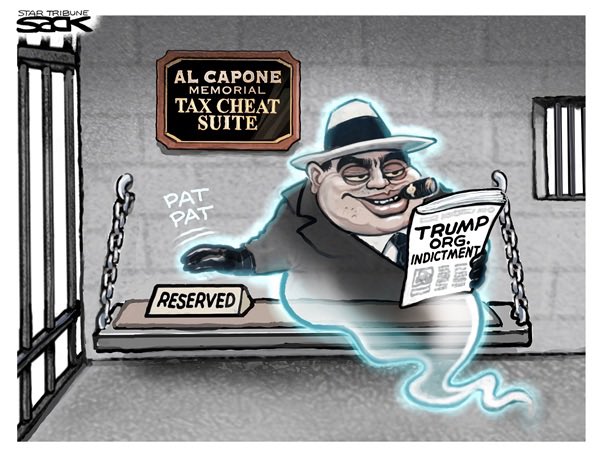
In fact, even if some of it was previously teased by the committee, the dump includes a cornucopia of information that affects your wallet—including powerful evidence of criminal tax evasion.
Among other things, Trump’s tax returns make a strong case for restoring the law that until 1924 made all income tax returns public. Newspapers back then ran long lists showing the income of and taxes paid by the wealthiest Americans.
Knowing that your income, deductions, and tax paid will be publicly available can do far more to encourage honest tax-paying than audits, which are increasingly rare and increasingly superficial.
Not even 500 of the nearly 25,000 households reporting incomes of $10 million or more in 2019 were audited. That’s 2 percent—just 1 in 50. Only 66 audits were completed.
People like Trump who earn money from legal sources can cheat like crazy on their tax returns with almost nothing to fear. That’s because fewer than 600 people at all income levels are convicted of tax fraud in a typical year.
That makes the odds of conviction about 1 in 275,000 taxpayers. But the odds for business owners are much better (which is to say less), because most people convicted of tax crimes are drug dealers, politicians who took bribes, or people who paid bribes.
The IRS, as funded by Congress, spent far more money auditing the working poor than the 24,457 households with incomes of $10 million and up in 2019. But don’t get angry at the IRS. They are just the tax police, enforcing the law as they are instructed by Congress. If Congress tells the IRS to focus on high-income tax cheating, it will.
A little-known reason the IRS rarely audits someone like Trump, even if there are indications of brazen fraud, is that if an audit will not raise any revenue immediately, it looks bad on IRS performance reports.
Consider a rich business owner who fabricates deductions but who would still owe zero tax in the audited year even if those deductions were denied. That means an audit that will not generate any tax revenue. That’s also what Trump apparently did in 26 sole proprietor, or Schedule C, filings in the six years of released tax returns.
Denying the immediate deductions may mean more taxes in future years, but the way the IRS measures audit performance, it doesn’t take future taxes into account. As a result, many working and retired IRS auditors have told me over the years, the IRS typically decides to audit other filers who are more likely to generate taxes immediately, allowing multi-year tax cheats to slip away
https://www.yahoo.com/news/trump-taxes-best-case-yet-042001819.html


