Why is trickle-down economics still with us?

And what 'highest marginal tax rate' do you want America to have (he asked - ready to roll his eyes at the response)?
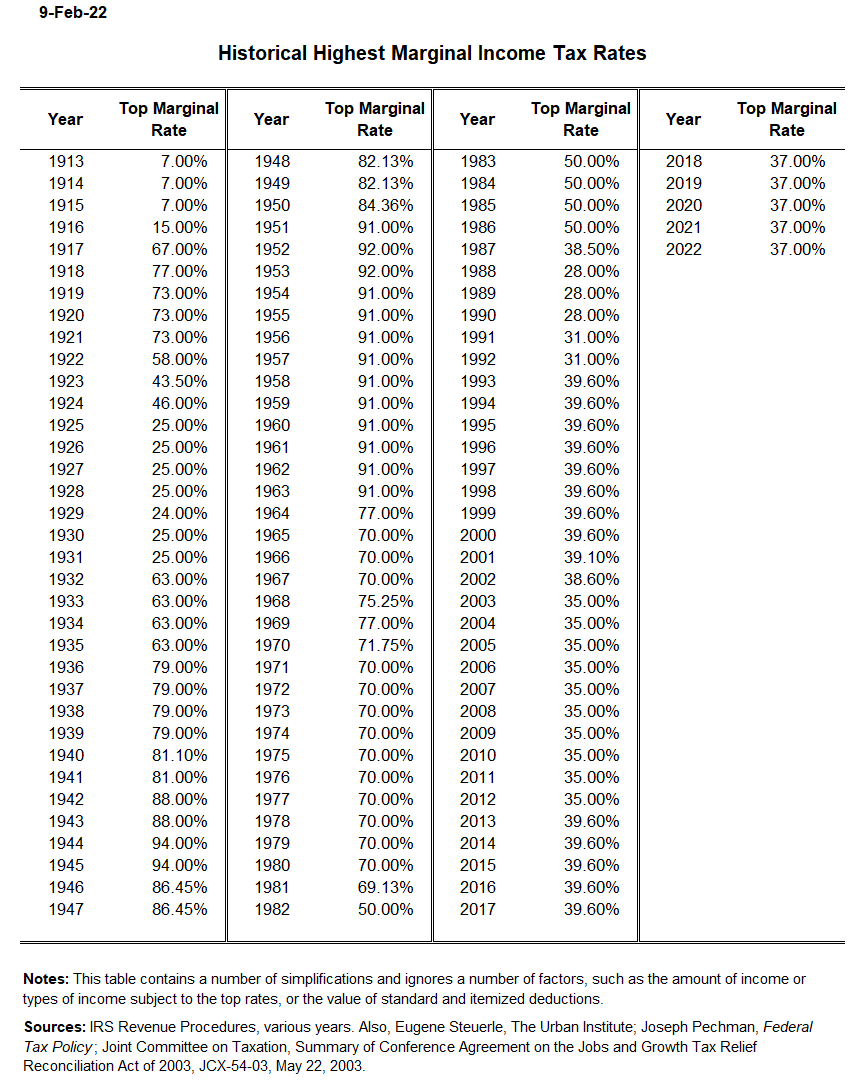
toprate_historical_2.png

Irrelevant appeal to history. Just because taxes were set at some level in the past, that doesn't mean they should be set that way today or that their being set at those levels was a smart thing to do.
 
Wups. I thought you might try to use the 16th amendment to ignore the rest of the Constitution. It means EVEN taxing at the same tax bracket regardless of income. The same percentage of income. You are still trying to ignore the 14th amendment and Article I.

Multiple tax brackets are unconstitutional.

The 14th amendment restricts state action. Article I was amended by the 16th to allow taxation based on income without apportionment by state or population which makes it constitutional.
 
Governments are part of an economy. What is exactly your point?

We often hear criticisms of "trickle down" as part of a debate on tax cuts. Supporters claim the economic activity of those at the top will trickle down to those below. Actually supply side economics, trickle down was a term used to denigrate the idea.

It is not generally a theory of how the economy works because the economy is much more complicated than that rather limited tactic.
 
Trickle down economics is not social welfare. It is a theory of how an economy works.

Supply side tax cuts are often criticized by those who want higher taxes on the upper income as a way to provide more economic benefits to lower income groups. Social welfare is one example of the economic benefits that some want to go to the working class.
 
Claiming the condition of American workers took a steep decline from the 1880's to the 1890's is certainly illustrating more stupidity than my claim that it didn't. Insults are a poor excuse for debate.

You never heard of the Gilded Age? Why am I not surprised. They probably don't teach much about that in the special ed classes.
 
You never heard of the Gilded Age? Why am I not surprised. They probably don't teach much about that in the special ed classes.

Sure, but show me where any creditable text teaches a big drop in the living condition of most Americans in the 1890's. Economic downturns (recession) can create hardships for all, but attributing any factor for a general decline that big is not realistic. Most (all) developed nations went through that evolution to adapt to industrialization.

If you are interested in historiography see some of the essays in American History Now by the American Historical Association for varying interpretations of this period.
 
Irrelevant appeal to history. Just because taxes were set at some level in the past, that doesn't mean they should be set that way today or that their being set at those levels was a smart thing to do.

What?

I simply asked BidenPresident a question.

I made no 'appeal to history'.
 
We often hear criticisms of "trickle down" as part of a debate on tax cuts. Supporters claim the economic activity of those at the top will trickle down to those below. Actually supply side economics, trickle down was a term used to denigrate the idea.

It is not generally a theory of how the economy works because the economy is much more complicated than that rather limited tactic.

It's not a theory of how the economy works because reality has shown that supply side doesn't work in real life even though some still cling to the theory. A producer can produce as much as they want to but they won't make money unless there is a demand. Supplying something doesn't create demand.
 
Supply side tax cuts are often criticized by those who want higher taxes on the upper income as a way to provide more economic benefits to lower income groups. Social welfare is one example of the economic benefits that some want to go to the working class.

I guess the question is how you want to treat those at the lower end of the economic ladder. Do we have a responsibility as a society?

Supply side tax cuts are criticized because they have not once provided the promised lifting up of those at the bottom. Supply side tax cuts have only increased the wealth inequality in the US.
 
Sure, but show me where any creditable text teaches a big drop in the living condition of most Americans in the 1890's

I can't help you if you have had zero learning in history class. Look it up some time. The change from largely agricultural to a more industrially dominated...wait, what am I doing? I'm going to try to explain the Gilded Age to someone who has no experience with American history.

I'll save my typing.


If you are interested in historiography see some of the essays in American History Now by the American Historical Association for varying interpretations of this period.

I don't care what you read since you clearly don't read for any comprehension. Sorry.
 
The 14th amendment restricts state action. Article I was amended by the 16th to allow taxation based on income without apportionment by state or population which makes it constitutional.

WRONG. The 14th amendment applies to the federal AND State governments. Article I was NOT amended by the 16th.
 
It's not a theory of how the economy works because reality has shown that supply side doesn't work in real life even though some still cling to the theory. A producer can produce as much as they want to but they won't make money unless there is a demand. Supplying something doesn't create demand.

Likewise, the economy can't work if there is a demand but no supply (evident by current inflation).
 
I guess the question is how you want to treat those at the lower end of the economic ladder. Do we have a responsibility as a society?

Supply side tax cuts are criticized because they have not once provided the promised lifting up of those at the bottom. Supply side tax cuts have only increased the wealth inequality in the US.

No method has worked consistently. At one time there was less inequality but everyone lived at a lower standard of living. Taxing the rich and providing more benefits to low income has not worked any better without eventually leading to inflation. Nations with more expansive social welfare systems usually have numbers worse than the U. S. --unemployment rate, inflation.....
 
I can't help you if you have had zero learning in history class. Look it up some time. The change from largely agricultural to a more industrially dominated...wait, what am I doing? I'm going to try to explain the Gilded Age to someone who has no experience with American history.

In other words, you don't know. Historiography is your friend.
 
Back
Top