Nearly 7 in 10 Americans have less than $1,000 in savings

I consider my education an investment and my horses and equipment an investment but I have nothing invested in stocks or anything like that like what is typically considered investments.

Fwiw, i know what you are saying but I wouldn't really consider your home an "investment"
 
norah said education and horses not home.

I mentioned a home but not as an investment... it IS an investment though, but in my mental well-being lol. So nice not having loud neighbors, being able to do some light renovations, and entertaining friends.
 
really?.....any real estate you own is an investment......
A home you purchase to live in is shelter for your family. Yes it's possible it can go up in value but unless you live in only w couple of markets across the country your home is not an investment. That's long been taught and is a mistake many people make
 
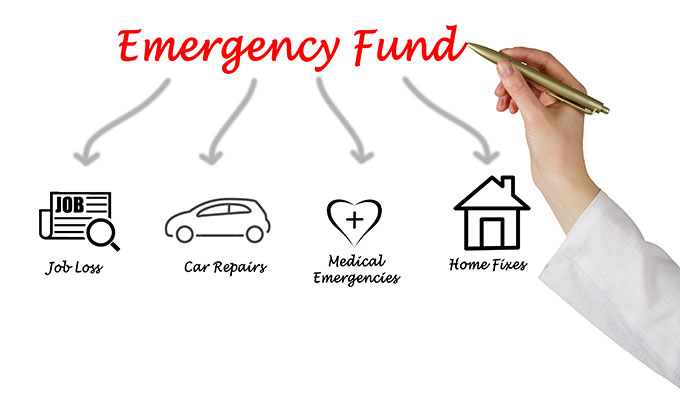
Emergency Fund 101

Suze says aim for an eight month emergency fund, I think it should be more like 18 months or at least a year?

http://www.suzeorman.com/blog/emergency-fund-101/


emergency-fund.jpg
 
what? Clearly that is not the case. Obama says the US is at full employment. That means there are so many jobs around and not enough people to fill them. In that environment workers are easily able to negotiate a better salary as companies do everything they can to hold on to them.

The only way your argument makes sense is if democrats have been lying and we are not at full employment.

In Victorian times in the UK a great number of jobs didn't pay enough to live on, and contemporary capitalism is moving happily back to that position. Full employment does not mean what you say under conditions of union-busting and the free movement of business to other countries, as I'm sure you know perfectly well.
 
In Victorian times in the UK a great number of jobs didn't pay enough to live on, and contemporary capitalism is moving happily back to that position. Full employment does not mean what you say under conditions of union-busting and the free movement of business to other countries, as I'm sure you know perfectly well.

again full employment means that there is literally so many jobs that employers would be competing to get you giving workers a lot of bargaining power. In fact in that situation you wouldnt even really need unions.

The only way your stuff makes sense is if we are not at full employment and the stats are just made up :)
 
again full employment means that there is literally so many jobs that employers would be competing to get you giving workers a lot of bargaining power. In fact in that situation you wouldnt even really need unions.

The only way your stuff makes sense is if we are not at full employment and the stats are just made up :)

Again, full employment means no such thing, because the alleged 'competition' depends entirely on what sort of workers they are short of, on the degree of union-busting, and whether they use the threat of getting cheaper workers abroad. You make assumptions based on times now past.
 
http://www.investopedia.com/terms/f/fullemployment.asp


Full Employment


00:12


01:27
*
What is 'Full Employment'
Full employment is an economic situation in which all available labor resources are being used in the most efficient way possible. Full employment embodies the highest amount of skilled and unskilled labor that can be employed within an economy at any given time. Any remaining unemployment is considered to be frictional, structural or voluntary.
BREAKING DOWN 'Full Employment'
Full employment is considered to be any acceptable level of unemployment above 0%. Full employment exists without any cyclical or deficient-demand unemployment, but does exists with some level of frictional, structural and voluntary unemployment. Full employment is seen as the ideal employment rate within an economy and is normally represented by a range of rates that are specific to regions, time periods and political climates.
A government or economy often defines full employment as any rate of unemployment below a defined number. If, for example, a country sets full employment at a 5% unemployment rate, any level of unemployment below 5% is considered acceptable. Full employment, once attained, often results in an inflationary period. The inflation is a result of workers having more disposable income, which would drive prices upward.
Types of Unemployment That Affect Full Employment
Full employment can also be defined as any economic situation that is devoid of cyclical or deficient-demand unemployment. Cyclical unemployment is the fluctuating type of unemployment that rises and falls within the normal course of the business cycle. This unemployment rises when an economy is in a recession and falls when an economy is growing. Therefore, for an economy to be at full employment, it cannot be in a recession that's causing cyclical unemployment.
Deficient-demand unemployment is similar to cyclical unemployment in that it arises when there isn't enough aggregate demand in an economy to support full employment. Declining aggregated demand is a characteristic of a recession. Full employment cannot exist when there isn't enough demand to support the workforce.
The final three types of unemployment can exist in situations in which full employment also exists. Structural unemployment arises outside of the business cycle when there is a skills gap. This unemployment occurs when there are jobs available but the unemployed population does not have the knowledge or skill level to perform the required tasks. Technology is a leading cause of structural unemployment.
Frictional unemployment represents the amount of unemployment that results from workers who are in between jobs, but are still in the labor force. Many economists have estimated that the average amount of frictional unemployment in the United States ranges from 2 to 7%.
Finally, voluntary employment occurs when a person makes a conscious decision to remain unemployed. This happens when there are jobs available but a worker cannot find a job of his or her specific choice.


Read more: Full Employment Definition | Investopedia http://www.investopedia.com/terms/f/fullemployment.asp#ixzz4My3D6Nw2
Follow us: Investopedia on Facebook
 
A home you purchase to live in is shelter for your family. Yes it's possible it can go up in value but unless you live in only w couple of markets across the country your home is not an investment. That's long been taught and is a mistake many people make

the only mistake would be thinking it isn't an investment.....lets see, you start off with a 5% downpayment and twenty years later you discharge your mortgage......in the meantime your house has doubled or tripled in value......don't you wish your stock had done the same?.....
 
Back
Top