Alaska Glaciers Melting: 80 Years Ago!

cancel2 2022

Canceled
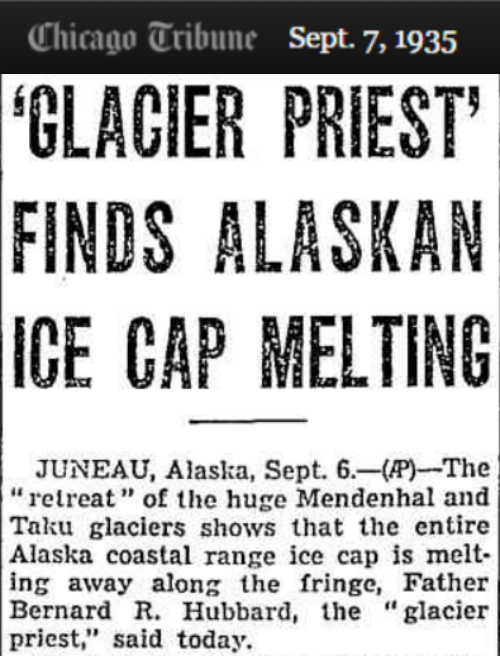
Experts say that melting glaciers in Alaska are a sign of man-made climate change. They say this because they don’t know anything about climate. Alaskan glaciers were melting in 1935.

2016-07-30222239-down.png


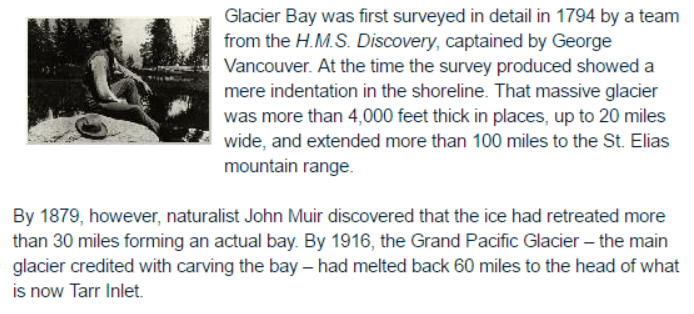
Alaska’s largest glacier melted almost 10 feet per day from 1794 to 1916.


There is no indication that Alaskan glacier melting has anything to do with humans, but that is what politicians want to hear – so scientists simply make stuff up.

http://realclimatescience.com/2016/07/80-years-ago-alaska-melting/
 
]There is no indication that Alaskan glacier melting has anything to do with humans, but that is what politicians want to hear – so scientists simply make stuff up.


Big conspiracy, ppl didn't even exist when this was happening:rolleyes:


Your country should know all about it..

linkboys.jpg


London's Historic "Pea-Soupers"

by David Urbinato
[EPA Journal - Summer 1994]


Americans may think smog was invented in Los Angeles. Not so. In fact, a Londoner coined the term "smog" in 1905 to describe the city's insidious combination of natural fog and coal smoke. By then, the phenomenon was part of London history, and dirty, acrid smoke-filled "pea-soupers" were as familiar to Londoners as Big Ben and Westminster Abby. The smog even invaded the world of Shakespeare, whose witches in Macbeth chant, "fair is foul, and foul is fair: Hover through the fog and filthy air."

Smog in London predates Shakespeare by four centuries.
Until the 12th century, most Londoners burned wood for fuel. But as the city grew and the forests shrank, wood became scarce and increasingly expensive. Large deposits of "sea-coal" off the northeast coast provided a cheap alternative. Soon, Londoners were burning the soft, bituminous coal to heat their homes and fuel their factories. Sea-coal was plentiful, but it didn't burn efficiently. A lot of its energy was spent making smoke, not heat. Coal smoke drifting through thousands of London chimneys combined with clean natural fog to make smog. If the weather conditions were right, it would last for days.

Early on, no one had the scientific tools to correlate smog with adverse health effects, but complaints about the smoky air as an annoyance date back to at least 1272, when King Edward I, on the urging of important noblemen and clerics, banned the burning of sea-coal. Anyone caught burning or selling the stuff was to be tortured or executed. The first offender caught was summarily put to death. This deterred nobody. Of necessity, citizens continued to burn sea-coal in violation of the law, which required the burning of wood few could afford.

Following Edward, Richard III (1377-1399) and Henry V (1413-1422) also tried to curb the use of sea-coal, as did a number of non-royal crusaders. In 1661, John Evelyn, a noted diarist of the day, wrote his anticoal treatise FUMIFUNGIUM: or the Inconvenience of the Aer and Smoake of London Dissipated, in which he pleaded with the King and Parliament to do something about the burning of coal in London. "And what is all this, but that Hellish and dismall Cloud of SEACOALE?" he wrote, "so universally mixed with the otherwise wholesome and excellent Aer, that her Inhabitants breathe nothing but an impure and thick Mist accompanied with a fuliginous and filthy vapour..."

Laws and treatises failed to stop citizens from burning coal, however. Too many people burned it and there were no real alternatives. Anthracite coal was much cleaner but too expensive. By the 1800s, more than a million London residents were burning soft-coal, and winter "fogs" became more than a nuisance. An 1873 coal-smoke saturated fog, thicker and more persistent than natural fog, hovered over the city of days. As we now know from subsequent epidemiological findings, the fog caused 268 deaths from bronchitis. Another fog in 1879 lasted from November to March, four long months of sunshineless gloom.

When it wasn't fatal, the fog could at least disrupt daily life. A 1902, bi-weekly report from a fog monitor gives an indication. He wrote: "White and damp in the early morning, it became smoky later, the particles coated with soot being dry and pungent to inhale. There was a complete block of street traffic at some crossings. Omnibuses were abandoned, and several goods trains were taken off."

These conditions were not rare. "It was soon found that light fogs largely attributable to smoke were permanent," the same monitor wrote of the winter of 1901-1902. "From the summit of St. Paul's Cathedral of Westminster Tower for instance the average limit of visibility was only one-half mile."

At the turn of the century, cries to reduce the smoke faced a tough opponent. Coal was fueling the industrial revolution. To be against coal burning was to be against progress. "Progress" won out.

Not until the 1950s, when a four-day fog in 1952 killed roughly 4,000 Londoners was any real reform passed. Parliament enacted the Clean Air Act in 1956, effectively reducing the burning coal. It was the beginning of serious air-pollution reform in England.

 
Big conspiracy, ppl didn't even exist when this was happening:rolleyes:


Your country should know all about it..

linkboys.jpg


London's Historic "Pea-Soupers"

by David Urbinato
[EPA Journal - Summer 1994]


Americans may think smog was invented in Los Angeles. Not so. In fact, a Londoner coined the term "smog" in 1905 to describe the city's insidious combination of natural fog and coal smoke. By then, the phenomenon was part of London history, and dirty, acrid smoke-filled "pea-soupers" were as familiar to Londoners as Big Ben and Westminster Abby. The smog even invaded the world of Shakespeare, whose witches in Macbeth chant, "fair is foul, and foul is fair: Hover through the fog and filthy air."

Smog in London predates Shakespeare by four centuries.
Until the 12th century, most Londoners burned wood for fuel. But as the city grew and the forests shrank, wood became scarce and increasingly expensive. Large deposits of "sea-coal" off the northeast coast provided a cheap alternative. Soon, Londoners were burning the soft, bituminous coal to heat their homes and fuel their factories. Sea-coal was plentiful, but it didn't burn efficiently. A lot of its energy was spent making smoke, not heat. Coal smoke drifting through thousands of London chimneys combined with clean natural fog to make smog. If the weather conditions were right, it would last for days.

Early on, no one had the scientific tools to correlate smog with adverse health effects, but complaints about the smoky air as an annoyance date back to at least 1272, when King Edward I, on the urging of important noblemen and clerics, banned the burning of sea-coal. Anyone caught burning or selling the stuff was to be tortured or executed. The first offender caught was summarily put to death. This deterred nobody. Of necessity, citizens continued to burn sea-coal in violation of the law, which required the burning of wood few could afford.

Following Edward, Richard III (1377-1399) and Henry V (1413-1422) also tried to curb the use of sea-coal, as did a number of non-royal crusaders. In 1661, John Evelyn, a noted diarist of the day, wrote his anticoal treatise FUMIFUNGIUM: or the Inconvenience of the Aer and Smoake of London Dissipated, in which he pleaded with the King and Parliament to do something about the burning of coal in London. "And what is all this, but that Hellish and dismall Cloud of SEACOALE?" he wrote, "so universally mixed with the otherwise wholesome and excellent Aer, that her Inhabitants breathe nothing but an impure and thick Mist accompanied with a fuliginous and filthy vapour..."

Laws and treatises failed to stop citizens from burning coal, however. Too many people burned it and there were no real alternatives. Anthracite coal was much cleaner but too expensive. By the 1800s, more than a million London residents were burning soft-coal, and winter "fogs" became more than a nuisance. An 1873 coal-smoke saturated fog, thicker and more persistent than natural fog, hovered over the city of days. As we now know from subsequent epidemiological findings, the fog caused 268 deaths from bronchitis. Another fog in 1879 lasted from November to March, four long months of sunshineless gloom.

When it wasn't fatal, the fog could at least disrupt daily life. A 1902, bi-weekly report from a fog monitor gives an indication. He wrote: "White and damp in the early morning, it became smoky later, the particles coated with soot being dry and pungent to inhale. There was a complete block of street traffic at some crossings. Omnibuses were abandoned, and several goods trains were taken off."

These conditions were not rare. "It was soon found that light fogs largely attributable to smoke were permanent," the same monitor wrote of the winter of 1901-1902. "From the summit of St. Paul's Cathedral of Westminster Tower for instance the average limit of visibility was only one-half mile."

At the turn of the century, cries to reduce the smoke faced a tough opponent. Coal was fueling the industrial revolution. To be against coal burning was to be against progress. "Progress" won out.

Not until the 1950s, when a four-day fog in 1952 killed roughly 4,000 Londoners was any real reform passed. Parliament enacted the Clean Air Act in 1956, effectively reducing the burning coal. It was the beginning of serious air-pollution reform in England.


I was beginning to think that anybody that loves Gary Moore must be intelligent, don't make me reconsider!!

Sent from my LENOVO Lenovo K50-t5 Using Ez Forum for Android
 
I was beginning to think that anybody that loves Gary Moore must be intelligent, don't make me reconsider!!

Sent from my LENOVO Lenovo K50-t5 Using Ez Forum for Android

LOL... I found Gary via Peter Green....... You like Peter?? The originator of
 
LOL... I found Gary via Peter Green....... You like Peter?? The originator of

Of course, I saw them many moons ago before Peter Green went bonkers and Mick Fleetwood moved to the USA. I saw Santana last year in London, another on the bucket list sorted!!
 
Of course, I saw them many moons ago before Peter Green went bonkers and Mick Fleetwood moved to the USA. I saw Santana last year in London, another on the bucket list sorted!!

I like Carlos as well, but mostly his earlier stuff &
 
It is a real shame about Peter... I've seen a couple documentaries about him & his illness..

there is a local DJ that has a show 1-5 (Pacific time) on Saturday & he plays lots of Peter Green/Early Mac..

He has played/toured w/ Peter a few years ago.. I think they did mostly the UK & Germany.. Mick Martin, he plays mostly harp & is teachin as he is playin the blues..
 
You should listen to Santana IV, it i called that because it is meant to be the follow up to the three classic albums.

Sent from my LENOVO Lenovo K50-t5 Using Ez Forum for Android

I will check it out later tonight, thnX..
 
Back
Top