America's doomed war; reports from the Persian Gulf region

Mahmoud Ahmadinejad

سپاه پاسداران انقلاب اسلامی
US Blockade Must End


Gulf leaders have gathered in Saudi Arabia to discuss a regional crisis triggered by the United States-Israel war on Iran, their first in-person meeting since the outbreak of the conflict two months ago.

The Gulf Cooperation Council (GCC) leaders were greeted by Saudi Crown Prince Mohammed bin Salman as they arrived in Jeddah on Tuesday, according to images released by Saudi state media.

GCC countries – Bahrain, Kuwait, Oman, Qatar, Saudi Arabia and the United Arab Emirates – have stressed that the Strait of Hormuz, through which one-fifth of the world’s oil and liquefied natural gas supplies pass during peacetime, must reopen and any deal must result in a permanent, long-term arrangement.

The talks in Jeddah also coincided with the UAE announcing a decision to withdraw from OPEC and OPEC+ to focus on “national interests”.
 
US Blockade Must End


Gulf leaders have gathered in Saudi Arabia to discuss a regional crisis triggered by the United States-Israel war on Iran, their first in-person meeting since the outbreak of the conflict two months ago.

The Gulf Cooperation Council (GCC) leaders were greeted by Saudi Crown Prince Mohammed bin Salman as they arrived in Jeddah on Tuesday, according to images released by Saudi state media.

GCC countries – Bahrain, Kuwait, Oman, Qatar, Saudi Arabia and the United Arab Emirates – have stressed that the Strait of Hormuz, through which one-fifth of the world’s oil and liquefied natural gas supplies pass during peacetime, must reopen and any deal must result in a permanent, long-term arrangement.

The talks in Jeddah also coincided with the UAE announcing a decision to withdraw from OPEC and OPEC+ to focus on “national interests”.
the opportunity to hold the world hostage with petrochemicals was enabled by destroying all viable alternative energies and murdering their inventors.

:truestory:

see coverup of Tartarian Civilization.
 
the opportunity to hold the world hostage with petrochemicals was enabled by destroying all viable alternative energies and murdering their inventors.

:truestory:

see coverup of Tartarian Civilization.


The oil, gas and arms companies profiting from the war on Iran


As bills rise across the world, campaigners call out the fossil fuel and weapons firms raking in mega profits.

As the death toll in Iran rose above 3,500 and the dual blockade of the vital Strait of Hormuz by the US and Iran continues, fossil fuel and weapons companies have seen their profits rise dramatically since the war by the US and Israel began two months ago.

The standoff between the US and Iran in the Strait of Hormuz has left 1,600 vessels and 20,000 seafarers stranded in the Gulf, as Brent crude tops $107 a barrel.

While hitting the pockets of millions in Europe, Asia and worldwide, the war has created big winners. BP's first-quarter profit more than doubled year-on-year to $3.2 billion, the highest for the British oil ‌giant since 2023, Reuters reported on Tuesday.

Recent analysis conducted by the Guardian found that major oil and gas companies made over $30m an hour in the first month of the war on Iran.

As the United States spends on average $1.8bn a day paying for the war on Iran, Lockheed Martin - the largest Pentagon contractor, which often takes in more taxpayer money than the entire State Department - saw its stock price rise by nearly 40 percent at the beginning of March since the start of 2026.
 

The oil, gas and arms companies profiting from the war on Iran


As bills rise across the world, campaigners call out the fossil fuel and weapons firms raking in mega profits.

As the death toll in Iran rose above 3,500 and the dual blockade of the vital Strait of Hormuz by the US and Iran continues, fossil fuel and weapons companies have seen their profits rise dramatically since the war by the US and Israel began two months ago.

The standoff between the US and Iran in the Strait of Hormuz has left 1,600 vessels and 20,000 seafarers stranded in the Gulf, as Brent crude tops $107 a barrel.

While hitting the pockets of millions in Europe, Asia and worldwide, the war has created big winners. BP's first-quarter profit more than doubled year-on-year to $3.2 billion, the highest for the British oil ‌giant since 2023, Reuters reported on Tuesday.

Recent analysis conducted by the Guardian found that major oil and gas companies made over $30m an hour in the first month of the war on Iran.
plus, I think Iran has a few of the last portals to the underground that is not in central banker hands.

see coverup of tartaria civilization.
 
plus, I think Iran has a few of the last portals to the underground that is not in central banker hands.

see coverup of tartaria civilization.


'I have never seen war and conflict manipulated so nakedly for short-term profiteering… that is an element which is quite unique to the assault on Iran'

- Andrew Feinstein, arms industry researcher
 

Fertilizer squeeze could spell trouble for next year's grain harvests


Farmers around the world are facing a record surge in fertilizer prices in four years due to the Iran war.

But with grain prices too low to cushion the blow from the deeper supply crunch, many are rethinking planting plans, putting global food production at risk.

The Middle East is a leading fertilizer production hub, and much of the global fertilizer trade typically passes through the Strait of Hormuz, which has seen non-Iranian traffic brought to a ‌standstill by the US blockade.
 
You mean Trump's crushing green energy and EVs? That was profoundly stupid.


US electricity prices have skyrocketed since Trump launched his ill-advised attack two months ago.


Search Assist


U.S. electricity prices have risen significantly due to various factors, including the Trump administration's policies, which have increased demand while constraining supply. This has led to a supply-demand mismatch, contributing to soaring electricity costs across the country.
 

Negotiations are ‘theater’ as Trump seeks exit from war


Ashish Prashar, political strategist, an advisor to the Middle East peace envoy, and director of the “Game Over Israel” campaign, has dismissed ongoing U.S. calls for negotiations with Iran as political theater, arguing that Washington is seeking a face-saving exit amid escalating military pressure.

Prashar, who has worked with Western political leaders including Tony Blair, Boris Johnson, and Barack Obama, launched the “Game Over Israel” campaign in 2025 to push for Israel’s diplomatic and cultural isolation, including calls to suspend Israel from international sporting events. The campaign gained global attention through advocacy efforts aimed at holding Israel accountable for its actions in Gaza and mobilizing international civil society pressure.

His remarks come as U.S. President Donald Trump issued new threats alongside calls for negotiations with Iran. On April 7, Trump warned that “a whole civilization will die tonight” if Tehran did not agree to his terms, while continuing to signal openness to diplomatic talks.

Against this backdrop, Prashar described the negotiation process as performative rather than substantive.

“The negotiations are theatre. It’s theatre for Western media and for the ruling class to show they’re trying to resolve this diplomatically,” he said.

He warned that Iran should not rely on diplomatic guarantees, arguing that the structural dynamics of the conflict make further confrontations likely.

“Iran should know that as long as Israel exists they will be attacked again and again, and the U.S. will help it, and everything they rebuild will be destroyed. It is their one chance to shape reality.”

“They must not rely on any guarantee; it's all a lie. Every word of it.”

Prashar also argued that Trump is attempting to shape a narrative of victory despite setbacks.

“Trump has us hanging regarding his so-called ‘annihilation’ of Iran. He is losing this war and is looking for a way to come out of it looking like the saviour and victor.”

He added that Washington is aware of the risks of escalation.

“He knows well that if he carried out his threats, Iran would not hold back in their response, and what little support for Trump and America would be nonexistent.”

Prashar further criticized both Israel and the United States, arguing that their historical trajectories influence current policies.

“Israel and the United States were both founded on violence and genocide and that’s all they know. The truth is the rest of the world knows this as well.”

He concluded that diplomatic options remain limited under current conditions.

“There is no real diplomatic solution with these two who have never honored a ceasefire and this leaves Iran with one option. Stay the course because the economic cost to the West and the globe will humble them faster than anything else.”

Prashar also criticized Western leaders for enabling the current crisis.

“Every Western leader who shrugged as Israel carried out genocide, and especially those who actively enabled it, helped make this moment inevitable: a U.S. President now openly threatening genocide.”
 

Trump relying on blockade to pressure Iran — but such tactics have not worked


Donald Trump appears to be relying on the US blockade of Iran’s ports to pressure Tehran to cave to his demands, said Ali Vaez, Iran Project Director at the International Crisis Group think tank.

“President Trump seems to believe that the US blockade on Iran is working and will bring Iran to its knees in the coming days, if not weeks, and therefore he can finally get Iran to surrender to his terms,” Vaez told CNN’s Rosemary Church.

But in the past, he cautioned, Trump’s applying of economic or military pressure on Tehran has “rendered Iran’s position stronger rather than weaker.”

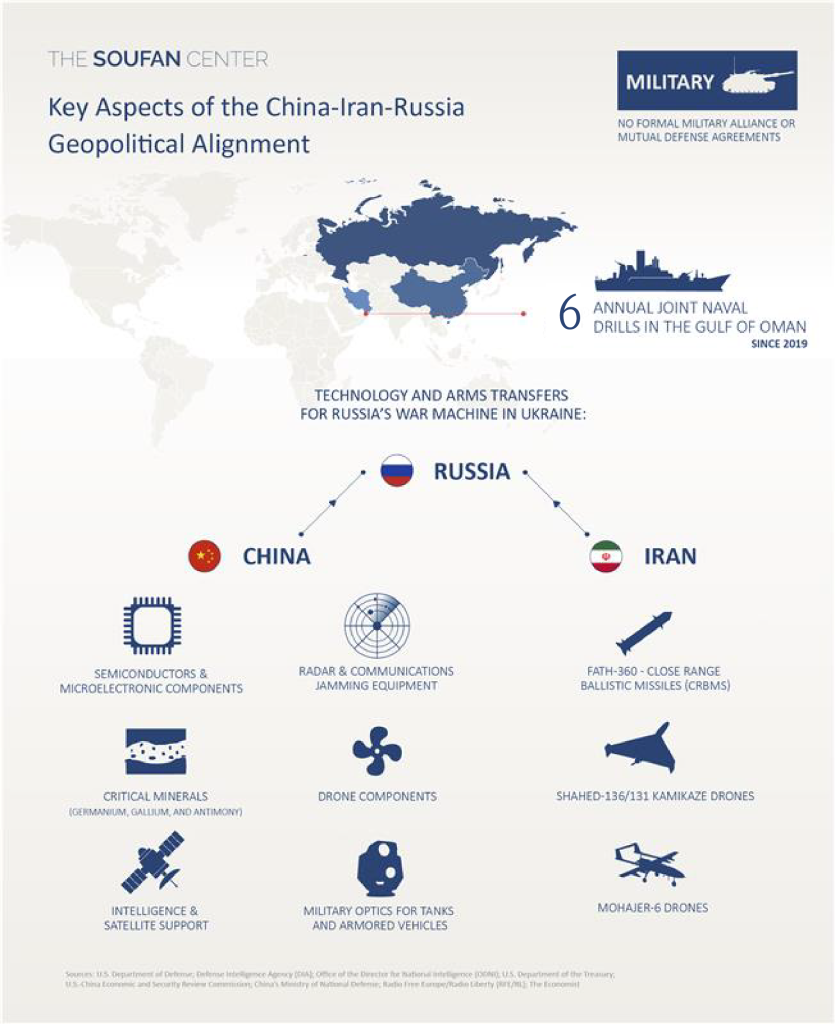
Vaez discussed Iranian Foreign Minister Abbas Araghchi’s meeting with Russian President Vladimir Putin, noting that Moscow can help Iran “in both scenarios: of a return to conflict or a deal.”

Russia has already provided Iran with intelligence and other support during the war, Vaez said. And if the US and Iran come to an agreement, Russia, as a permanent member of the UN Security Council, could help Iran fulfill its goals.

For example, if Iran wants to charge tolls in the Strait of Hormuz, it may need a security council resolution to achieve that, Vaez said, and Russia will oblige.
 
514402803_1189147419905582_2025354320315781680_n-835x1024.png
 

US lawmaker questions need for 3 carriers in Persian Gulf​


Rep. Gil Cisneros, D-Calif., expressed concern about the number of U.S. aircraft carriers stationed in the Persian Gulf and service members’ time spent away from home.

“We have three carriers in the area right now. How many do we really need?” Cisneros asked the defense secretary. “It’s a great show of force, but do we really need three carriers there?”

He said he heard news that one of the aircraft carriers, the USS Ford, which is the world’s largest warship, will soon return home after a 10-month deployment. The Washington Post reported today that officials said the USS Ford would leave the Middle East soon.

Cisneros also asked Hegseth and Cain to consider the toll on military personnel in the gulf, saying, “We have service members that were kept away from their families for over a year? How many missed the birth of a child?”
 
Back
Top