
Tensions between Ukraine and Russia have escalated again, more than two years after Russia's annexation of Crimea.
Russia has accused Ukraine of trying to stage armed incursions in the peninsula, but Ukraine denies that and says Russia has massed tens of thousands of soldiers there.
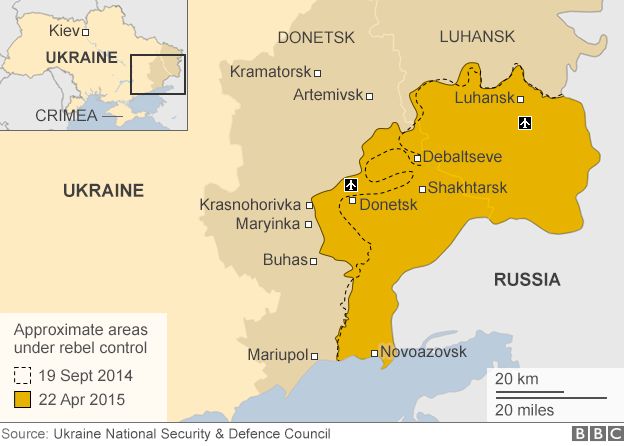
Further east, sporadic clashes continue in parts of Donetsk and Luhansk, where pro-Russian rebels face Ukrainian government troops.
What sparked the latest crisis?
Russia says that a group of Ukrainian saboteurs entered Crimea on 7 August with the aim of carrying out "acts of terrorism" ahead of parliamentary elections next month. Two Russians were killed in two nights of clashes and explosives recovered, the foreign ministry says.
Ukraine's president says the claims are preposterous. There have been credible reports of gunfire at the border on one night, although one Kiev official blamed the incident on drunken Russian forces.
Russian state TV has produced video of a former volunteer fighter named Yevhen Panov apparently confessing to the sabotage. In the video he was handcuffed and had a recent cut above his right eye. His family say he was abducted.
Ukrainian officials believe that Russia is creating a pretext for something far more serious.
There are fears, especially in Ukraine, that Russia has built up its forces in Crimea for an August offensive, while the West's eyes are turned towards the Rio Olympics. It happened before, during the Beijing Games of 2008, when Russian troops entered Georgia.
Russia is holding big military exercises in Crimea this month and said on Friday that it had deployed S-400 air defence missiles there.
Ukraine has responded by raising its alert to red on the de facto border with Crimea, as well as near the front line in the east, where there is a fragile ceasefire between Ukrainian forces and the rebels.
Some analysts believe President Vladimir Putin is looking to create a military diversion from Russia's faltering economy and imminent parliamentary elections, even though the main opposition forces are barred from contesting them.
Perhaps Russia is planning to seize a land corridor via Mariupol, it has been argued. A 19km (12-mile) bridge from southern Russia to Crimea, being built across the Kerch Strait, is at least two years from completion and the peninsula relies on Ukraine for its power supply.
Few expect such a dramatic escalation, however. Others suggest Mr Putin's main aim was to tear up the fragile Minsk agreement that keeps the tentative truce in eastern Ukraine from falling apart.
Already, Mr Putin has written off a key meeting on the Minsk deal planned for next month in Beijing with Ukraine's President Petro Poroshenko and the leaders of France and Germany.
On 24 August Ukrainians celebrate their 25th year of independence.
Russia argues that the Kiev government is trying to divert attention from Ukraine's very real economic and political problems by stirring up unrest in Crimea.
Russia seized the peninsula from Ukraine after pro-Russian President Viktor Yanukovych was deposed in Kiev in February 2014, and the loss of Crimea is a deep wound for Ukrainians.
Ukrainians, on the other hand, argue that Russia is trying to ruin the 25th anniversary party.
why did Russia annex Crimea in the first place?
Ostensibly, President Putin took control of the Ukrainian peninsula to protect Russians from the far-right extremists whom Russia said had overthrown President Yanukovych. Even now he sees Ukraine's leaders as illegitimate, referring to them as "the people who seized power in Kiev".
In a 2015 documentary he said he took the decision on 23 February, at the end of an overnight emergency meeting, hours after the Ukrainian leader had fled Kiev.
"We finished about seven in the morning," he said. "When we were parting, I told all my colleagues, 'We are forced to begin the work to bring Crimea back into Russia'."
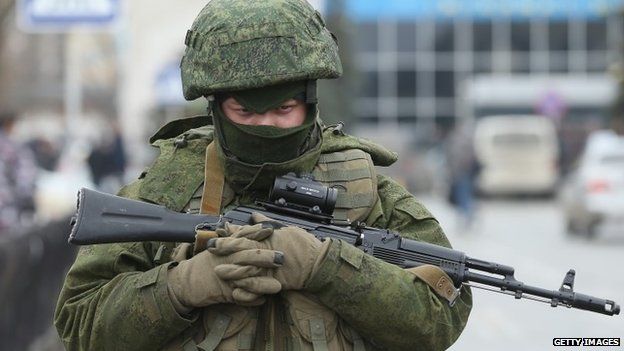
But Russia did not at first admit its involvement. "Little green men" in unmarked uniforms suddenly appeared and took control and then a disputed local referendum sealed the deal.
For most Russians Crimea is a historic part of their country anyway. It has an ethnic Russian majority but was handed to Ukraine in 1954 as a gift by Soviet leader Nikita Khrushchev.
After Ukraine's independence in 1991 Russia kept control of the Sevastopol naval base in Crimea, home of the Black Sea Fleet.
Protests broke out in Ukraine's capital after President Yanukovych's government rejected a far-reaching accord with the European Union in November 2013 in favour of stronger ties with Russia.
Why was President Yanukovych deposed?
Thousands of people, outraged that a long-standing aspiration for integration with Europe had been ditched overnight, poured into central Kiev for peaceful protests.
For months they occupied Independence Square, known as Maidan and the demonstrations spread, with many Ukrainians arguing the president was serving the interests of his own close circle and Moscow rather than their country.
But the protests became violent on 18 February 2014 and by 20 February 88 people had been killed in 48 hours. Video showed police snipers targeting protesters.
The next day President Yanukovych appeared to have salvaged a deal with opposition leaders after talks with three EU foreign ministers in Kiev.
But hours later he fled, his armed guard melted away and on 22 February parliament voted to remove him from power.
Ukraine's turbulent transition
The euphoria felt by supporters of the revolution soon turned to crisis as Crimea was annexed by Russia and pro-Russian protests broke out in the eastern Ukrainian cities of Donetsk, Luhansk and Kharkiv.
While Ukrainian authorities established control of Kharkiv, near the northern border with Russia, events spiralled out of control in Luhansk and Donetsk, and in mid-April the Kiev authorities declared an anti-terrorist operation against the separatists.
The rebels held their own pseudo-referendums and declared independence in both regions.
Russia was accused of stirring the conflict by sending its own forces and military hardware to bolster the separatists, but it always denied the allegations, insisting that any Russians fighting there were "volunteers".
It has fiercely denied that a Russian Buk missile launcher shot down a Malaysian Airlines flight on 17 July 2014 with 298 people on board.
The EU and US imposed sanctions on Russia after the Crimea annexation, and repeatedly ratcheted them up.
Russia has accused Ukraine of trying to stage armed incursions in the peninsula, but Ukraine denies that and says Russia has massed tens of thousands of soldiers there.
Further east, sporadic clashes continue in parts of Donetsk and Luhansk, where pro-Russian rebels face Ukrainian government troops.
What sparked the latest crisis?
Russia says that a group of Ukrainian saboteurs entered Crimea on 7 August with the aim of carrying out "acts of terrorism" ahead of parliamentary elections next month. Two Russians were killed in two nights of clashes and explosives recovered, the foreign ministry says.
Ukraine's president says the claims are preposterous. There have been credible reports of gunfire at the border on one night, although one Kiev official blamed the incident on drunken Russian forces.
Russian state TV has produced video of a former volunteer fighter named Yevhen Panov apparently confessing to the sabotage. In the video he was handcuffed and had a recent cut above his right eye. His family say he was abducted.
Ukrainian officials believe that Russia is creating a pretext for something far more serious.
There are fears, especially in Ukraine, that Russia has built up its forces in Crimea for an August offensive, while the West's eyes are turned towards the Rio Olympics. It happened before, during the Beijing Games of 2008, when Russian troops entered Georgia.
Russia is holding big military exercises in Crimea this month and said on Friday that it had deployed S-400 air defence missiles there.
Ukraine has responded by raising its alert to red on the de facto border with Crimea, as well as near the front line in the east, where there is a fragile ceasefire between Ukrainian forces and the rebels.
Some analysts believe President Vladimir Putin is looking to create a military diversion from Russia's faltering economy and imminent parliamentary elections, even though the main opposition forces are barred from contesting them.
Perhaps Russia is planning to seize a land corridor via Mariupol, it has been argued. A 19km (12-mile) bridge from southern Russia to Crimea, being built across the Kerch Strait, is at least two years from completion and the peninsula relies on Ukraine for its power supply.
Few expect such a dramatic escalation, however. Others suggest Mr Putin's main aim was to tear up the fragile Minsk agreement that keeps the tentative truce in eastern Ukraine from falling apart.
Already, Mr Putin has written off a key meeting on the Minsk deal planned for next month in Beijing with Ukraine's President Petro Poroshenko and the leaders of France and Germany.
On 24 August Ukrainians celebrate their 25th year of independence.
Russia argues that the Kiev government is trying to divert attention from Ukraine's very real economic and political problems by stirring up unrest in Crimea.
Russia seized the peninsula from Ukraine after pro-Russian President Viktor Yanukovych was deposed in Kiev in February 2014, and the loss of Crimea is a deep wound for Ukrainians.
Ukrainians, on the other hand, argue that Russia is trying to ruin the 25th anniversary party.
why did Russia annex Crimea in the first place?
Ostensibly, President Putin took control of the Ukrainian peninsula to protect Russians from the far-right extremists whom Russia said had overthrown President Yanukovych. Even now he sees Ukraine's leaders as illegitimate, referring to them as "the people who seized power in Kiev".
In a 2015 documentary he said he took the decision on 23 February, at the end of an overnight emergency meeting, hours after the Ukrainian leader had fled Kiev.
"We finished about seven in the morning," he said. "When we were parting, I told all my colleagues, 'We are forced to begin the work to bring Crimea back into Russia'."
But Russia did not at first admit its involvement. "Little green men" in unmarked uniforms suddenly appeared and took control and then a disputed local referendum sealed the deal.
For most Russians Crimea is a historic part of their country anyway. It has an ethnic Russian majority but was handed to Ukraine in 1954 as a gift by Soviet leader Nikita Khrushchev.
After Ukraine's independence in 1991 Russia kept control of the Sevastopol naval base in Crimea, home of the Black Sea Fleet.
Protests broke out in Ukraine's capital after President Yanukovych's government rejected a far-reaching accord with the European Union in November 2013 in favour of stronger ties with Russia.
Why was President Yanukovych deposed?
Thousands of people, outraged that a long-standing aspiration for integration with Europe had been ditched overnight, poured into central Kiev for peaceful protests.
For months they occupied Independence Square, known as Maidan and the demonstrations spread, with many Ukrainians arguing the president was serving the interests of his own close circle and Moscow rather than their country.
But the protests became violent on 18 February 2014 and by 20 February 88 people had been killed in 48 hours. Video showed police snipers targeting protesters.
The next day President Yanukovych appeared to have salvaged a deal with opposition leaders after talks with three EU foreign ministers in Kiev.
But hours later he fled, his armed guard melted away and on 22 February parliament voted to remove him from power.
Ukraine's turbulent transition
The euphoria felt by supporters of the revolution soon turned to crisis as Crimea was annexed by Russia and pro-Russian protests broke out in the eastern Ukrainian cities of Donetsk, Luhansk and Kharkiv.
While Ukrainian authorities established control of Kharkiv, near the northern border with Russia, events spiralled out of control in Luhansk and Donetsk, and in mid-April the Kiev authorities declared an anti-terrorist operation against the separatists.
The rebels held their own pseudo-referendums and declared independence in both regions.
Russia was accused of stirring the conflict by sending its own forces and military hardware to bolster the separatists, but it always denied the allegations, insisting that any Russians fighting there were "volunteers".
It has fiercely denied that a Russian Buk missile launcher shot down a Malaysian Airlines flight on 17 July 2014 with 298 people on board.
The EU and US imposed sanctions on Russia after the Crimea annexation, and repeatedly ratcheted them up.
