
The extent to which the average American’s tax burden varies based on his or her state of residence represents a significant point of differentiation among state economies. But it’s only one piece of the puzzle.What if, for example, a particular state can afford not to tax its residents at high rates because it receives disproportionately more funding from the federal government than states with apparently oppressive tax codes? That would change the narrative significantly, revealing federal dependence where bold, efficient stewardship was once thought to preside.
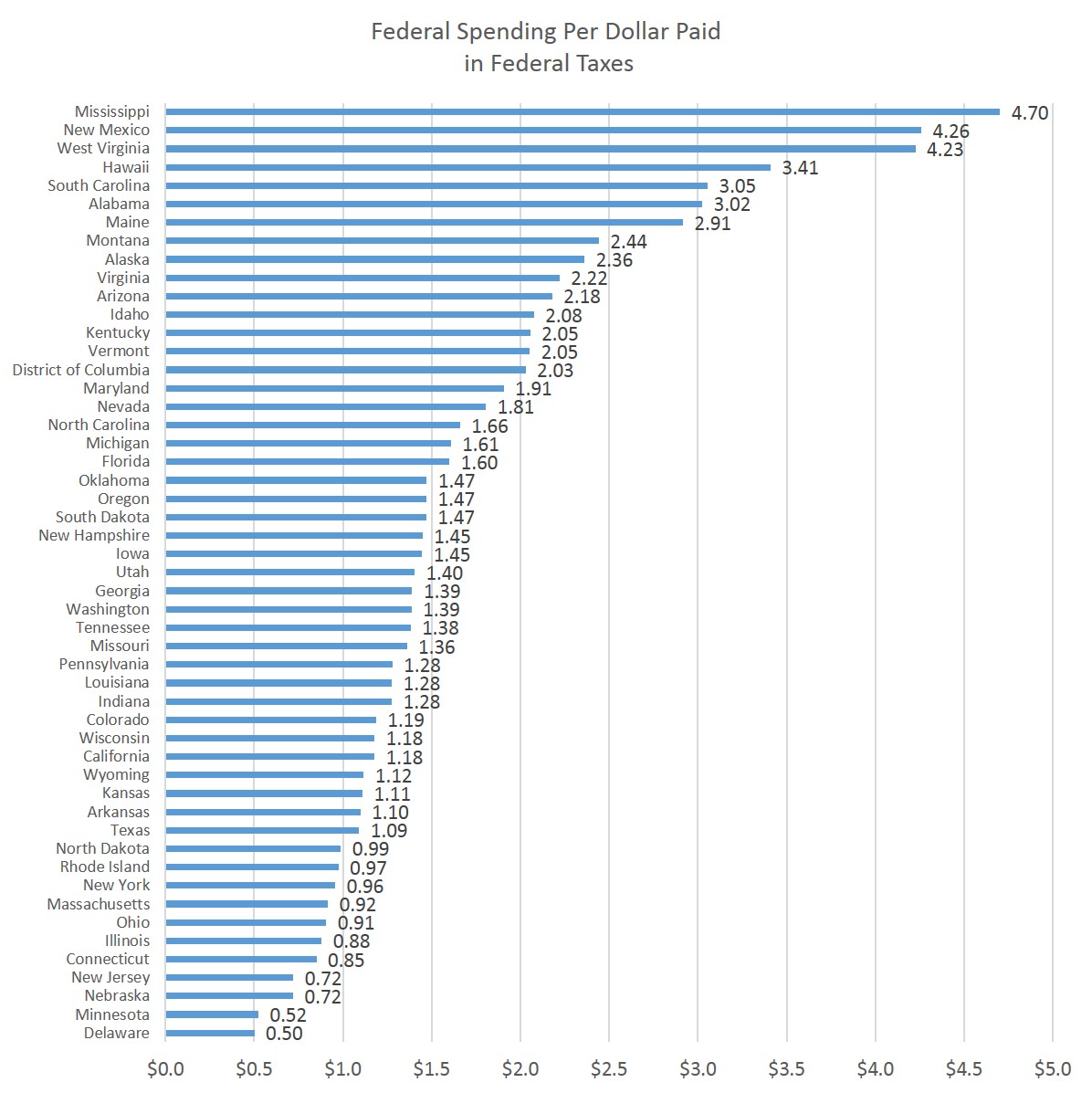
The idea of the American freeloader burst into the public consciousness when #47percent started trending on Twitter in 2012. And while the notion is senselessly insulting to millions of hardworking Americans, it is true that some states receive a far higher return on their federal income-tax contributions than others.
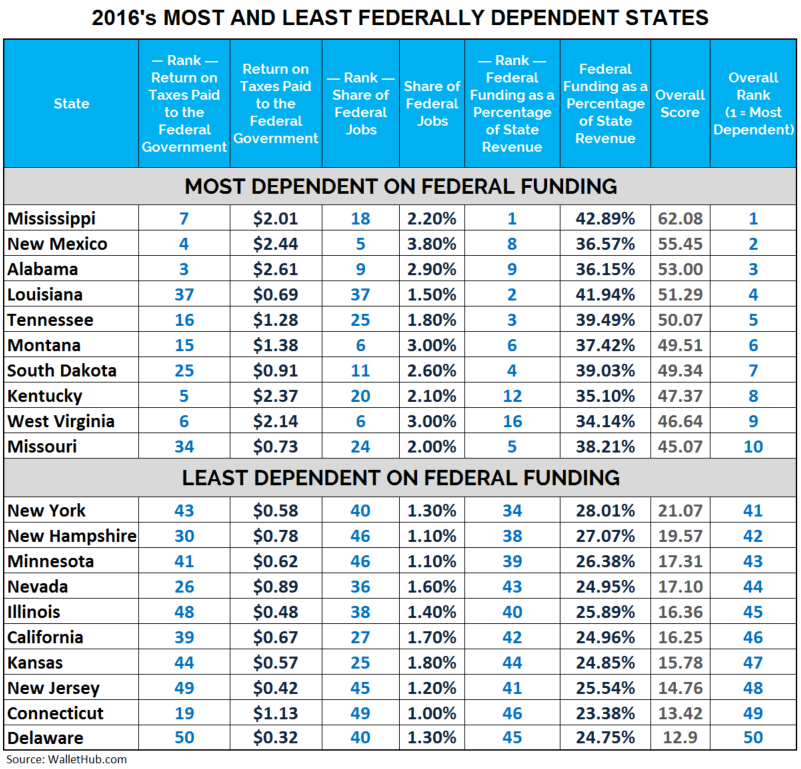
Just how pronounced is this disparity? And to what extent does it alter our perception of state and local tax rates around the country? WalletHub sought to answer those questions by comparing the 50 states in terms of three key metrics. Read on for our findings, expert commentary and a detailed methodology.
1MAIN FINDINGS2RED VS. BLUE STATES3CORRELATION ANALYSIS
[h=2]Red vs. Blue States[/h]

The idea of the American freeloader burst into the public consciousness when #47percent started trending on Twitter in 2012. And while the notion is senselessly insulting to millions of hardworking Americans, it is true that some states receive a far higher return on their federal income-tax contributions than others.
Just how pronounced is this disparity? And to what extent does it alter our perception of state and local tax rates around the country? WalletHub sought to answer those questions by comparing the 50 states in terms of three key metrics. Read on for our findings, expert commentary and a detailed methodology.
1MAIN FINDINGS2RED VS. BLUE STATES3CORRELATION ANALYSIS
[h=2]Red vs. Blue States[/h]
More @ source https://wallethub.com/edu/states-most-least-dependent-on-the-federal-government/2700/#methodology
Last edited:

