
Most Decorated Unit In U.S. History Fought For A Country That Didn’t Accept Them
The 442nd Regimental Combat Team was made up of Japanese-Americans, many of whom served when their families were imprisoned behind barbed wire.
As Americans look back and honor service members across the country on Veterans Day, one unit’s work is largely left out of the mainstream conversation. But the 442nd Regimental Combat Team’s contributions to the country are nothing short of remarkable.
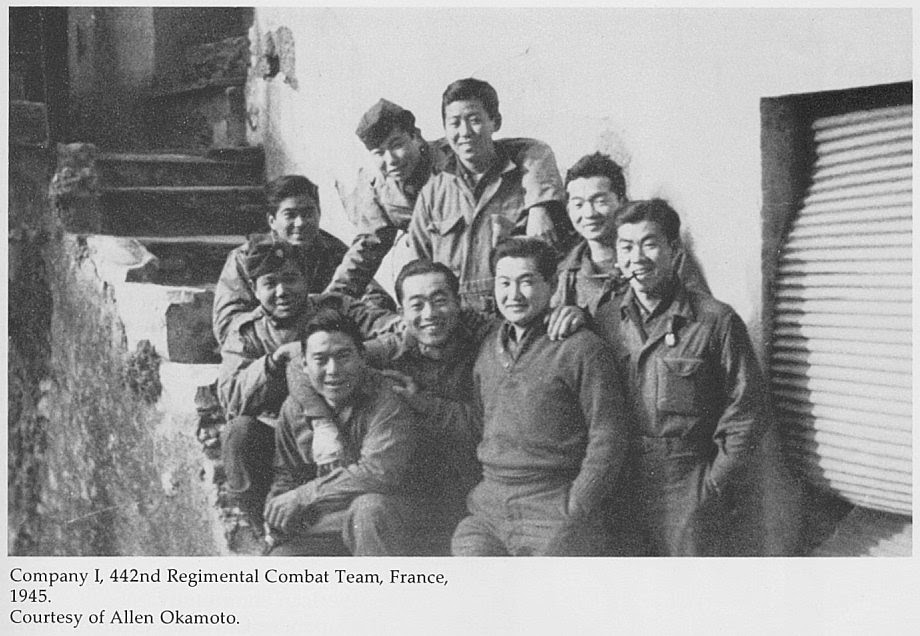
With the motto “Go for broke,” the unit was made up of Japanese-Americans who served the U.S. during World War II ― a time of rampant anti-Japanese sentiment. As many of their civilian loved ones were*imprisoned behind barbed wire*after the bombing of Pearl Harbor, the team accrued an impressive combat record, becoming the most decorated unit in U.S. military history for its size and length of service.
And they did this all the while enduring racism and xenophobia at home, said Mitch Maki, president of Go For Broke National Education Center, which spreads awareness around the Japanese-American soldiers.
“Many of them decided they were going to serve because they knew this was the only way to prove their loyalty and create a better place for themselves as well as for their families,” Maki told HuffPost. “Many of these young men believed that loyalty needed to be demonstrated in blood.”
The Tough Path To Battle
The 442nd RCT, which was formed on March 23, 1943,*included mostly second-generation, or “Nisei,” soldiers, who were the children of Japanese immigrants. The unit included both draftees and volunteers, according to the nonprofit*Densho, which preserves the history of Japanese-American incarceration during World War II.*
The 442nd’s formation marked a turning point in the U.S. military’s wartime policy. Following the bombing of Pearl Harbor,*people of Japanese ancestry had actually been barred from service as “enemy aliens,” 4-C, by the U.S. War Department while xenophobic sentiment swept the country.
“We kept asking, ‘What can we do? How do we change things?’ We were upset that we did not have a chance to prove our loyalty,” Nisei veteran Kenjiro Akune, who ended up being placed in Japanese-American intelligence unit,*Military Intelligence Service, told HuffPost.*
<<snip>>
They also racked up 21 Medals of Honor, 4,000 Purple Hearts, 29 Distinguished Service Crosses, 588 Silver Stars and more than 4,000 Bronze Stars.*The group’s immense contributions in the war include helping to liberate several towns, including Bruyeres and Biffontaine, France, as well as the sub-camps of the Nazi concentration camp Dachau.
The Japanese-American soldiers took on incredible risks. In one particularly memorable engagement, the 442nd was ordered to rescue the “Lost Battalion,”*white U.S. soldiers who were stranded on a ridge near Saint-Dié, France, attempting to withstand heavy enemy fire.*Two other battalions had already failed to rescue the battalion, which was running low on food, water and supplies, according to Densho. The military decided to send in the 442nd.*
“They were given some of the assignments in which they knew they were cannon fodder. They knew that they would be suicide missions,” Maki told HuffPost. “The unspoken message was that they were expendable.”*
full article https://www.huffingtonpost.com/entr...09fe4b05673aa593f8f?ncid=inblnkushpmg00000009