Trump Campaign Doubles Down: It’s Totally Fine That He Called His Enemies ‘Vermin’
Historians said Trump echoed a term used by Hitler and Mussolini. A campaign spokesperson called the former president's critics "snowflakes"
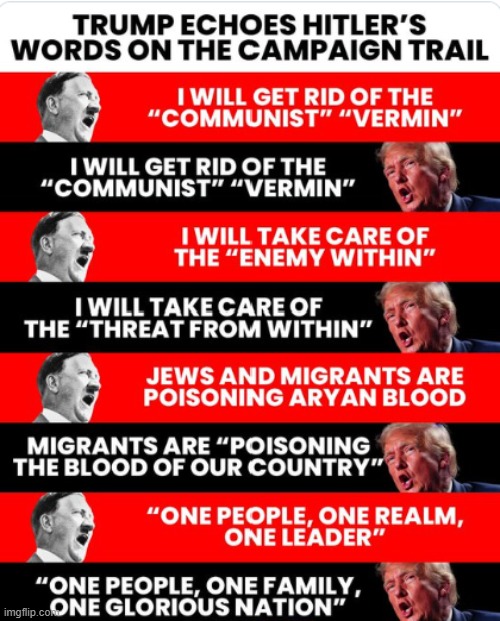
Donald Trump‘s campaign is defending the former president’s use of the word “vermin” to describe his opponents and detractors after receiving backlash for echoing a term used by brutal authoritarian dictators like Adolf Hitler and Benito Mussolini.
“We pledge to you that we will root out the communists, Marxists, fascists and the radical left thugs that live like vermin within the confines of our country that lie and steal and cheat on elections,” Trump said in a Veterans Day speech on Saturday after using the term in a social media post earlier that same day.
Trump also said in his speech that “the threat from outside forces is far less sinister, dangerous and grave than the threat from within. Our threat is from within. Because if you have a capable, competent, smart, tough leader, Russia, China, North Korea, they’re not going to want to play with us.”
The speech prompted reactions from historians, including John Meacham, who said Monday on MSNBC’s Morning Joe that Trump is “lifting” rhetoric from Mussolini and other historic fascists. “And from the Third Reich, and using the 1930s as an example of anything is a fraught enterprise,” Meacham added. “Because to call your opponent vermin, to dehumanize them, is to not only open the door, but to walk through the door toward the most ghastly kinds of crimes.”
Steven Cheung, a Trump campaign spokesperson, responded to the backlash by calling critics “snowflakes” and promising that “their existence will be crushed” by Trump. In a statement to The Washington Post, Cheung said: “Those who try to make that ridiculous assertion are clearly snowflakes grasping for anything because they are suffering from Trump Derangement Syndrome and their entire existence will be crushed when President Trump returns to the White House.”
Cheung later clarified to The Post that he meant to say their “sad, miserable existence” rather than their “entire existence.”...