

ziggy
Verified User
The Due Process Failure That Makes America Look Weak
If DJI actually poses a national security threat, why couldn’t any federal agency prove it?
Section 1709 of the FY25 NDAA gave the government a full year to conduct a security audit. DJI begged for that audit. They sent letters in March, June, and December 2025 asking agencies to examine their products. The response? Silence. No agency started the review. No evidence was gathered. No findings were made.
Instead, DJI got banned by default. Not because anyone proved they’re dangerous. Not because security researchers found backdoors. Not because intelligence agencies documented data exfiltration. They got banned because a bureaucratic clock ran out.
This is the opposite of strength. A confident superpower would have conducted the audit, found the evidence (if it exists), and banned DJI with documentation so thorough that no one could question the decision. Instead, the U.S. government essentially admitted it couldn’t or wouldn’t do the work. The message to the world: America bans Chinese companies not because we can prove they’re threats, but because we can’t be bothered to check.
As we reported in our analysis of DJI’s Adam Welsh interview, Congress deliberately designed Section 1709 with two “trap doors.” First, they didn’t designate which agency should conduct the audit. Second, they made the ban automatic if no audit occurred. This wasn’t an oversight. It was a feature. The outcome was predetermined; the process was theater.
People Will Die Because of This Decision
That’s not hyperbole. That’s math.DJI has documented over 1,000 lives saved by drones globally. More than 87% of public safety drones in the United States are DJI. Over 80% of state and local public safety agencies, including fire departments, sheriff’s offices, search-and-rescue teams, and local police, rely on DJI drones for everything from wildfire response to missing person searches to flood rescues.
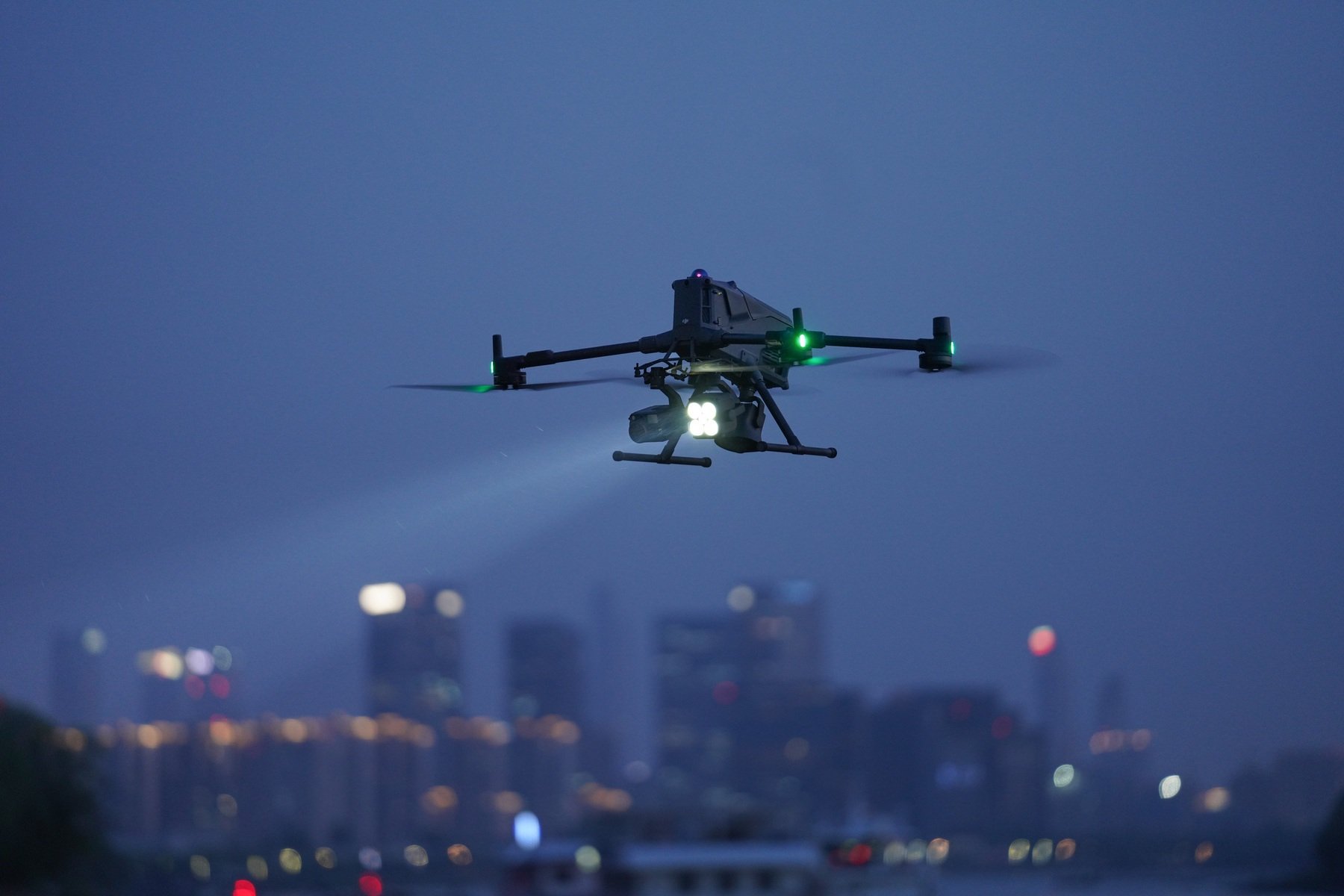
Just two weeks ago, we published a comprehensive list of documented American rescues using DJI drones. On December 7, a man trapped in quicksand in Utah’s Arches National Park at 21 degrees Fahrenheit was located within minutes by a drone. In North Carolina, deputies used a DJI Mavic 2 Enterprise Advanced with thermal camera to find a missing child who wandered from home after dark. In Texas, first responders used DJI Matrice drones to locate flood victims. In Michigan, a sheriff’s department found an elderly woman missing during a winter snowstorm using thermal imaging.
These aren’t future possibilities. These are things that happened. And the drones that made them possible will become increasingly difficult to replace, maintain, and support.
Arizona Fire Chief Luis Martinez warned Congress: “Lives are going to be lost because this air capability is going to be taken away.” When batteries die, when motors fail, when drones crash, what replaces them? The Blue UAS alternatives cost three to five times more and deliver a fraction of the capability. Most departments can’t afford them. Many departments will simply stop having drone programs.
The Hobby Dies Next
First responders aren’t the only casualties. The recreational drone community just lost its primary supplier. DJI’s consumer drones brought millions of Americans into aviation. The Mavic Mini made aerial photography accessible. The FPV series created a new generation of pilots. The Neo made drones approachable for complete beginners.The administration says it wants to “unleash American drone dominance.” But you don’t build dominance by eliminating the products that get people interested in drones in the first place. You build dominance by competing. By innovating. By making something better. Banning the competition is what countries do when they can’t compete.
The Component Ban Changes Everything
The scope of today’s action goes beyond what most coverage has reported. The National Security Determination defines “UAS critical components” to include data transmission devices, communications systems, flight controllers, ground control stations, controllers, navigation systems, sensors and cameras, batteries and battery management systems, and motors.How many American-branded drones use foreign motors? Foreign batteries? Foreign flight controllers? The answer is virtually all of them. Even companies on the Pentagon’s Blue UAS approved list source components globally. Unless DoD or DHS grants specific exemptions, the entire supply chain just got disrupted.
FCC Bans All Foreign And DJI Drones: America Just Made Itself Weaker, Not Safer
We've been tracking the December 23 deadline for months, expecting DJI to land on the FCC's Covered List through bureaucratic default. What the FCC actually
 dronexl.co