
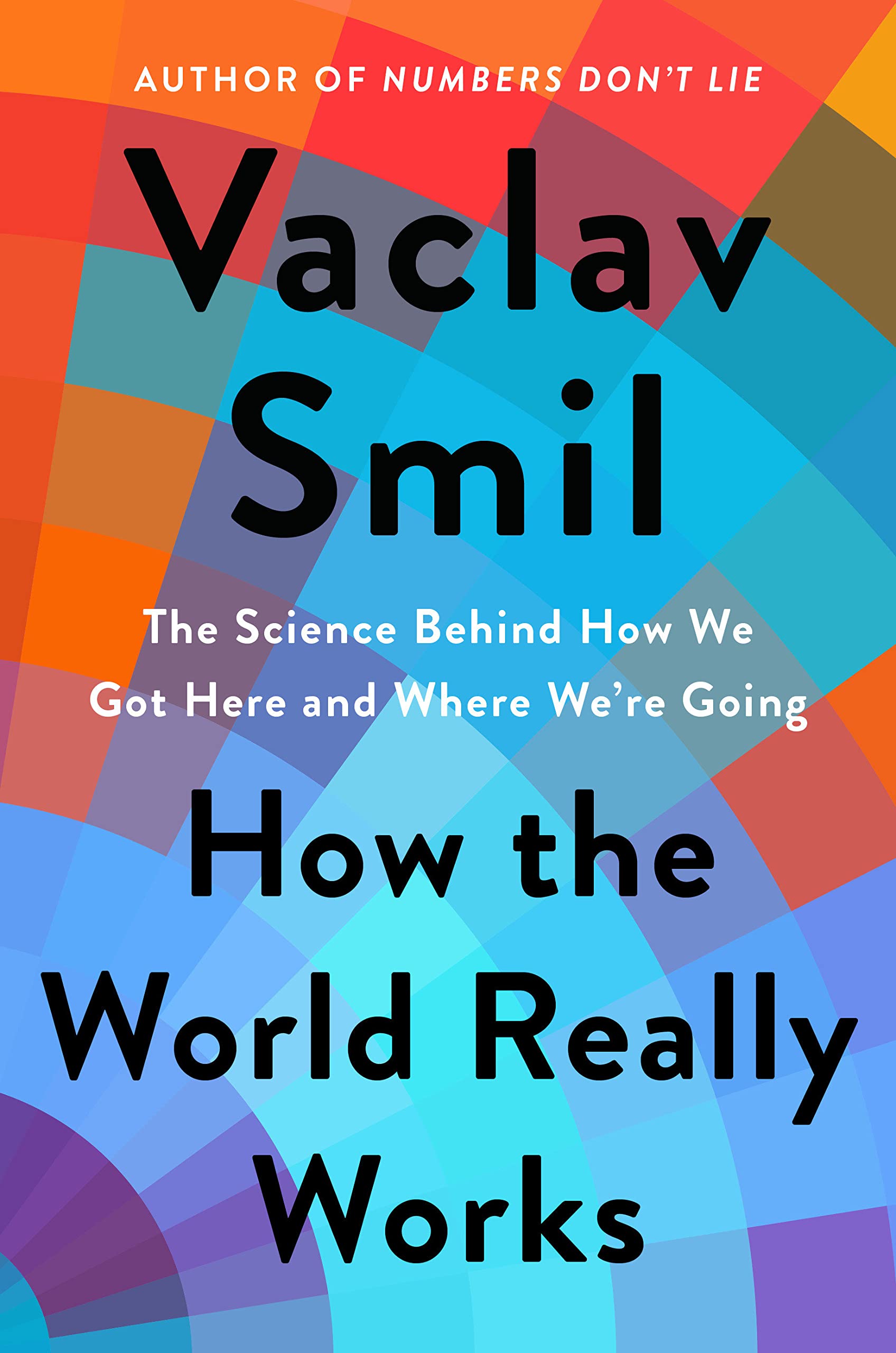
The New York Times Magazine published an interview with Vaclav Smil, probably the world's greatest expert on energy-where it comes from, how we harness it, what it costs, and why it costs what it does.
Smil's new book, "How the World Really Works: The Science Behind How We Got Here and Where We're Going" occasioned the interview.
The article "This Eminent Scientist Says Climate Activists Need to Get Real" is delightful to read. (For climate realists.)
New York Times Magazine writer David Marchese squirms to escape the implications of everything Smil says. He tried desperately to get Smil to agree that climate change is a looming catastrophe and we simply must act now to avert it by replacing fossil-fuel energy with wind, solar, and other "renewable" sources.
But Smil won't take the bait.
He says emissions cuts "are unrealistic." They don't take into account the vast scale of the energy needed to serve even the basic needs of the world's roughly 8 billion people-food, clothing, shelter, transportation, protection from cold and heat, and all the industry that makes those things. And they don't consider what's necessary to produce and distribute all that energy.
Marchese persisted: "But aren't goals necessary for orienting our actions?" Smil parried, "What's the point of setting goals which cannot be achieved? It's misleading and doesn't serve any use because we will not achieve it, and then people say, What's the point? I'm all for goals but for strict realism in setting them."
Marchese tried again: "but aren't there credible pathways to decarbonizing the grid?"
A swing and a miss.
Smil replied: "Germany, after nearly half a trillion dollars, in 20 years went from getting 84 percent of their primary energy from fossil fuels to 76 percent. Can you tell me how you'd go from 76 percent fossil to zero by 2030, 2035? I'm sorry, the reality is what it is."
And then there's Smil's parting thought: "There are these billions of people who want to burn more fossil fuel. There is very little you can do about that. They will burn it unless you give them something different. But who will give them something different? You have to recognize the realities of the world, and the realities of the world tend to be unpleasant, discouraging and depressing."
We could sum up Smil's message in the words of Thomas Robert Malthus 200 years ago: "What cannot be done, will not be done."
https://townhall.com/columnists/calvinbeisner/2022/04/30/draft-n2556833