Bungling Biden's sanctimonious sanctions in the news

Legion

Oderint dum metuant
7b8880a3e5240a59985c9b9afb5a2166


LESS FOOD, HIGHER PRICES FOR THE WORLD - SO BUNGLING BIDEN COULD VIRTUE SIGNAL


Ukraine: how the global fertilizer shortage is going to affect food availability and prices


We are currently witnessing the beginning of a global food crisis, driven by the knock-on effects of recent rises in fuel prices and now the conflict in Ukraine.

There were already clear logistical issues with moving grain and food around the globe, which will now be considerably worse.

But a more subtle relationship sits with the link to the nutrients needed to drive high crop yields and quality worldwide.

Crops are the basis of our food system, whether feeding us or animals, and without secured supply in terms of volume and quality, our food system is bankrupt.

Crops rely on a good supply of nutrients to deliver high yields and quality (as well as water, sunlight and a healthy soil), which in modern farming systems come from manufactured fertilizers.

As you sit and read this, the air you breathe contains 78% nitrogen gas – this is the same source of nitrogen used in the production of most manufactured nitrogen fertilizers.

However, to take this gas from the air and into a bag of fertilizer takes a huge amount of energy.

The Haber-Bosch process, which converts nitrogen and hydrogen into ammonia as a crucial step in creating fertilizers, uses between 1% and 2% of all energy generated globally by some estimates.

Consequently, the cost of producing nitrogen fertilizer is directly linked to the cost of fuel. This is why the price of ammonium nitrate has nearly doubled, compared to a week ago.

Fertilizer inputs to farming systems represent one of the largest single variable costs of producing a crop.

When investing in fertilizer, a farmer must balance the return on this investment through the price they receive at harvest. Adding more fertilizer, for a small improvement in yield, might not pay for itself at harvest.

This calculation between the cost of fertilizer and the value of the crop produced – the “break-even ratio” – is typically around six for a cereal crop (6kg of grain needed to pay for 1kg of nitrogen fertilizer), but with the rise in fertilizer prices it is currently around ten.

Using less fertilizer will reduce yields and quality, adding to pressure on the food system as a whole.
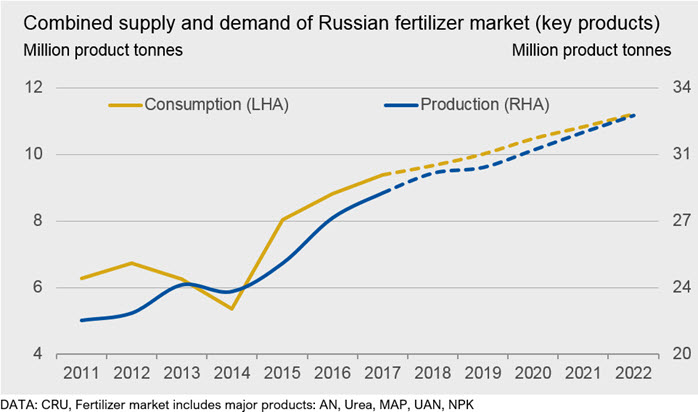
combined-supply-and-demand-of-russian-fertilizer-market.jpg


And Bungling Biden banned the import of Russian fertilizer.
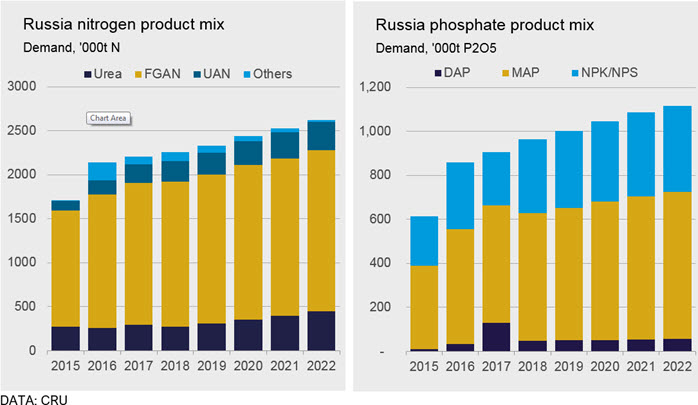


russia-nitrogen-product-mix.jpg


https://theconversation.com/ukraine-how-the-global-fertiliser-shortage-is-going-to-affect-food-179061
 
STARVATION MATRIX decoded: Russia, fertilizer, the Haber equation

the-starvation-matrix-decoded-russia-fertilizer-hydrocarbons-co2-the-haber-equation-and-crop-yields-explained.jpg


Russia and Ukraine are among the world’s largest producers of nitrogen fertilizers and grain crops


The Haber equation describes the process by which hydrocarbons are combined with atmospheric nitrogen to create nitrogen fertilizer that can be directly used by plants.

Notice that you need hydrocarbons to produce ammonia, which is the basis for all nitrogen-based fertilizers such as ammonium nitrate, urea, etc.

You cannot use solar panels to efficiently produce fertilizer. Nor can you use wind farms. You need hydrogen from hydrocarbons for an efficient process. So shutting down natural gas pipelines means you don’t have the hydrocarbons to produce fertilizer. Without fertilizer, crop yields plummet.

What nearly all Leftists and DEMOCRATS fail to recognize is that hydrocarbons are needed to create fertilizer in order to grow food. They falsely think of all hydrocarbons as “dirty” energy, not realizing that ammonia is a simple, clean molecule that’s needed to produce both organic and non-organic crops. (Plants also need phosphorous and potassium, as well as trace minerals, of course.)

Also, remember that fossil fuels are natural sources of energy, produced by the Earth itself. Natural gas is even called “natural,” which is completely accurate. It’s natural to use natural gas as an energy source, and it doesn’t pollute the planet one bit.

Now, Ukraine has banned all exports of wheat, oats, millet, buckwheat, sugar, cattle, meat and numerous other products, as reported by The Hill.

This move is certain to cause a global supply shortage crisis in these grains, leading to even more scarcity and price inflation for the next 1-2 years. This is on top of Hungary also banning all wheat exports a few days ago.

Russia-Ukraine-28-Percent-Wheat-Exports-March.png

Bungling Biden's sanctimonious sanctions have cut off Russia’s fertilizer and gas from the Western world.

Making matters even worse, the sanctimonious sanctions imposed by other weak, woke Western nations — such as the SWIFT de-platforming of Russian banks — has made it impossible for Russian exporters to sell fertilizers and food crops to them. This also impacts minerals, of course.

The impact on America and Western Europe is that there will be panic-level shortages in food crops, fertilizers, energy and minerals, including those minerals used to manufacture electric vehicles, electrical wiring, computing components and so on.

Bungling Biden is directly responsible for this.

By cutting off Russia, woke western nations have only cut off their own supplies of natural gas, fertilizers and many food crops. The results are inevitable and irreversible: Global famine.


https://miamistandard.news/2022/03/09/the-starvation-matrix-decoded-russia-fertilizer-hydrocarbons-co2-the-haber-equation-and-crop-yields-explained/
 
DEMOCRAT: Fertilizer prices are biggest worry for US farmers

vilsack2-1024x578.jpg


AMBER WAVES OF ... VIRTUE SIGNALING MEAN DISASTER FOR AMERICA


Bungling Biden's sanctimonious sanctions of Russian imports this week might drive up the costs of farm fertilizers globally — which have already nearly quadrupled last year in price in the United States and remain high, according to U.S. Secretary of Agriculture Tom Vilsack.

“That’s my biggest and deepest concern,” Vilsack said of the sanctimonious sanction’s immediate effects on U.S. agriculture, “and we’re obviously going to keep an eye on that.”

Russia had already begun to limit its fertilizer exports late last year and recently imposed a two-month export moratorium on ammonium nitrate, a key fertilizer for corn.

In November, Iowa farmers faced fertilizer price quotes that were three to six times higher than the previous year. That has led to speculation that farmers will plant fewer acres of corn and reduce the amount of fertilizer they apply to their fields. The planting season is about two months away.

Vilsack said supply shortages reinforce “the need for us to look at our own capacities domestically, and figure out ways in which we can be perhaps a little bit less reliant on outside forces.”

Ukraine has fertile soil that is comparable in richness to Iowa’s and is a major wheat and corn producer in eastern Europe.


https://idahocapitalsun.com/2022/02/24/vilsack-fertilizer-prices-are-biggest-worry-for-farmers-after-russian-invasion/
 
Back
Top