What facts? Void argument fallacy.
Coal contains between 5% and 6% hydrogen, so is considered a hydro-carbon.

What facts? Void argument fallacy.
No coal has carbon in it along with several other compounds Coal is a mixture of compounds not an element. If coal was carbon only we would call it carbon not coal.Coal is carbon. Carbon is on the periodic table.
Actually they tend to build wind generation in the same general areas where the land is available and wind is available. So the lines tend to be larger than you think. They had to build extra transmission lines because they could not keep all their turbines on line at the same time.Since wind produces so little power, that line is more like a normal distribution line than anything else. Pretty cheap to build. There are no fossil fuel plants.
Transmission lines for wind power are not the reason wind power is the 2nd most expensive method of generating electricity. The reason is a very simple one. Wind generators produce very little power and can't even run all the time. Those machines still take up real estate and require regular maintenance. Just to install one requires about 6 specially made trucks just to haul the parts in, and a helicopter to lift stuff into place. You spend more on diesel and gasoline and the special equipment to install it than you ever get out of the wind generator in it's lifetime. Much of the time it can generate no power at all because wind conditions or temperature conditions are not within tolerable limits of the machine. Icing conditions are particularly bad for these things. You can't run them with ice on the blades. A catastrophic failure would immediately result, throwing debris up to a mile away.
Then of course, there is the blight on the landscape from them.

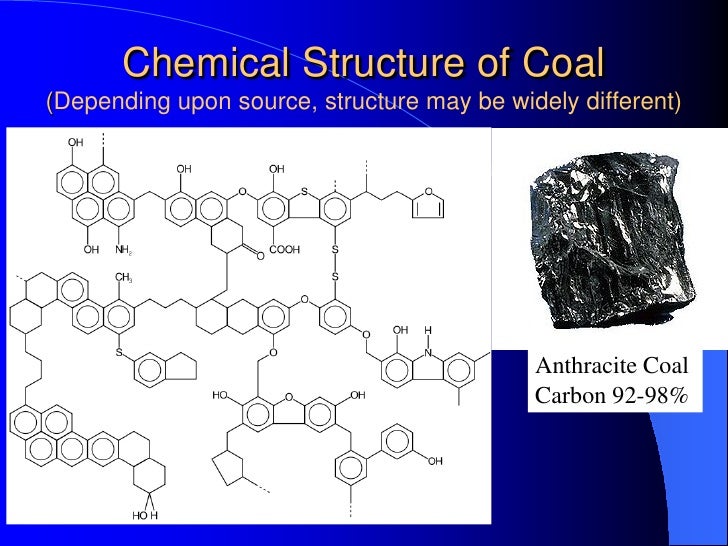
Hydrocarbon. See all those benzene rings with carbon and HYDROGEN in them?
Coal contains between 5% and 6% hydrogen, so is considered a hydro-carbon.
No coal has carbon in it along with several other compounds Coal is a mixture of compounds not an element. If coal was carbon only we would call it carbon not coal.
Actually they tend to build wind generation in the same general areas where the land is available and wind is available. So the lines tend to be larger than you think. They had to build extra transmission lines because they could not keep all their turbines on line at the same time.
Maybe but it goes to larger lines down stream.I build instrumentation, dude. That's what my company does. Some of that instrumentation is installed in wind generator farms. I know what kind of transmission lines come out of those places. It ain't much.

Benzene is not a hydrocarbon. Hydrocarbon has no oxygen. Coal is carbon. Showing me impurities in coal is not coal.

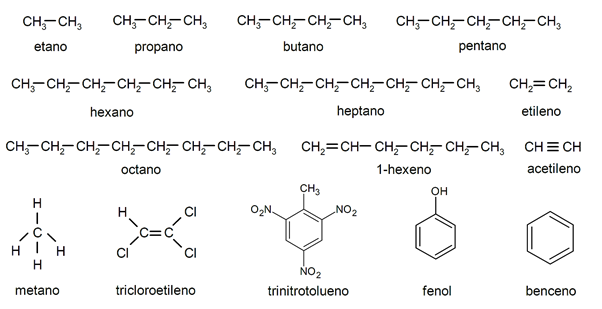
https://www.exampleslab.com/20-examples-of-hydrocarbons/Examples of hydrocarbons
Methane (CH4). It is a gas with a repulsive odor, very flammable, present in the atmosphere of the great gaseous planets and in ours it is the product of the decomposition of organic matter or a product of mining activities.
Ethane (C2H6). It is a highly flammable gas, one of those that constitute natural gas and is capable of producing frostbite in contact with organic tissues.
Butane (C4H10). It is a colorless and stable fas, widely used as a high pressure (liquid) fuel in the domestic context.
Propane (C3H8). It is a colorless and odorless gas, endowed with high explosiveness and narcotic properties when exposure to high concentrations occurs.
Pentane (C5H12). It is an alkane that is normally in a liquid state. It is used as a solvent and as a source of energy, given its high safety and low cost.
Benzene (C6H6). It is a colorless liquid with a sweet aroma, very flammable and also highly carcinogenic, it is among the industrial products with the highest production today. It is used in the manufacture of rubbers, detergents, pesticides, medicines, plastics, resins and in the refining of petroleum.
Hexane (C6H14). It is used as a solvent for some paints and adhesives, as well as in obtaining pomace oil. Its use, however, is restricted because it is an addictive neurotoxic.
Heptane (C7H16). It is a liquid that, at ambient pressure and temperature, is highly flammable and explosive. It is used in the fuel industry as the zero point of octane, and as a working base in pharmaceuticals.
Octane (C8H18). It is the 100th point on the gasoline octane scale, opposite to heptane, and has a long list of isomers for industrial use.
1-Hexene (C6H12). Classified in the industry as a superior olefin and alpha-olefin, it is a colorless liquid essential in obtaining polyethylene and certain aldehydes.
Ethylene (C2H4). The most widely used organic compound in the world is both a natural plant hormone and an industrial compound necessary for the manufacture of plastic. It is usually obtained from the dehydrogenation of ethane.
Acetylene (C2H2). It is a colorless gas, lighter than air and highly flammable, which produces a flame capable of reaching 3000 ° C, one of the highest temperatures manageable by man. It is used as a source of lighting and heat in various industries and applications.
Trichlorethylene (C2HCL3). It is a colorless flammable liquid, with a sweet smell and taste, highly carcinogenic and toxic, capable of interrupting the cardiac, respiratory and hepatic cycles. It is a powerful industrial solvent that does not exist in nature.
Trinitrotoluene (C7H5N3OR6). Known as TNT, it is a pale yellow, crystalline, highly explosive compound. It does not react with metals or absorb water, so it has a long life and is widely used as part of military and industrial bombs and explosives.
Phenol (C6H6OR). Also known as carbolic or phenyl acid or phenylhydroxide, it is solid in its pure, crystalline, white or colorless form. It is used to obtain resins, nylon and as a disinfectant or part of various medical preparations.
Tar. It is a complex mixture of organic compounds whose formula varies according to the nature of its production and its temperature and other variables. It is a liquid, bituminous, viscous and dark substance, with a strong odor and many applications, from psoriasis treatment to road paving.
Kerosene. It is a common fuel, not very clean and obtained through the distillation of natural petroleum. It is composed of a mixture of hydrocarbons in a transparent and yellowish liquid, insoluble in water, used for lighting and surface cleaning purposes, as well as a pesticide and motor lubricant.
Gasoline. Obtained from petroleum by direct or fractional distillation, this mixture of hundreds of hydrocarbons is used in internal combustion engines as the cleanest, most efficient and popular fuel known, especially after it was separated from lead in the early 2000s. .
Petroleum. It is the most important mixture of hydrocarbons known in industrial terms. From oil it is possible to synthesize many other and diverse types of substances. It is produced underground from organic matter accumulated in geological traps and subjected to extremely high pressure. It is of fossil origin, a viscous and dense black liquid, whose world reserves are non-renewable, but which constitutes the main input for the automotive, electrical, chemical and materials industries.
Maybe but it goes to larger lines down stream.

https://www.exampleslab.com/20-examples-of-hydrocarbons/
Hydrocarbons are often combined with other organic molecules like NO2, OH, etc., to form substances. That doesn't negate that they are hydrocarbons.
Yes I have but if Wind farms A ,B and C are transmitting to a larger Transmission line D the lines from A and the lines from B and the line from C can each be smaller than the transmission line D.Have you ever heard of the weak link in the chain?
If you really believe that then you are a moron.Yes it does.
Several of these are not hydrocarbons, despite the pretty picture you used. All the examples in yellow are hydrocarbons.
Coal is not a hydrocarbon.
Yes I have but if Wind farms A ,B and C are transmitting to a larger Transmission line D the lines from A and the lines from B and the line from C can each be smaller than the transmission line D.
If you really believe that then you are a moron.
Dude the chemistry does not agree with you. Coal contains carbon and hydrocarbonCalling people names doesn't change chemistry, dude.
...And your point?

Not the definition of a hydrocarbon.
Dude the chemistry does not agree with you. Coal contains carbon and hydrocarbon
Dude the chemistry does not agree with you. Coal contains carbon and hydrocarbon