If I am not mistaken, Republican administrations lead in crimes committed by administration figures while in office.
They blow the Democrats out of the water on that.
Would that count?
Yes, credit where due.

If I am not mistaken, Republican administrations lead in crimes committed by administration figures while in office.
They blow the Democrats out of the water on that.
Would that count?
You include COVID as it's just a normal part of the POTUS 4 years.

That "Captain of the ship" wording is interesting, because when you were talking about Congress holding the purse strings, I was thinking of a specific historical example of the president effectively forcing Congress's hand. Teddy Roosevelt wanted to make a display of US military power by taking a Navy armada on a tour of global ports. Congress didn't want to pay, but the budget had enough to get them half-way around the world. So he just sailed them half way around the world and Congress had to finance getting them back.
I'm not sure how apocryphal that is, but it's something I learned in school when we were dealing with Teddy Roosevelt's aggressive use of presidential power. And I think it does point to just how much the president really can act as the captain of the ship. And as I argued above, you can really see the results of that if you compare the Reagan and Clinton eras. If Congress mattered as much as the president, you'd expect those eras to be pretty similar in terms of policy, since once had mostly a Democratic Congress and Republican President, and the other vice versa. But they weren't actually similar at all. In the Reagan years we got huge military spending growth, in the Clinton era military budgets shrunk as a share of overall spending. Under Reagan we got radical upper-class tax cuts. Under Clinton, taxes on the rich rose. And so on. The bully pulpit really does allow a president to bully Congress to a pretty great extent.
Republicans have a better record of NOT calling everyone who disagrees with them domestic terrorists.
Things like that work once. Besides paying for them to get back, what else did Congress do to prevent another such stunt?
Our main problem in the US for the past three decades has been an increasingly dysfunctional Congress. They won't talk nor compromise except in rare circumstances. The Russian attack on Ukraine is a surprising example of bipartisan action by Congress. I expect we'll see another bipartisan act after the WSEs murder a bunch of Americans either this summer or the summer of 2024. Let's hope that action puts our nation back onto a more sensible course.

False.

WSE?

I'm happy to look at any measurable indicator you name. However, you bring up inflation and that was already specifically calculated, in two different ways, in the top post.
Taxes, I suppose, it a quantifiable comparison we could make. However, I don't recognize taxes as inherently good or bad. They just move money from one pile to another, so the key question is how well that money gets spent in either pile. If, for example, you cut taxes and as a result the private sector spends money less productively than it was being spent in the public sector, and the GDP growth rate falls, that's bad. If, instead they spend it more productively and GDP growth rates rise, that's good.
Still, there are other ones I can think of that aren't economic. I spoke to teen birth rates, already, above. Murder rates and incarceration rates are also good indicators to look into. Maybe infant mortality rates?
no taxation is not just moving money from one pile to another.
your amoral financial industry way of viewing the world is why central planners are reviled throughout history, and why their regimes always fail.
Agreed. Worse, IMO, they're both working hard to put party over country.
What makes you think that? It's simply a decision about whether a particular dollar figure goes to one entity (generally a person or corporation) or another entity (typically a government).
Taxes exist in all modern societies, not just one with central economic planning. Even the most libertarian of societies believe there are particular functions that can best be handled by the government, and those need to be funded.

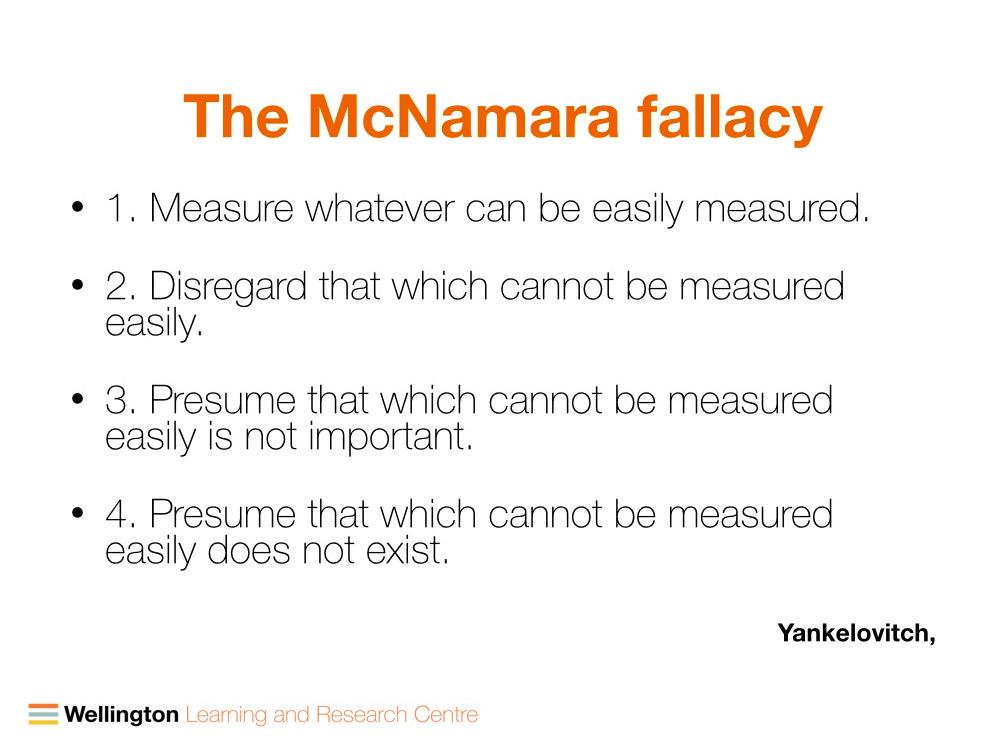
This board is interesting, in that a number of the right-wingers here have completely given up on the idea of even attempting to engage with fact-based arguments. Instead, they simply name a fallacy and hope that ends the discussion and we can return to free-form venting of emotions, in lieu of discussions that reference actual evidence.
I don't have a huge problem with Eisenhower, but I think the "soft focus" of history makes people forget a few things. For starters, did you know he led the nation into three separate recessions? Seriously -- no modern president had more recessions than him. And it shows in some of the economic stats. The month he took office, the unemployment rate was 2.9%. By the time he left, it was 6.6%. He also failed badly to provide leadership in pushing back against McCarthyism. McCarthy scared Eisenhower, so he mostly let him run wild without calling him out. When a Republican finally had the balls to speak up, it wasn't anyone in the administration, but rather Margaret Chase Smith, a senator from Maine. Eisenhower also did pathetically little on the civil rights front, relative to his predecessor (who integrated the armed forces) or his successors. And, again, you can see the result. When Ike left office, well over half of all Black people lived in poverty.
As for Reagan's military overspend, I'd actually have counted that against him. He basically sold the nation a bill of goods based on the idea that the Soviet Union was a huge threat, even as they were actively imploding and desperately suing for peace. The result was a massive run-up in deficits with precious little to show for it. And so much of that money turned out to be wasted -- on things like Star Wars defense shields that didn't work at all, or Cold-War-minded weapons systems that would quickly be obsolete.
Not saying that any of them were perfect, one can find some indicator with any President to draw a different portrayal, but that in terms of the thread, Ike did emulate a sense of leadership during the tense environment of the Cold War, not sure Stevenson could have done the same. By today’s standards, he didn’t progress civil rights, but he didn’t stand as an obstacle, he did send the troops into Little Rock, and it was Ike who upon McCarthy’s attack on the Army sent out the word enough was enough
And as I noted, not a fan of Reagan, but from a Republican perspective, and again, following the theme of the thread, I can see why many would consider him an asset as President
It is a difficult question, none of them measure up to everyone, LBJ is a perfect example, should be a top ranked President on his Civil Rights achievements, but gets negative reviews for Vietnam
It's not simply that decision you reference.
The fact you cannot see it is your problem.
you're a central planner totalitarian diseased individual.
Carter to Biden is a very long time.I discussed inflation in the top post. If you look at Democrats vs. Republicans as a whole, rather than cherry-picking particular periods, then inflation has actually been lower, on average, during Democratic presidencies. That said, unlike with every other indicator I've looked into, there is a reasonable way to crunch those numbers that makes the Republicans look a bit better when it comes to inflation (if you measure net change in the rate from start to finish of each presidency).
“Sweetie” claims to have an Ivy League education.
Anecdotal usually means lies.