50 years of failed eco predictions

Cars are a LOT cheaper to make than when they were first made.

No they're not. They're just as expensive as ever, you just need to account for scale...which you're not doing because if you did, it would ruin your argument.


Computers are a LOT cheaper to make than those old mainframes too.

Right, but computers already existed, so you're not creating a new product, you're just improving on one for which demand already exists.

The demand is for the IMPROVED product, not the product itself.

This is why most businesses fail; the people running them have no fucking idea what they're doing.


If an product is cheaper, more consumers will buy it. See Walmart for details.

Not if they don't have the money to buy it.


Nope. Incentive increases to increase production and to make the product even cheaper to produce. I guess you don't get the idea of competition, do you? You are operating under some weird model of a closed economic system.

Increasing production doesn't make the item cheaper to produce...it means it costs MORE to produce because you're INCREASING your production. But if there is no demand for your shitty product, then all you're doing is deflating its value by producing more of it. And just because something is cheaper doesn't mean people will start buying it...like what happened with Shale and Fracking...so much of it was produced that its value has diminished which has pushed hundreds of companies into trillions of dollars of bankruptcies because they did exactly what you're saying here...overproduce a product to drive down its cost to make it appealing for consumers to buy...but if consumers don't have the money to spend to buy it, then all you've done is deflate the value of your product on the market and completely erased any possible ROI.

Again, you are the best example of why most businesses fail.
 
Moron...what Carter had was stagflation which is not a recession.
It was a recession. Carter called it a 'stagflation' and so did the Fake News service.
It's something completely different. Stagflation is SLOW economic growth, not contracting economic growth.
It was contracting.
Contracting economic growth is a recession. Slow economic growth is stagflation.
It was contracting.
Carter's GDP growth for his term (3.25%) was higher than Trump's (0.95%), Bush the Dumber's (2.2%), Bush the Elder's (2.25%), and Obama's (1.62%). And Reagan (3.48%) was only 0.23% higher than Carter.
GDP is not economy since it includes government spending.
And the wage and price controls started with Nixon in 1970, you dumbass.
Carter imposed price controls on gasoline, causing long lines at gas pumps. Carter imposed minimum wage increases too. Price controls never work.
So on top of not knowing a goddamn thing about economics, you also don't know a goddamned thing about history.
Inversion fallacy.
 
Wrong again because you're too sloppy and too lazy to do the work of being informed.

Total Private Sector Employment (in 000s)
January 1977: 65,634
January 1981: 74,673


Total Government Sector Employment (in 000's)
January 1977: 15,056
January 1981: 16,360


So Carter created 9M private sector jobs and 1.3M public sector jobs.

It was actually Bush the Dumber (remember him?) who grew public sector employment during his term while losing net private sector jobs. Bush the Dumber would go on to create net 480,000 jobs in 8 years, but all those jobs are government jobs.

The government doesn't create private sector jobs.
 
It comes from both. Increased economic activity means wages (more jobs) and more opportunities to start your own business.

OK, before you said it didn't, so now you're moving the goalposts here because you realized that no one can buy a product if they don't have a wage high enough.

Supply-side economics doesn't fucking work because of that...and going all-in on the supply side is a sure fire way to devalue your product (see: natural gas & fracking).

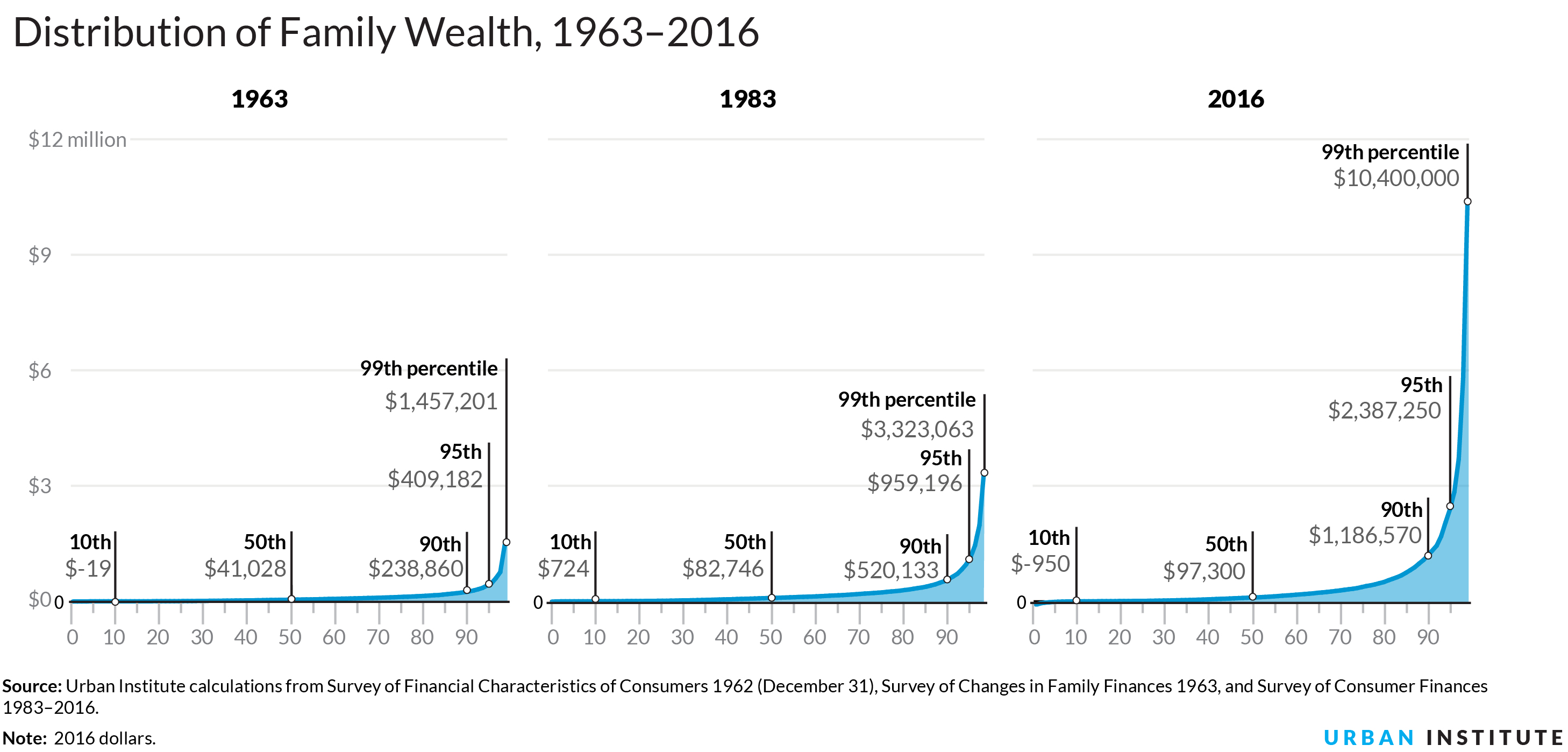
And it also doesn't fucking work when wealth is hoarded at the top and not disseminated down the workforce via higher wages.

So you can waste all your time and money building an inventory of product, but if no one has the money to spend, all you're left with is the debt you went into in order to generate this artificial supply to meet speculative demand that doesn't exist.

And that is why more than half of all businesses fail.
 
You are clueless. Government is not economics.

Government plays a significant role in the economy.

Presently, government spending makes up about 17% of the economy.

So if you cut government spending and aren't making up that spending in other places, you will contract the economy.
 
Nope.

The S&L crisis was brought about by the combination of taxpayer guarantees along with deregulation, and it started in earnest with the Garn–St. Germain Depository Institutions Act of 1982 that deregulated savings and loan associations and allowed banks to provide adjustable-rate mortgage loans.

Guess you forgot about the Keating Five, namely:

The Keating Five Scandal

During this crisis, five U.S. senators known as the Keating Five were investigated by the Senate Ethics Committee due to the $1.5 million in campaign contributions they accepted from Charles Keating, head of the Lincoln Savings and Loan Association. These senators were accused of pressuring the Federal Home Loan Banking Board to overlook suspicious activities in which Keating had participated. The Keating Five included:

John McCain (R–Ariz.)
Alan Cranston (D–Calif.)
Dennis DeConcini (D–Ariz.)
John Glenn (D–Ohio)
Donald W. Riegle, Jr. (D–Mich.)

Only ONE of them was a Republican.
 
So you LIKE paying more for your computers than before, do you?

You are never, ever going to be able to bring down costs for consumers by flooding the market with supply.

It will never happen.

If you want to make things more affordable for consumers, then you need to pay consumers more money.


You think you should pay half a million for one, like the old mainframes, eh?

The consumer market sets the rates, not the suppliers.

Suppliers who try to do that never last.


Deflation caused by productivity is GOOD.

NO IT ISN'T.


Personal computers are so cheap now almost every home has several of them.

Not because they're cheap, but because they're a necessity.

Computers are not cheap at all...they are fucking expensive as shit.


ou can get a computer now for as little as $40.

Yeah, that can't do shit and breaks after a year.
 
It's not being hoarded.

Yes it is.

WealthPercentiles.jpg
 

Ah, so you cannot come up with even 1 lazy example of your economic theory bearing any positive results.

Over the last 40 years, every single Conservative President and Congress has left behind an economy in tatters for the Democrats to clean up.

Every. Single. Time.
 
So the personal computer industry was never created, eh? WTF are YOU typing on?

Well, the computer industry came from the work the government did to develop computers mainly for defense purposes...in fact, almost all the contracts that companies like IBM had at the beginning were with the government.

You really don't know much history, do you? Because the personal computer wasn't invented out of thin air.
 
odd. The eco predictions are coming true and rightys still deny it. It was supposed to be even worse according to some, is not saying it is not happening. It is.
I saw a program on PBS a few years ago on a Minnesota gardening club. They were old people who had been together for years. they were talking about the longer seasons they have and the plants they could grow now, that they could not before. It was not about global warming, except, in the end, it was.
 
Yes they do. There is no reason to hoard cash. It works against you, due to inflation.

No they don't, and I just provided you with three links that proves they didn't.

I notice that you didn't even quote those links, but you quoted what I wrote.

That's because you don't want to deal with the fact that what you believe is a myth that has been disproved by the last 3 years of economic data that you told me to look at!

From the Cleveland Fed: The average quarterly growth rate of business investment was 2.8 percent in 2018–2019, lower than the rates in 2016–2017 (4.0 percent), 2013–2017 (3.9 percent), or 2010–2017 (5.5 percent).

So, in Conservatardia, is 2.8% MORE than 4.0%? How about 3.9%? Surely 2.8% is higher than 5.5%, right? RIGHT?
 
Last edited:
WRONG. Taxes were cut across the board, not just corporate taxes.

For most people, those tax cuts expire in the next couple years.


Business boomed.

Trump never got the 3% annual GDP growth you, he, and the Conservatives all promised.

In fact, Trump best annual GDP growth (2.85%) never exceeded Obama's best annual GDP growth (2.89%).

And manufacturing plunged into a recession in 2019, a year after the tax cut:

U.S. manufacturing was in a mild recession during 2019, a sore spot for the economy
https://www.washingtonpost.com/busi...mild-recession-during-2019-sore-spot-economy/

And the rest of the economy followed a year later, before any COVID lockdowns:

It's official: Recession began in February, ending longest U.S. expansion ever
https://www.cbsnews.com/news/united-states-recession-started-february/

Trump's economy never boomed. In fact, he never created more jobs than Obama did:

Obama’s Last Three Years Of Job Growth All Beat Drumpf’s Best Year
https://www.forbes.com/sites/chuckj...th-all-beat-trumps-best-year/?sh=4d2de6846ba6

And the DJIA grew at its slowest pace in a decade when the Russia Tax Cut started on 1/1/18.
 
It all ended when DEMOCRATS shut down the economy by shuttering businesses due to the Church of Covid.

Laughable.

The economy entered a recession in February 2020, a month before any COVID lockdowns started:

It's official: Recession began in February, ending longest U.S. expansion ever
https://www.cbsnews.com/news/united-states-recession-started-february/

The lockdowns weren't until Mid-March.

Does February come before or after March?

Is time not linear in Conservatardia?
 
No they're not. They're just as expensive as ever, you just need to account for scale...which you're not doing because if you did, it would ruin your argument.


Right, but computers already existed, so you're not creating a new product, you're just improving on one for which demand already exists.

The demand is for the IMPROVED product, not the product itself.

This is why most businesses fail; the people running them have no fucking idea what they're doing.


Not if they don't have the money to buy it.


Increasing production doesn't make the item cheaper to produce...it means it costs MORE to produce because you're INCREASING your production. But if there is no demand for your shitty product, then all you're doing is deflating its value by producing more of it. And just because something is cheaper doesn't mean people will start buying it...like what happened with Shale and Fracking...so much of it was produced that its value has diminished which has pushed hundreds of companies into trillions of dollars of bankruptcies because they did exactly what you're saying here...overproduce a product to drive down its cost to make it appealing for consumers to buy...but if consumers don't have the money to spend to buy it, then all you've done is deflate the value of your product on the market and completely erased any possible ROI.

Again, you are the best example of why most businesses fail.
and you have compassion for corporations why?
 
No they're not. They're just as expensive as ever, you just need to account for scale...which you're not doing because if you did, it would ruin your argument.


Right, but computers already existed, so you're not creating a new product, you're just improving on one for which demand already exists.

The demand is for the IMPROVED product, not the product itself.

This is why most businesses fail; the people running them have no fucking idea what they're doing.


Not if they don't have the money to buy it.


Increasing production doesn't make the item cheaper to produce...it means it costs MORE to produce because you're INCREASING your production. But if there is no demand for your shitty product, then all you're doing is deflating its value by producing more of it. And just because something is cheaper doesn't mean people will start buying it...like what happened with Shale and Fracking...so much of it was produced that its value has diminished which has pushed hundreds of companies into trillions of dollars of bankruptcies because they did exactly what you're saying here...overproduce a product to drive down its cost to make it appealing for consumers to buy...but if consumers don't have the money to spend to buy it, then all you've done is deflate the value of your product on the market and completely erased any possible ROI.

Again, you are the best example of why most businesses fail.

it can become cheaper per unit. let's have honesty.
 
Back
Top