

You are using an out of date browser. It may not display this or other websites correctly.
You should upgrade or use an alternative browser.
You should upgrade or use an alternative browser.
What if Trump actually wanted this outcome in Hormuz all along?
- Thread starter Mahmoud Ahmadinejad
- Start date

CBHype
Charles Bentley Hypodrome
CENTCOM: U.S. Navy Starts Mission to Clear Mines From Strait of Hormuz
The United States Navy has begun operations in preparation for clearing mines from the Strait of Hormuz, U.S. Central Command said on Saturday.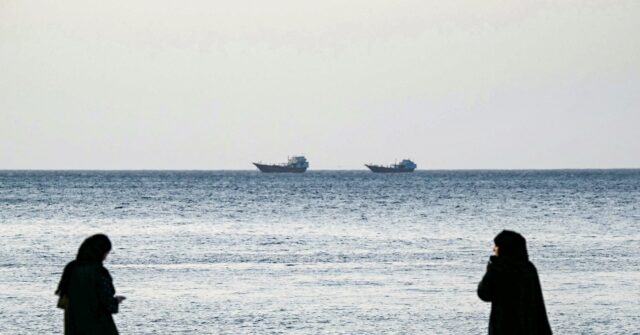
U.S. Navy Starts Mission to Clear Mines From Strait of Hormuz
The U.S. Navy has begun operations in preparation of clearing mines from the Strait of Hormuz, U.S. Central Command said on Saturday.
 www.breitbart.com
Mahmoud Ahmadinejad
سپاه پاسداران انقلاب اسلامی
CENTCOM: U.S. Navy Starts Mission to Clear Mines From Strait of Hormuz
The United States Navy has begun operations in preparation for clearing mines from the Strait of Hormuz, U.S. Central Command said on Saturday.
U.S. Navy Starts Mission to Clear Mines From Strait of Hormuz
The U.S. Navy has begun operations in preparation of clearing mines from the Strait of Hormuz, U.S. Central Command said on Saturday.
That's what they claim, anyway.

For fuck sake, stop spamming the forum, Legion, you fucking loser.Helen Thompson says the consistent ‘thread’ through the second Trump administration has been resetting the energy part of the world geopolitically

Teflon Don
I'm back baby
Ask Jarod. He claims to know everything
Mahmoud Ahmadinejad
سپاه پاسداران انقلاب اسلامی
This entire outcome, including the apparent closure of the Strait of Hormuz, may not be a bug of the war at all, but a deliberate feature.
Helen Thompson argues that driving up the worldwide price of oil and keeping it there may be a core war goal of the Trump administration. That hurts China, which depends on imported energy, and helps America, which is a net energy producer. And if that’s the case, then Iranian control over the Strait would, ironically, be a desirable outcome.
“The Trump administration thinks through the lens of resource competition,” Thompson explained.
“You have to consider the possibility … that actually part of what’s going on isn’t just about Iran, it’s about the Trump administration trying to hurt China,” she told the conservative-leaning website UnHerd.
The Iran war may be “part of an attempt by the Trump administration to reset the energy part of the world geopolitically,” she told Bloomberg Podcasts.
That, says Thompson, is the consistent “thread” through the second Trump administration’s foreign policy — including the intervention in oil-rich Venezuela and its attempts to destabilize resource-rich Greenland. It is also, she points out, part of the geopolitical blueprint that the administration laid out last fall.
America, Thompson points out, may be a “beneficiary” of the war economically because it will be able to sell more liquefied natural gas at elevated prices, especially to the Europeans.
She adds that right now, competitive thinking between the U.S. and China focuses on artificial intelligence, which uses a staggering amount of energy. Driving up China’s energy costs hurts its AI ambitions.
Thompson also points out that it wasn’t the Iranians who “closed” the Strait of Hormuz.
Western shipping insurers became worried about the risks. After initially floating the notion of stepping in and providing insurance to ships through the U.S. government, the Trump administration soon walked away from the idea. That would be consistent with the theory that the administration does not want fuel to flow freely through the strait, because it wants oil and gas to remain expensive.
Expensive fuel produces its own political calculus here at home. High gasoline and diesel prices are expected to cost the Republicans heavily in the midterm elections, especially if they persist. That, at least, is a problem Xi doesn’t have to deal with.
And the parts of America that actually benefit from expensive oil, such as the energy companies and the oil-producing regions of the South, West and Midwest, are typically MAGA country. Oil prices at today’s levels are actually high enough to provoke another drilling boom, according to data from the Dallas Fed.
Does this sound fanciful? As always, do the math. According to the Dow Jones Markets Data team, since the start of this war on Feb. 28, the U.S. publicly traded energy industry (meaning all the energy companies traded on U.S. exchanges) has gained $93 billion in market value. Those companies’ 2026 revenue estimates have risen more than $200 billion, from $1.9 trillion to $2.1 trillion. (Yes, really.) Their estimated total net income for 2026 has risen by 22%, or $33 billion, to $183 billion.
This doesn’t leave the rest of the world with many good options. Either the Iranian regime has an accidental stranglehold over the Strait of Hormuz, or it achieved this with the deliberate connivance of the Trump administration.
To understand what the Iranians are likely to do with this newfound power, try to imagine what an amoral but rational actor would do in their shoes. They’d probably charge a toll on oil and gas that was low enough that nobody minded paying it. So charging $1 on a $98 barrel is bupkis to oil producers and consumers, while it adds up to real money over time for the Iranians.
What you would not do is kill the goose laying the golden egg, meaning you would not want to make your control over the Strait of Hormuz so costly or irksome to others that they are moved to take action, either by actually removing you from power, or by quickly building new pipelines in the desert to circumvent the strait. So an amoral but rational actor would avoid charging too much.
Meanwhile, the situation means there is an ominous chance that oil will not return to prewar levels, or anything like it, anytime soon.
Helen Thompson argues that driving up the worldwide price of oil and keeping it there may be a core war goal of the Trump administration. That hurts China, which depends on imported energy, and helps America, which is a net energy producer. And if that’s the case, then Iranian control over the Strait would, ironically, be a desirable outcome.
“The Trump administration thinks through the lens of resource competition,” Thompson explained.
“You have to consider the possibility … that actually part of what’s going on isn’t just about Iran, it’s about the Trump administration trying to hurt China,” she told the conservative-leaning website UnHerd.
The Iran war may be “part of an attempt by the Trump administration to reset the energy part of the world geopolitically,” she told Bloomberg Podcasts.
That, says Thompson, is the consistent “thread” through the second Trump administration’s foreign policy — including the intervention in oil-rich Venezuela and its attempts to destabilize resource-rich Greenland. It is also, she points out, part of the geopolitical blueprint that the administration laid out last fall.
America, Thompson points out, may be a “beneficiary” of the war economically because it will be able to sell more liquefied natural gas at elevated prices, especially to the Europeans.
She adds that right now, competitive thinking between the U.S. and China focuses on artificial intelligence, which uses a staggering amount of energy. Driving up China’s energy costs hurts its AI ambitions.
Thompson also points out that it wasn’t the Iranians who “closed” the Strait of Hormuz.
Western shipping insurers became worried about the risks. After initially floating the notion of stepping in and providing insurance to ships through the U.S. government, the Trump administration soon walked away from the idea. That would be consistent with the theory that the administration does not want fuel to flow freely through the strait, because it wants oil and gas to remain expensive.
Expensive fuel produces its own political calculus here at home. High gasoline and diesel prices are expected to cost the Republicans heavily in the midterm elections, especially if they persist. That, at least, is a problem Xi doesn’t have to deal with.
And the parts of America that actually benefit from expensive oil, such as the energy companies and the oil-producing regions of the South, West and Midwest, are typically MAGA country. Oil prices at today’s levels are actually high enough to provoke another drilling boom, according to data from the Dallas Fed.
Does this sound fanciful? As always, do the math. According to the Dow Jones Markets Data team, since the start of this war on Feb. 28, the U.S. publicly traded energy industry (meaning all the energy companies traded on U.S. exchanges) has gained $93 billion in market value. Those companies’ 2026 revenue estimates have risen more than $200 billion, from $1.9 trillion to $2.1 trillion. (Yes, really.) Their estimated total net income for 2026 has risen by 22%, or $33 billion, to $183 billion.
This doesn’t leave the rest of the world with many good options. Either the Iranian regime has an accidental stranglehold over the Strait of Hormuz, or it achieved this with the deliberate connivance of the Trump administration.
To understand what the Iranians are likely to do with this newfound power, try to imagine what an amoral but rational actor would do in their shoes. They’d probably charge a toll on oil and gas that was low enough that nobody minded paying it. So charging $1 on a $98 barrel is bupkis to oil producers and consumers, while it adds up to real money over time for the Iranians.
What you would not do is kill the goose laying the golden egg, meaning you would not want to make your control over the Strait of Hormuz so costly or irksome to others that they are moved to take action, either by actually removing you from power, or by quickly building new pipelines in the desert to circumvent the strait. So an amoral but rational actor would avoid charging too much.
Meanwhile, the situation means there is an ominous chance that oil will not return to prewar levels, or anything like it, anytime soon.
Mahmoud Ahmadinejad
سپاه پاسداران انقلاب اسلامی
America’s decision regarding the Strait of Hormuz appears deeply contradictory. The same United States that had repeatedly warned about the consequences of closing this vital waterway and emphasized the need to keep it open is now talking about blocking maritime traffic. But if this move is seen merely as a tactical shift or a temporary reaction, the core of the story is missed.
What is unfolding is not simply about “closing the strait,” but about redefining control and function over the Strait of Hormuz.
Rather than granting Iran its sovereign territorial rights, America appears to be attempting to strip Iran of that basic dignity and appropriate it for himself. In other words, America seeks to transform the Strait of Hormuz from a waterway shared by Iran and Oman into an American one, even if that means blocking the same route Washington once insisted must remain open.
In this context, the announcement of a ban on all shipping takes on a different meaning.
America is playing with a global variable: the flow of Middle Eastern energy to the world.
What is unfolding is not simply about “closing the strait,” but about redefining control and function over the Strait of Hormuz.
Rather than granting Iran its sovereign territorial rights, America appears to be attempting to strip Iran of that basic dignity and appropriate it for himself. In other words, America seeks to transform the Strait of Hormuz from a waterway shared by Iran and Oman into an American one, even if that means blocking the same route Washington once insisted must remain open.
In this context, the announcement of a ban on all shipping takes on a different meaning.
America is playing with a global variable: the flow of Middle Eastern energy to the world.
Mahmoud Ahmadinejad
سپاه پاسداران انقلاب اسلامی
Mahmoud Ahmadinejad
سپاه پاسداران انقلاب اسلامی
US at full capacity as American blockade squeezes global LNG, prices surge
Qatar disruption deepens crunch as no quick supply fix emerges.
A two-month halt in LNG shipments from Qatar — one of the world’s largest suppliers — has triggered a sharp surge in prices across Europe and Asia, intensifying pressure on economies heavily reliant on imported gas for power, heating and industry.
Dubai: The closure of the Strait of Hormuz is rippling through global energy markets, choking off a critical supply of liquefied natural gas (LNG) and exposing a hard limit: Even the world’s top exporter, the United States, cannot step in to plug the gap, The New York Times reported.
A two-month halt in LNG shipments from Qatar — one of the world’s largest suppliers — has triggered a sharp surge in prices across Europe and Asia, intensifying pressure on economies heavily reliant on imported gas for power, heating and industry, according to the report.
The disruption marks the second major shock to global gas markets in less than five years, after Russia curtailed pipeline supplies to Europe following its war in Ukraine in 2022. While US exports helped cushion that blow, analysts say this crisis is different — and potentially more severe.
“All of the LNG exported from the US is already at full capacity,” Massimo Di Odoardo of Wood Mackenzie was quoted as saying.
Since the Iran war began in late February, LNG prices in Europe and Asia have surged to as much as six times US domestic gas prices, highlighting a tightening market with limited alternatives.
Hormuz choke — LNG flows & shortage
- About 20% of global LNG trade passes through the Strait of Hormuz
- Qatar halt: Shipments paused for ~2 months
- Ras Laffan damage: ~17% capacity hit
- US exports: About 18 billion cubic feet/day (near full capacity)
- Price surge: Up to 6x US gas prices in Europe/Asia
- Supply gap: No immediate replacement for lost Qatari LNG
- Bottom line: Global LNG supply is tight, with limited spare capacity to offset disruptions.
Situation worsens
At the center of the crisis is the US blockade of the Strait of Hormuz, a key maritime chokepoint through which roughly 20 percent of global LNG supplies pass.With non-Iranian shipping disrupted and vessels stalled, the flow of energy from the Gulf has slowed sharply.
The situation worsened after Qatar halted production at its Ras Laffan facility, one of the world’s most important LNG hubs, with missile strikes damaging about 17 percent of its capacity, the report said.
Even as US energy firms expand export capacity, new LNG terminals — mainly along the Gulf Coast — take years and billions of dollars to build. Several projects are underway, but analysts warn they will not come online fast enough to offset prolonged disruption.
Mahmoud Ahmadinejad
سپاه پاسداران انقلاب اسلامی
Trump says he is keeping Strait of Hormuz closed, not Iran
View: https://www.youtube.com/watch?v=4TjfijdaNuQ