Trump is a symptom. America is the disease

Mahmoud Ahmadinejad

سپاه پاسداران انقلاب اسلامی
All is explained.


Episode 1: "America's Hidden Empire: Why Trump's Intervention Of Venezuela Was Nothing New"; (Dan Snow's History Hit, guest: Professor Daniel Immerwahr, historian and author of How to Hide an Empire)
  • The episode frames recent U.S. actions toward Venezuela under Trump as part of a long-standing pattern of American intervention in the Western Hemisphere, rooted in the Monroe Doctrine (originally from the 1820s to block European interference but later expanded to justify U.S. control for "security and prosperity").
  • It traces the shift from formal empire (direct annexations, purchases like the Louisiana Purchase, wars, and dispossession of Native nations) in the 19th/early 20th centuries to an "informal empire" via dollar/gunboat diplomacy—controlling economics, customs, foreign policy, and resources in places like the Caribbean without formal annexation.
  • Historical examples include the 1954 Guatemala coup (driven by United Fruit Company interests, using disinformation, psychological warfare, and Radio Swan broadcasts) and the 1989 Panama invasion (to remove Noriega and secure the canal). During the Cold War, the U.S. attempted 64 illegal interventions (tilting elections or coups), succeeding in 25 cases, often leading to instability and authoritarianism.
  • Trump's approach—rhetoric of a "Trump Monroe Doctrine," assembling forces off Venezuela's coast, and focusing on oil control without full occupation—fits this tradition of resource protection and regime influence through pressure rather than boots-on-the-ground conquest.
  • The discussion emphasizes how post-WWII decolonization reduced formal empires but increased covert methods, and notes that defying U.S. interests often invited coups or economic leverage


View: https://www.youtube.com/watch?v=vF3U0Kkm0xs


Episode 2: "Who Owns Greenland? (Not America!); (Dan Snow's History Hit, guest: Professor Robert Rix, University of Copenhagen)
  • U.S. interest dates back over 160 years: 1867 purchase attempt for resources (fishing, coal, cryolite); 1910s swap schemes tied to West Indies sales; a secret 1946 offer of $100 million; and WWII protection of cryolite mines and airbases (essential for aluminum production and transatlantic flights). Post-war, the U.S. built and maintains the Thule air base (1951) for NORAD missile warning and satellite tracking.
  • Trump's recent rhetoric (military force "always an option" for security and minerals, amid melting ice exposing resources) echoes these past attempts but faces major barriers: Greenland is autonomous Danish territory (part of the Kingdom of Denmark), Danish citizens include many Greenlandic Inuit, NATO implications are huge, and Denmark cannot simply "sell" it without Greenlandic consent.
  • The episode stresses that current U.S. presence (Thule base) already exists under agreements, but full annexation would trigger a NATO crisis and ignore indigenous/self-rule realities.

View: https://www.youtube.com/watch?v=mmhg6Eunl2Q
 

The cost of 76 years of US wars, from Korea to Iran


Al Jazeera breaks down the human and financial cost of decades of US-led wars and its latest war on Iran.
Since the 1950s, US-led wars have killed millions of civilians and tens of thousands of military personnel.

According to an analysis by the Cost of War Project at Brown University’s Watson Institute of International and Public Affairs, US-led wars since 2001 have directly caused the deaths of about 940,000 people across Afghanistan, Pakistan, Iraq, Syria, Yemen and other post-9/11 conflict zones.

The graphic below breaks down the estimated number of civilians killed for every US soldier in the Korean, Vietnam, Afghanistan and Iraq wars.


INTERACTIVE-CIVILIAN-CASUALTIES-IN-US-WARS-APRIL-24-2026-copy-3-1777366845.png
 
Naveed Shah is the political director of Common Defense, a grassroots veteran-led organisation based in Washington, DC, that aims to engage, organise and mobilise veterans.

Shah, who served in Iraq from 2006 to 2010, believes the US too often overreaches with open-ended wars of choice that create more problems than they solve.

“The current conflict with Iran is repeating the mistakes that led us to spending 20 years in Iraq and Afghanistan: shaky evidence at best, moving goalposts and dangerous rhetoric that risks drawing us into another prolonged war,” Shah tells Al Jazeera.

“At the same time, while we’re deploying troops overseas, the government is trying to claw back the care we promised for our veterans,” Shah says.

“The true cost of war extends far beyond the battlefield. It echoes for decades in veterans’ bodies and minds and for their families. For the families of the troops who won’t come home, it will be an empty seat at the dinner table and a hole in their heart for eternity,” he says.

According to the Cost of War Project, the US is expected to spend at least $2.2 trillion on obligations for veterans’ healthcare over the next 30 years.

Iran war most unpopular in US history​


According to a Reuters/Ipsos poll from April 12, 60 percent of Americans disapprove of US military strikes on Iran. This is up from a 43 percent disapproval rating at the start of the war.

Historically, US wars have mostly enjoyed a “rally around the flag” effect, which causes low disapproval at the outset.

The chart below compares the disapproval rating at the start and end of the five main wars the US has led since the 1950s.


INTERACTIVE-ratings-US-WARS-APRIL-24-2026-copy-2-1777382952.png
 
Marwa Jadoon, 40, from Oklahoma, whose name has been changed to keep her identity concealed, says her out-of-pocket expenses have increased by more than 35 percent over the past couple of months.

“As someone with multiple considerably expensive health conditions, I’m paying more than I’ve ever paid before just to cover only my essential medications and recurring testing. It’s limited my ability to afford additional treatments since healthcare costs are astronomical in the US. I’ve cut costs in groceries and anything outside of essentials,” Jadoon says.

Jadoon feels she’s been shortchanged with the policy shifts that came at the same time she was made redundant, further complicating her life.

“I find it appalling that my tax dollars are funding a war when we have repeatedly been told that we cannot afford universal healthcare. At the end of last year, I lost my job and had to apply for unemployment and Soonercare,” she says, referring to state-covered healthcare.

She explains that unemployment benefits would not even cover her rent.

“How can my tax dollars afford to pay for wars and foreign governments while I can’t even receive Medicaid because they deemed $400 is too much a month? My phone bill alone is $116 a month. My student loan payments are almost $200 a month. I would love to see anyone in the current administration survive on $400 a week with no medical coverage,” Jadoon says.

Another woman in Oklahoma, who also wished to remain anonymous due to her job with the state government, says, “The war in Iran and its funding has made me feel cornered. I feel it at the gas pump, I feel it at the doctor, dentist. I feel it at the bank. I feel it when I’m at the grocery store, thinking how exactly everyone is acting so calm. And it moves me, literally. Emotions carry little power. I’m ready to do something about it. I’ve been stolen from and lied to, and I’ve had enough.

According to the Climate Solutions Lab at the Watson Institute for Public and International Affairs at Brown University, the total consumer burden from the increase in petrol and diesel prices across the US as a result of the war on Iran is estimated at $27.8bn, roughly $200 per household.

The national average price of petrol has increased nearly 40 percent from $2.90 per gallon ($0.76 per litre) before the war to $4.10 per gallon ($1.08 per litre) now.


INTERACTIVE-fuel-cost-IN-US-WARS-APRIL-24-2026-copy-4-1777384719.png
 

Trump's threats to steal Iran's oil continue a long history of US pillage


From Zimbabwe to Venezuela, US economic coercion and imperial plunder of Third World countries remain business as usual.

Since the bipartite US-Israeli attack on Iran began two months ago, US President Donald Trump has made declarations about stealing Iranian oil: "If it were up to me, I'd take the oil, I'd keep the oil, it would bring plenty of money." Failing that, he has threatened to destroy Iran's oil infrastructure.

Hoping for a repeat performance of the kidnapping of Nicolas Maduro and the Venezuelan oil theft, Trump's triumphalist rhetoric turned out to be premature.

Iranian officials responded to Trump's threats by reminding him several times that Iran is not Venezuela: "We tell the Americans clearly: this is not Venezuela, where you can loot resources," and that the Islamic Republic and the Iranian nation "will stand firmly against such attempts".

If the Americans and the British were able to pillage Iranian oil after overthrowing Prime Minister Mohammad Mosaddegh, who nationalised it in 1953, the possibility of a repeat performance today seems much less likely.

The US pillage of Third World resources is hardly a new development.

It has continued US imperialist policies since the Second World War, and long predates it in the case of US theft of Latin America's resources, let alone those of Native Americans within the US itself.

In 1952, the US voted against a UN General Assembly resolution declaring self-determination a human right.

Indeed, the US and the former European colonial empires stood firm after the war and the onset of the age of decolonization, insisting that the end of European and American direct colonialism did not entail granting economic sovereignty to the countries undergoing decolonization.

This is something former Ghanaian President Kwame Nkrumah understood well when he explained that granting political independence to formerly colonized countries, while maintaining the same colonial global economic structure of pillaging Third World resources, changed very little in the economic lives of the colonized and ultimately denied them economic sovereignty and substantive independence.

Postcolonial challenge​

The first major collective challenge by formerly colonized countries took place in 1955 at the Afro-Asian Bandung Conference in Indonesia. The conference asserted the right to self-determination of still-colonized countries and peoples, as well as those that had just won independence.

What transpired at Bandung was a reversal of the hegemony of western insistence on economic pillage.

Asian and African countries had, in fact, been fighting for the inclusion of political and economic self-determination at the United Nations since the end of the Second World War.

A few months after Bandung, in November 1955, the Third Committee of the UN General Assembly had already agreed to the formulation of the right to self-determination for adoption in the 1960 resolution and the 1966 UN covenants.

Debates in the Third Committee had been raging since 1950, with colonizing countries insisting on a colonial exemption clause in the future resolution.

The imperialist countries were vehemently opposed by Asian and African delegates, prominent among them Arab delegates from Syria, Iraq and Saudi Arabia, among others, who played a crucial role in defeating the colonial clause and in pushing for self-determination as a human right.

This came after much agitation and opposition by the US and American corporations to any whiff of economic self-determination at the UN, insisting that the right only encompassed political self-determination.

US corporations went apoplectic when Guatemala's President Jacobo Arbenz introduced land reform measures that threatened US businesses and referenced a 1952 UN General Assembly resolution supporting nationalisation of economic resources.

Chile, like the rest of Latin America, economically dominated by the imperialist US, sought during the same year to amend the draft human rights covenants to state that the "right of people to self-determination included the economic right to control all of their natural resources and not to be deprived of their use or their means of existence by the actions of any outside power".

The Americans were so appalled by the moves to establish economic independence that they called the Soviet and Third World attempts to institutionalise economic self-determination for independent states a form of "hate language".

By 1962, UN General Assembly resolution 1803 endorsed permanent sovereignty over natural resources in a move to affirm economic self-determination.

But that did not stop the US, which sponsored coups to overthrow leaders committed to pursuing economic sovereignty and removed them from power - including Syria's Shukri al-Quwwatli in 1949; Mosaddegh in 1953; Guatemala's Jacobo Arbenz in 1954; Congo's Patrice Lumumba in 1961; Brazil's Joao Goulart in 1964; Indonesia's Ahmad Sukarno in 1965; and Ghana's Nkrumah in 1966 - to name the most prominent.

Gamal Abdel Nasser was targeted by the Europeans and Israel in a tripartite invasion in 1956 after he nationalised the Suez Canal Company, and by Israel and the US in 1967 to end the Egyptian welfare state and Nasser's experiment in asserting economic sovereignty.

Despite these defeats, the formerly colonised continued to seek ways to reassert their economic sovereignty against the imperialist economic order.

The last collective attempt was made in the 1970s, while the world was on the verge of being taken over by economic neoliberalism and "globalisation" - namely the project of a New International Economic Order (NIEO).

The NIEO was a set of proposals made by Third World countries through the UN Conference on Trade and Development, established in 1964 by formerly colonised countries as well as imperialised Latin American countries and headed by Argentinian economist Raul Prebisch, to promote economic "equality" and remedy economic "injustices" among states to accelerate "economic and social development". It came to nought.

Indeed, the US veto on the liberation of the peoples of southern Africa from apartheid and settler-colonialism - Angola, Mozambique, Zimbabwe-Rhodesia, Namibia, South Africa - continued until guarantees were given that the US and its European imperialist allies and the white settlers would maintain economic sovereignty over these countries after "independence".

It was also Kissinger who was the architect of the "tar baby" option of strengthening US ties with the white supremacist settler-colonies in South Africa, Rhodesia, and the Portuguese colonies of Mozambique and Angola.

In the infamous and illustrative case of Zimbabwe-Rhodesia, this economic arrangement persisted for almost two decades after independence in 1980.

Neoliberal coercion​

By 1990, 100,000 white settlers remained in Zimbabwe. Control of the commercial private sector remained in white hands. The opulent suburbs remained exclusively white while Africans lived in overcrowded townships. The white settlers maintained their superiority and their economic and, essentially, their political privileges.

The refusal of the UK or the Americans to subsidise the purchase of white land increased land hunger and economic frustration.

When the moratorium on nationalisation of white property ran out in 1990, President Robert Mugabe was advised not to frighten the neighbouring whites in South Africa, especially after the release of Nelson Mandela in February 1990 and negotiations underway to end apartheid while maintaining imperialist and white sovereignty over South Africa's national resources.


I will.

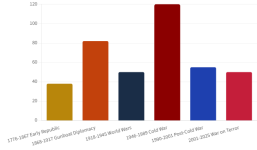
According to the Military Intervention Project (MIP) at Tufts University's Fletcher School of Law and Diplomacy - the most comprehensive dataset ever compiled on the subject - the United States has conducted nearly 400 military interventions since 1776. That's roughly one every seven months for 250 years.

Half of those interventions occurred after 1950, and more than a quarter have taken place since the end of the Cold War in 1991. The post-9/11 era ranks as the third most militarily active period in U.S. history, behind only the Cold War (1946-1989) and the era of "gunboat diplomacy" (1868-1917).

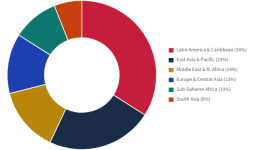
The regional breakdown is striking: 34% of all U.S. interventions have been in Latin America and the Caribbean, 23% in East Asia and the Pacific, 14% in the Middle East and North Africa, and 13% in Europe and Central Asia. Latin America alone has been the target of more than one in three U.S. military interventions in American history.


1777531477366.png
 

The Acceleration Problem​

The U.S. conducted roughly 90 military interventions in its first 170 years (1776-1945). It conducted over 300 in the 80 years since. And unlike earlier eras when shows of force and threats were common, post-9/11 interventions have been overwhelmingly kinetic - actual combat operations, drone strikes, and special operations raids.


1777531548434.png
 
Beyond the two World Wars, the United States has fought several major wars involving hundreds of thousands of troops, sustained combat over years, and enormous casualties. The Korean and Vietnam Wars alone killed over 90,000 Americans and millions of locals. The post-9/11 wars in Afghanistan and Iraq consumed over $8 trillion and resulted in an estimated 900,000+ deaths.
 
Back
Top