

You are using an out of date browser. It may not display this or other websites correctly.
You should upgrade or use an alternative browser.
You should upgrade or use an alternative browser.
Looks like @Damocles (and others) were right
- Thread starter Diogenes
- Start date

T. A. Gardner
Serial Thread Killer
Sucks for them.
The Chinese will be fine, they will simply stop exporting oil products....I have seen reports that they already have.
Price of petrol is already up 80% in the Rump of the UK I have been told.....nothing remotely like this has happened in China....which is in dollar terms cheaper than in America.
Price of petrol is already up 80% in the Rump of the UK I have been told.....nothing remotely like this has happened in China....which is in dollar terms cheaper than in America.
In practice, China has already banned fuel exports (gasoline, diesel, jet fuel) effective mid-March to prioritize domestic supply, and refiners have advanced maintenance. Alternative sources (Russia pipelines/sea, sanctioned Iranian volumes) still trickling through at reduced rates, plus floating storage.
The most reliable current assessments (as of mid-March 2026) come from the IEA’s Oil Market Report (March 2026) and specialist tracker Vortexa.
IEA data show Chinese crude refinery throughput already trending down (from 14.9 mb/d in Jan/Feb to 14.7 mb/d in March and a projected low of ~14.0 mb/d in May) due to precautionary maintenance and feedstock shortages, with non-OECD Asian runs cut broadly.
Demand growth for 2026 is still projected at +190 kb/d year-on-year (stable underlying GDP at 4.7%), but short-term adjustments include petrochemical feedstock losses of ~730 kb/d plus ~1 mb/d in related commodities from the Gulf, partly offset by switching to naphtha and coal-to-chemicals. Domestic crude production remains stable near 4.4 mb/d, with total liquids (including NGLs/pipeline Russia) around 5.1 mb/d.
Vortexa’s analysis (updated March 9, 2026) confirms the exposure: Hormuz-transiting seaborne crude fell to 44% of imports in early 2026 (from 51% in 2025) thanks to higher Russian seaborne volumes (1.8 mb/d), but the remaining gap triggers selective refinery run cuts if the closure persists.
Onshore crude inventories total 1.3 billion barrels nationally (4 months of seaborne imports), with refinery on-site stocks at ~3 weeks plus commercial buffers; the SPR adds further ~90 days.
State refiners (PetroChina/Sinopec) are expected to cut product exports and runs first before tapping SPR.
No nationwide disruption is occurring yet, but prolonged closure risks targeted throughput reductions at vulnerable plants (e.g., those with narrow crude slates or high Saudi exposure).
The most reliable current assessments (as of mid-March 2026) come from the IEA’s Oil Market Report (March 2026) and specialist tracker Vortexa.
IEA data show Chinese crude refinery throughput already trending down (from 14.9 mb/d in Jan/Feb to 14.7 mb/d in March and a projected low of ~14.0 mb/d in May) due to precautionary maintenance and feedstock shortages, with non-OECD Asian runs cut broadly.
Demand growth for 2026 is still projected at +190 kb/d year-on-year (stable underlying GDP at 4.7%), but short-term adjustments include petrochemical feedstock losses of ~730 kb/d plus ~1 mb/d in related commodities from the Gulf, partly offset by switching to naphtha and coal-to-chemicals. Domestic crude production remains stable near 4.4 mb/d, with total liquids (including NGLs/pipeline Russia) around 5.1 mb/d.
Vortexa’s analysis (updated March 9, 2026) confirms the exposure: Hormuz-transiting seaborne crude fell to 44% of imports in early 2026 (from 51% in 2025) thanks to higher Russian seaborne volumes (1.8 mb/d), but the remaining gap triggers selective refinery run cuts if the closure persists.
Onshore crude inventories total 1.3 billion barrels nationally (4 months of seaborne imports), with refinery on-site stocks at ~3 weeks plus commercial buffers; the SPR adds further ~90 days.
State refiners (PetroChina/Sinopec) are expected to cut product exports and runs first before tapping SPR.
No nationwide disruption is occurring yet, but prolonged closure risks targeted throughput reductions at vulnerable plants (e.g., those with narrow crude slates or high Saudi exposure).
The Chinese dont believe that we deserve the truth on such matters....you can almost bet your car that they have more than they claim and more than Western so-called experts think.In practice, China has already banned fuel exports (gasoline, diesel, jet fuel) effective mid-March to prioritize domestic supply, and refiners have advanced maintenance. Alternative sources (Russia pipelines/sea, sanctioned Iranian volumes) still trickling through at reduced rates, plus floating storage.
The most reliable current assessments (as of mid-March 2026) come from the IEA’s Oil Market Report (March 2026) and specialist tracker Vortexa.
IEA data show Chinese crude refinery throughput already trending down (from 14.9 mb/d in Jan/Feb to 14.7 mb/d in March and a projected low of ~14.0 mb/d in May) due to precautionary maintenance and feedstock shortages, with non-OECD Asian runs cut broadly.
Demand growth for 2026 is still projected at +190 kb/d year-on-year (stable underlying GDP at 4.7%), but short-term adjustments include petrochemical feedstock losses of ~730 kb/d plus ~1 mb/d in related commodities from the Gulf, partly offset by switching to naphtha and coal-to-chemicals. Domestic crude production remains stable near 4.4 mb/d, with total liquids (including NGLs/pipeline Russia) around 5.1 mb/d.
Vortexa’s analysis (updated March 9, 2026) confirms the exposure: Hormuz-transiting seaborne crude fell to 44% of imports in early 2026 (from 51% in 2025) thanks to higher Russian seaborne volumes (1.8 mb/d), but the remaining gap triggers selective refinery run cuts if the closure persists.
Onshore crude inventories total 1.3 billion barrels nationally (4 months of seaborne imports), with refinery on-site stocks at ~3 weeks plus commercial buffers; the SPR adds further ~90 days.
State refiners (PetroChina/Sinopec) are expected to cut product exports and runs first before tapping SPR.
No nationwide disruption is occurring yet, but prolonged closure risks targeted throughput reductions at vulnerable plants (e.g., those with narrow crude slates or high Saudi exposure).
T. A. Gardner
Serial Thread Killer
Maybe the UK shouldn't have stopped drilling in the North Sea...The Chinese will be fine, they will simply stop exporting oil products....I have seen reports that they already have.
Price of petrol is already up 80% in the Rump of the UK I have been told.....nothing remotely like this has happened in China....which is in dollar terms cheaper than in America.
Now, the Brits are a day late and pound short...
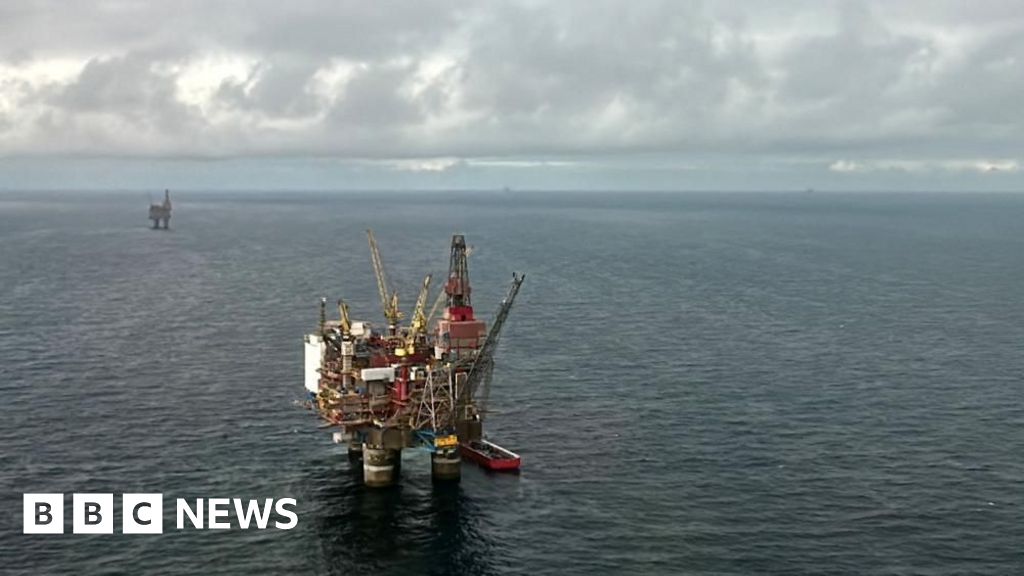
More North Sea exploration to be allowed in new Labour plan
The chancellor will unveil the North Sea Strategy in her Budget speech, the BBC understands.
 www.bbc.com
Maybe the UK shouldn't have stopped drilling in the North Sea...
Now, the Brits are a day late and pound short...
More North Sea exploration to be allowed in new Labour plan
The chancellor will unveil the North Sea Strategy in her Budget speech, the BBC understands.
Net Zero is their mantra.
T. A. Gardner
Serial Thread Killer
They can enjoy sitting in cold houses in the dark for all I care.Net Zero is their mantra.

Heat pumps: Lords slam 'failing' green heating scheme
Government unlikely to meet its green heating targets as take-up of the grant scheme is so low.
 www.bbc.co.uk

The UK heat pumps scandal has gone on for too long. End subsidies now
From NOT A LOT OF PEOPLE KNOW THAT By Paul Homewood h/t Ian Magness/Paul Kolk Anyone for free money? Yes, as the Prime Minister discovered when he was offering to pay for our pub lunch under the Ea…
 iowaclimate.org
Looks as though Xi might have to compete on the open market for Saudi and UAE petroleum if a US blockade scenario squeezes the Gulf to a little more than a third of its usual output.
Red China has already banned exports of refined fuel products in anticipation of a supply squeeze.
Beijing has already signaled willingness to play ball at the UN security council by abstaining on Res 2817 which condemned Iran’s “egregious attacks” on Gulf states in “the strongest possible terms.” Moscow’s objections did little to alter the language or the votes, and Putin ultimately fell in line to abstain alongside Xi.
Beijing has a strategic reserve that it can tap to survive the immediate shock, but it offers little more than 78 days of cushion.
On its northern routes, it would likely max out Russia’s supply. There’s little capacity left to squeeze, with their ESPO pipeline and the Kozmino port running near peak. The reopening rail loading facilities in Siberia offer little extra.
That scenario involves concessions to Moscow Xi likely prefers to avoid, especially as he weighs rapprochement with Trump with their meeting set for the end of the month.
Red China has already banned exports of refined fuel products in anticipation of a supply squeeze.
Beijing has already signaled willingness to play ball at the UN security council by abstaining on Res 2817 which condemned Iran’s “egregious attacks” on Gulf states in “the strongest possible terms.” Moscow’s objections did little to alter the language or the votes, and Putin ultimately fell in line to abstain alongside Xi.
Beijing has a strategic reserve that it can tap to survive the immediate shock, but it offers little more than 78 days of cushion.
On its northern routes, it would likely max out Russia’s supply. There’s little capacity left to squeeze, with their ESPO pipeline and the Kozmino port running near peak. The reopening rail loading facilities in Siberia offer little extra.
That scenario involves concessions to Moscow Xi likely prefers to avoid, especially as he weighs rapprochement with Trump with their meeting set for the end of the month.
They can enjoy sitting in cold houses in the dark for all I care.
Heat pumps: Lords slam 'failing' green heating scheme
Government unlikely to meet its green heating targets as take-up of the grant scheme is so low.
The UK heat pumps scandal has gone on for too long. End subsidies now
From NOT A LOT OF PEOPLE KNOW THAT By Paul Homewood h/t Ian Magness/Paul Kolk Anyone for free money? Yes, as the Prime Minister discovered when he was offering to pay for our pub lunch under the Ea…
Same. As @Damocles (and others) posited, it may be that Trump is softening up the Red Chinese to gain an advantage in the next round of talks.
They need imported oil; we don't.

Lefties are completely misreading what’s happening right now.
What if this isn’t chaos?
What if it’s a controlled geopolitical reset?
When the Strait of Hormuz gets disrupted, roughly 20% of the world’s oil supply is immediately at risk.
That sends shockwaves through:
• Europe
• China
• India
Thet gets their attention. Energy security is now the geopolitical priority.
The U.S. just issued a temporary 30-day waiver allowing Russian oil already at sea to be sold to stabilize the market. This isn’t about helping Russia.
What if this is about preventing a global supply shock while the system resets?
• The Persian Gulf states pretty much supplied Asia
• Russia supplied Europe and the UK after they went "green"
• Communist China manufactured almost every manufactured product the West consumed
I doubt Russia can produce and distribute enough oil and gas to replace the Gulf States overnight.
Red China was heavily dependent on Middle East oil. Xi is leery of Putin. I doubt he'll want to be beholden to Russia.
Europe is now desperate. They bet bigly on "green energy". It's not enough.
Meanwhile the United States is sitting on the largest combined oil + gas production capacity on the planet.
So what happens next?
Maybe the world starts asking: “Who can guarantee supply?”
The United States of America.
I believe that when energy dominance shifts, global wealth and leverage should shift with it.

Trump’s upcoming Beijing visit is turning into a diplomatic nightmare for Xi Jinping.
Xi originally invited Trump hoping it would look like a major diplomatic victory. Instead, it’s becoming a humiliation.
Three signals make this obvious.
- First, Marco Rubio is coming with Trump, the same Rubio Beijing sanctioned and banned from entering China for criticizing Xinjiang and Hong Kong.
- Second, Trump is refusing the usual grand tour. Unlike Macron or Scholz, he will only stay in Beijing and skip visiting other Chinese cities, making the trip short and transactional rather than friendly.
- Third, reports say the U.S. may approve $14 billion in arms sales to Taiwan immediately after the meeting, possibly the largest package ever.
In other words, Trump is framing the trip as business, not friendship.
What Xi hoped would look like tribute now risks looking like a diplomatic slap in the face.