Fetterman is just a right wing jerkoff.Sen. John Fetterman (D-PA) called for Democrats to “drop” their Trump Derangement Syndrome (TDS) after a shooting at the Washington Hilton Hotel on Saturday, and called for Democrats to support building the White House ballroom.
Fetterman shared a screenshot of a Mediaite article from reporter Joe DePaolo about how security at the hotel, where the Washington Correspondents’ Dinner took place, was “awful.” In a post on X. Fetterman expressed that the venue at the Washington Hilton Hotel “wasn’t built to accommodate an event with the line of succession” of the United States government in attendance.
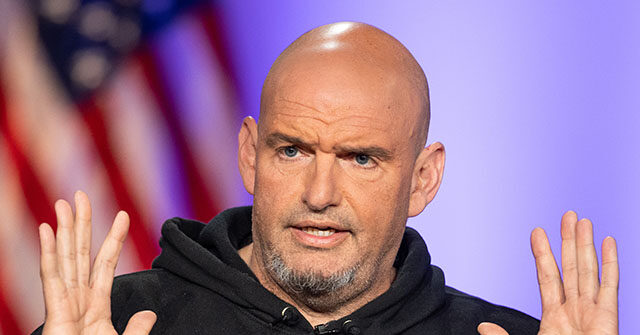
Fetterman to Dems: 'Drop the TDS and Build the White House Ballroom'
Sen. John Fetterman (D-PA) called for Democrats to "drop" their TDS after a shooting at the Washington Hilton Hotel on Saturday.www.breitbart.com

You are using an out of date browser. It may not display this or other websites correctly.
You should upgrade or use an alternative browser.
You should upgrade or use an alternative browser.
Fetterman to Democrats: ‘Drop the TDS and Build the White House Ballroom’
- Thread starter volsrocks
- Start date

T. A. Gardner
Serial Thread Killer
What the evidence shows
1. The ballroom is funded primarily through private donations
Multiple sources confirm that the White House has stated the ballroom will be paid for by private donors, including major corporations such as Amazon, Apple, Meta, Lockheed Martin, and others.
Trump has repeatedly claimed he and “patriot donors” are covering the cost.
So, Google AI agrees I am correct--grudgingly...
2. But the funding is
A court‑ordered release of the contract revealed:
This structure has raised major ethics concerns.
- Donors can remain anonymous
- The White House is exempt from conflict‑of‑interest checks
- Companies with federal business can donate without disclosure
Now it's raising what amounts to trivial objections to make that look bad, a Leftist, not neutral, POV.
3. The project cost has ballooned
Estimates range from $250M to $400M, depending on the source and stage of reporting.Trump has changed the number multiple times.
Many, most large government projects have serious cost overruns. I wonder how Google AI would 'feel' about California's high speed choo choo train to nowhere. And, yes, that is sarcasm, another thing Google AI doesn't recognize.
4. Some taxpayer money
While donors fund the ballroom structure, reporting shows taxpayer funds cover security‑related elements, such as fortified underground facilities.
This means the project is not 100% privately funded, even if the ballroom itself is.
Yet, another trivial objection.
Bottom line:Bottom line
- Private donors are paying for the ballroom’s construction.
- Anonymous donations and limited oversight raise transparency concerns.
- Taxpayer money is involved for security components, meaning the project is not entirely privately funded.
Google AI's slant is one trying to make the project look bad using the usual all-or-nothing approach to facts and data.

Grim Reaper
Chief Exit Officer (CEO)
You keep trying to turn every factual point into a morality play about Google AI’s slant, but notice what you’re actually doing:So, Google AI agrees I am correct--grudgingly...
Now it's raising what amounts to trivial objections to make that look bad, a Leftist, not neutral, POV.
Many, most large government projects have serious cost overruns. I wonder how Google AI would 'feel' about California's high speed choo choo train to nowhere. And, yes, that is sarcasm, another thing Google AI doesn't recognize.
Yet, another trivial objection.
Bottom line:
Google AI's slant is one trying to make the project look bad using the usual all-or-nothing approach to facts and data.
When the facts line up with you, you call them proof. When the facts don’t, you call them trivial objections. When the facts contradict your claim, you call them Leftist POV. That isn’t analysis. It’s a reflex.
Pointing out anonymous donors, lack of oversight, shifting cost estimates, and taxpayer‑funded security isn’t making it look bad. Those are simply parts of the record. You’re labeling them trivial because they’re inconvenient, not because they’re incorrect.
You can’t have it both ways, If you want to claim the project is completely privately funded, then the parts that aren’t privately funded stop being trivial. They’re the exact reason the claim is inaccurate.
Calling every correction bias doesn’t turn your narrative into evidence. It just signals that you don’t have a factual counterpoint, so you’re retreating into motive‑ascription instead of addressing the substance.
If you want to dispute the facts, dispute them. If all you’ve got is Google AI bad, that’s not a rebuttal, it’s a placeholder for one.